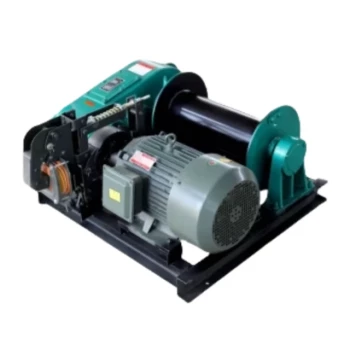
At its core, a winch machine is more cost-effective than manpower because it replaces the significant, cumulative cost of a manual labor team with a single, highly efficient tool. This shift reduces direct wage expenses while dramatically increasing the speed and safety of heavy lifting operations, leading to substantial savings in project time and a lower risk of costly accidents.
The true cost-effectiveness of a winch is not just in the rental price versus salaries. It's a comprehensive calculation where the machine's superior speed, productivity, and safety generate financial gains that far outweigh the cost of manual labor for any significant task.
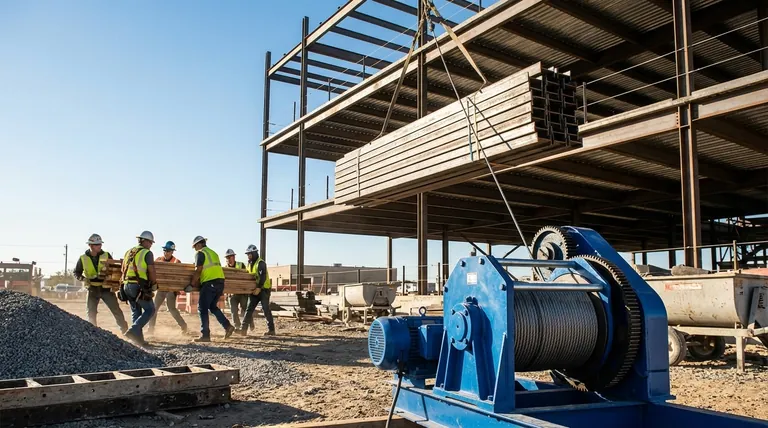
Analyzing the Direct Cost Comparison
The most straightforward financial argument comes from comparing the direct expenses of hiring a machine against hiring a team. The numbers almost always favor the machine as the load or complexity increases.
Labor Wages vs. Hire Costs
Hiring a winch for a specific project can be significantly cheaper than paying the daily or hourly wages for a team of workers required to perform the same task manually.
The Power of Consolidation
A single winch can perform the work of multiple laborers. This consolidation means you are paying one hire fee instead of several salaries for the same lifting capacity.
The Hidden Financial Gains of Operational Efficiency
Beyond direct costs, the true value emerges from how a winch transforms the workflow. Time is a critical cost factor in any project, and winches are fundamentally designed to save time.
Accelerated Project Timelines
Winch machines lift and move heavy loads much faster than manual labor. This acceleration saves time on the specific task and can shorten the entire project timeline, reducing overhead costs.
Reduced Production Downtime
Electric winches, in particular, offer high speeds that minimize the time other operations must pause for a lift. This reduces production downtime, keeping the entire project moving forward efficiently.
Increased Overall Productivity
Because winches are faster and more powerful, they enable more work to be completed in the same amount of time. This boost in productivity means lower labor costs per unit of work accomplished.
Understanding the Trade-offs: The True Cost of an Accident
Relying on manpower for heavy lifting introduces risks that are often overlooked in initial cost estimates. The primary trade-off is accepting a higher risk of injury for a perceived lower upfront cost.
The Financial Impact of Workplace Injuries
A single injury can be financially devastating, involving medical costs, insurance claims, project delays, and potential legal fees. Winch machines dramatically reduce the risk of injury by removing personnel from the most dangerous part of the lifting process.
Reliability and Consistency
A winch provides consistent, predictable performance. It doesn't suffer from fatigue, which can lead to mistakes and accidents in a manual team working under immense physical strain.
Making the Right Choice for Your Project
Choosing between a winch and manpower requires looking beyond the initial price and evaluating the total operational cost and risk.
- If your primary focus is minimizing direct expenses on a large project: A winch is almost always the more cost-effective solution due to its ability to replace a large, expensive manual team.
- If your primary focus is speed and meeting tight deadlines: The superior speed of a winch is non-negotiable, as it directly reduces project timelines and associated costs.
- If your primary focus is safety and risk mitigation: A winch provides a controlled, mechanical advantage that is inherently safer than relying on manual labor for heavy, dangerous lifts.
Ultimately, viewing a winch as a tool for efficiency and risk reduction reveals its true value as a sound financial investment.
Summary Table:
| Cost Factor | Winch Machine | Manual Labor |
|---|---|---|
| Direct Cost | Single hire fee | Multiple salaries |
| Speed | Fast, consistent | Slow, variable |
| Safety Risk | Low, controlled | High, injury-prone |
| Productivity | High output | Limited by fatigue |
Ready to cut costs and improve safety on your next project? At GARLWAY, we specialize in providing robust and efficient construction machinery, including winches, concrete mixers, and batching plants, tailored for construction companies and contractors worldwide. Our equipment is designed to accelerate your timelines, reduce operational risks, and maximize your ROI. Contact our experts today to find the perfect winch solution for your needs!
Visual Guide

Related Products
- Warn Winch Windlass Boat Trailer Winch
- Electric and Hydraulic Winch for Heavy Duty Applications
- Small Electric Winch 120V and 240V for Compact Applications
- 12000 lb Electric Boat Trailer Winch with Windlass Anchor Warn
- Quick Windlass Portable Winch for Truck and Boat Best Boat Winch
People Also Ask
- What are the main components of a boat trailer winch? A Guide to Safe & Efficient Boat Loading
- What factors should be considered when choosing a boat trailer winch? Ensure Safe and Effortless Boat Loading
- What is the purpose of boat trailer winches? Safely and Efficiently Load Your Boat
- What are the two main types of boat trailer winches? Manual vs. Electric Explained
- How often should a boat trailer winch be replaced? Your Guide to Safety and Longevity