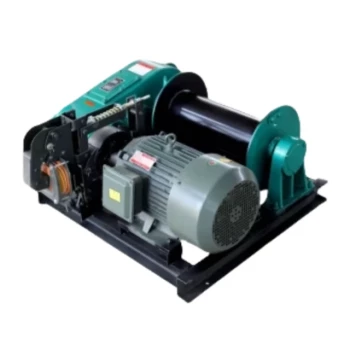
An electric winch is considered an indispensable tool because it translates electrical energy into immense pulling force with exceptional control and efficiency. This capability allows a single person to safely move loads weighing thousands of pounds, a task that would otherwise be impractical or dangerous, making it a cornerstone for industries ranging from construction and shipping to off-road vehicle recovery.
The true value of an electric winch lies not just in its raw power, but in its combination of accessible force, precise user control, and a self-contained, relatively simple mechanical design that makes it profoundly versatile.
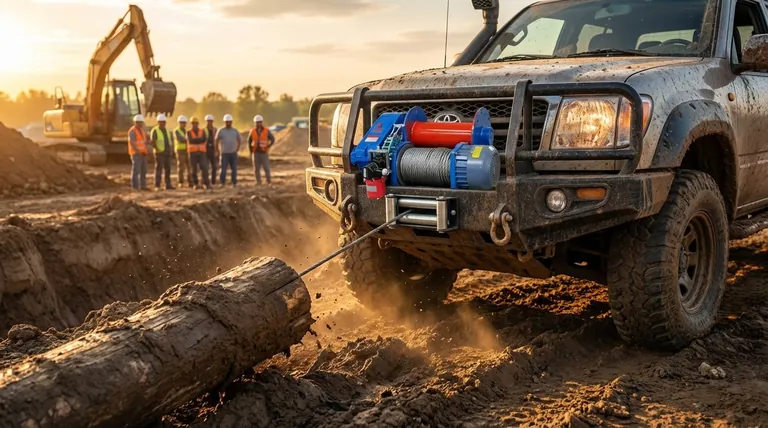
The Core Mechanics: How an Electric Winch Generates Force
To understand why an electric winch is so effective, you must first understand its core components. It is a system designed to multiply force through a series of simple, reliable mechanical stages.
The Electric Motor
The process begins with the electric motor. Powered by a vehicle's battery or another electrical source, the motor generates high-speed rotational energy. This initial power is fast, but it lacks the torque needed to pull heavy loads.
The Gear Reducer
The motor's energy is channeled into a gear reducer (often a multi-stage planetary gearset). This is the heart of the winch's power. The gear train converts the motor's high-speed, low-torque rotation into low-speed, high-torque rotation, effectively multiplying the pulling force.
The Drum and Brake
This high-torque force turns the winch drum, winding the cable and pulling the load. Critically, an electromagnetic or mechanical braking system is integrated into this process. This brake automatically engages when the motor stops, preventing the drum from unwinding and ensuring the load is held securely in place.
Key Advantages in Operation
The mechanical design of an electric winch directly translates into powerful advantages for a wide range of applications, from industrial lifting to recreational recovery.
Unmatched Power-to-Size Ratio
Because of the force multiplication achieved by the gear reducer, electric winches offer enormous pulling capacity in a compact and lightweight package. This makes them easy to mount on vehicles or move between job sites.
Simplicity and Ease of Use
Unlike hydraulic systems that require complex fluid pumps and lines, an electric winch is largely self-contained. Operation is typically managed with a simple push-button remote control, reducing the need for extensive manual labor and making it highly accessible.
Precision and Safety
The motorized operation and integrated braking system provide a high degree of control. Operators can manage the speed and direction of a pull with accuracy, allowing for the precise and safe maneuvering of heavy or delicate objects.
Understanding the Trade-offs and Limitations
While powerful, electric winches are not without limitations. Acknowledging these trade-offs is critical for using them safely and effectively.
Dependency on a Power Source
The most obvious limitation is the need for a stable electrical source. For vehicle-mounted winches, this means the engine must typically be running to prevent draining the battery. In remote industrial settings, a reliable power supply is a prerequisite.
Heat and Duty Cycle
Electric motors generate significant heat under load. Most consumer-grade electric winches have a limited duty cycle, meaning they require a cool-down period after a short duration of heavy pulling to prevent the motor from overheating and sustaining damage. Hydraulic winches often excel in applications requiring continuous, all-day operation.
The Illusion of Simplicity
While easy to operate, the immense forces involved with winching can create extremely dangerous situations if not managed properly. The ease of use can mask the need for professional training on topics like proper rigging techniques, calculating load resistance, and cable safety.
Making the Right Choice for Your Task
Ultimately, the indispensability of an electric winch comes from applying its specific strengths to the right problem.
- If your primary focus is off-road recovery or intermittent field use: The compact size, simple installation, and ability to run off a vehicle's electrical system make an electric winch the definitive choice.
- If your primary focus is continuous, heavy-duty industrial work: An industrial-grade electric winch is a strong contender, but you must carefully evaluate its duty cycle against a hydraulic system that may be better suited for constant operation.
- If your primary focus is safety and precision: Prioritize a winch with a reliable braking system and advanced remote controls, and ensure all users receive formal training on safe operating procedures.
By understanding both its powerful capabilities and its inherent limitations, you can leverage the electric winch as a reliable tool to overcome immense physical challenges safely and efficiently.
Summary Table:
| Key Advantage | Why It Matters |
|---|---|
| High Power-to-Size Ratio | Generates immense pulling force from a compact, vehicle-mountable unit. |
| Precision Control | Allows for safe, accurate maneuvering of heavy loads with simple remote operation. |
| Integrated Safety Brake | Automatically holds loads securely when the motor stops, preventing accidents. |
| Simple, Self-Contained Design | Easier to install and operate than complex hydraulic systems, reducing labor. |
Ready to harness the power and precision of an industrial-grade electric winch?
GARLWAY specializes in providing robust and reliable construction machinery, including electric winches, concrete mixers, and batching plants, for construction companies and contractors worldwide. Our solutions are engineered to enhance safety, efficiency, and productivity on your job site.
Contact GARLWAY today for a consultation and discover the right winch for your heavy-duty lifting and recovery needs!
Visual Guide

Related Products
- Electric 120V Boat Winch by Badlands
- Small Electric Winch 120V and 240V for Compact Applications
- Electric and Hydraulic Winch for Heavy Duty Applications
- 12000 lb Electric Boat Trailer Winch with Windlass Anchor Warn
- Electric Hoist Winch Boat Anchor Windlass for Marine Applications
People Also Ask
- How do electric boat winches work? Unlock Effortless Launching & Retrieval
- How much current does an electric boat winch draw? Plan Your Electrical System for Peak Performance
- Can I run a winch straight from a battery? Essential Power Setup for Safe Operation
- What are the types of electric winches available? Choose the Right Winch for Your Job
- What are the uses of electric winches in mining and tunneling? Enhance Safety and Efficiency Underground