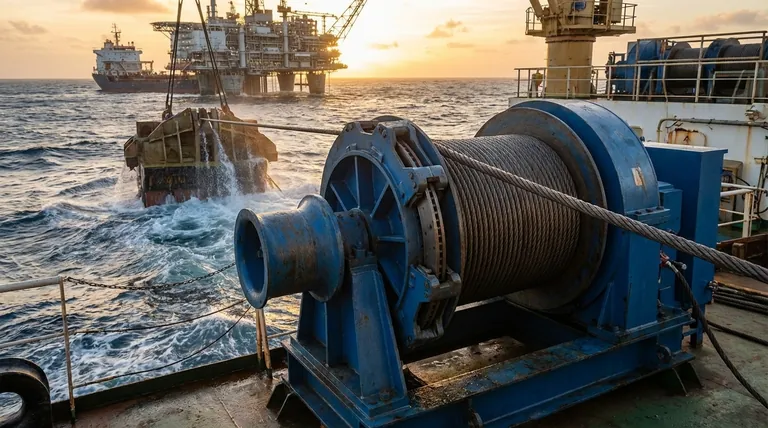
In a marine hydraulic winch, the brake system is the most critical safety component. Its primary function is not just to stop the winch but to securely hold massive loads in a static position, preventing catastrophic accidents and ensuring operational control in demanding marine environments.
The hydraulic motor provides the power to move a load, but the brake system provides the safety to hold that load. It acts as the ultimate safeguard against uncontrolled movement when the winch motor is inactive.
The Core Function: More Than Just Stopping
A winch's brake is fundamentally a safety lock. While the hydraulic motor provides the dynamic force for pulling and paying out, the brake is responsible for static load control.
Holding the Load Securely
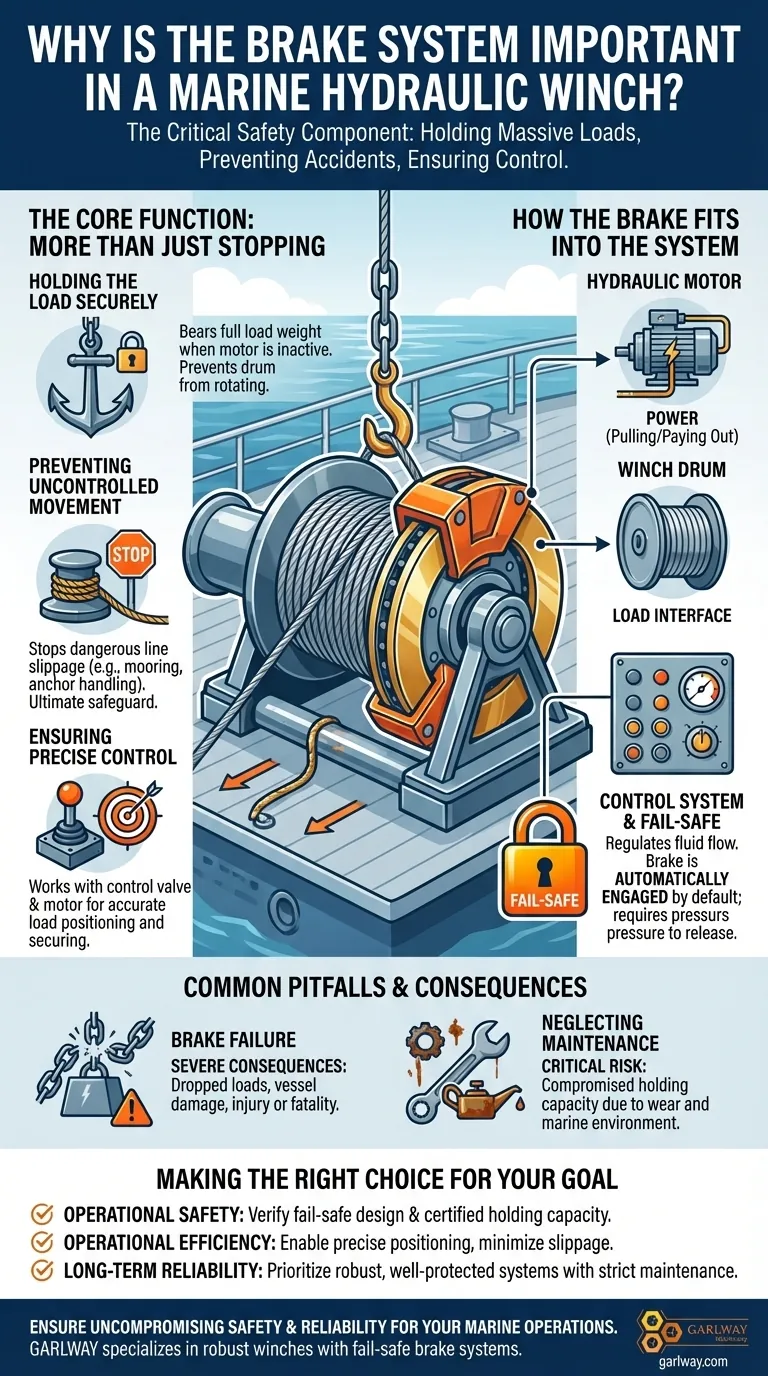
When the winch operator stops hauling or paying out the line, the hydraulic motor disengages. The brake immediately engages to bear the full weight of the load, preventing the winch drum from rotating.
Preventing Uncontrolled Movement
In marine applications like mooring or anchor handling, any uncontrolled slip of the line can be disastrous. The brake system ensures a vessel remains secured to a dock or that a heavy anchor doesn't free-fall.
Ensuring Precise Control
The brake works in tandem with the control valve and hydraulic motor. This integration allows an operator to position and hold a load with precision, which is essential for delicate operations or securing cargo.
How the Brake Fits Into the Winch System
The brake does not operate in isolation. It is a key component that works with other parts of the winch to deliver power and safety.
The Hydraulic Motor
This component converts hydraulic fluid pressure into the mechanical energy needed to turn the winch drum. It is designed for pulling power, not for static holding.
The Winch Drum
The drum is the cylinder that winds the rope or cable. The brake system typically acts directly on the drum or its drivetrain to prevent it from turning.
The Control System
The operator uses control valves to regulate the flow of hydraulic fluid to the motor. In most modern systems, the brake is designed to be fail-safe, meaning it is automatically engaged by default and requires hydraulic pressure to release.
Common Pitfalls to Avoid
Understanding the brake's importance means recognizing the severe consequences of its failure or improper maintenance. This is not a component where compromises can be made.
The Consequence of Brake Failure
A failing brake is one of the most dangerous scenarios in winch operation. It can lead to dropped loads, damage to the vessel or dock, and a significant risk of severe injury or fatality to personnel.
Neglecting Maintenance
Brake systems are subject to wear and the harsh marine environment. Regular inspection and maintenance are not just best practices; they are essential safety protocols to ensure the brake's holding capacity is never compromised.
Making the Right Choice for Your Goal
When evaluating or operating a marine hydraulic winch, your perspective on the brake system should align with your primary objective.
- If your primary focus is operational safety: The brake system's fail-safe design and certified holding capacity are the most critical features to verify.
- If your primary focus is operational efficiency: A reliable and responsive brake enables precise load positioning, minimizes slippage, and reduces downtime.
- If your primary focus is long-term reliability: Prioritize winches with robust, well-protected brake systems and ensure a strict maintenance schedule is followed.
Ultimately, the brake system is the silent guardian that ensures power is always matched by control.
Summary Table:
| Function | Importance |
|---|---|
| Static Load Holding | Bears the full load weight when the motor is inactive, preventing drum rotation. |
| Fail-Safe Operation | Automatically engages by default; requires hydraulic pressure to release for maximum safety. |
| Prevents Uncontrolled Movement | Stops dangerous line slippage during mooring or anchor handling operations. |
| Ensures Precise Control | Works with the motor and control valve for accurate load positioning and securing. |
Ensure Uncompromising Safety and Reliability for Your Marine Operations
At GARLWAY, we specialize in engineering robust construction and marine machinery. For construction companies and contractors operating in demanding marine environments, a reliable winch is non-negotiable. Our hydraulic winches are built with fail-safe brake systems as a core safety feature, designed to securely hold massive loads and prevent catastrophic failure.
Don't compromise on safety. Contact our experts today to find the perfect winch solution for your project's needs.
Get a Custom Quote & Ensure Your Load Safety Now!
Visual Guide
Related Products
- Hydraulic Winding Engine Harbor Freight Winch
- Electric Hoist Winch Boat Anchor Windlass for Marine Applications
- Heavy Duty Electric Boat Winch Windlass Anchor
- Electric and Hydraulic Winch for Heavy Duty Applications
- Warn Winch Windlass Boat Trailer Winch
People Also Ask
- What role does hydraulic fluid play in hydraulic winches? It's the Lifeblood of Your Heavy-Duty Pulling Power
- What vehicles commonly use hydraulic winches? For Industrial Trucks Needing Unmatched Power
- What are the features of hydraulic winches? Unmatched Power and Continuous Duty for Heavy Loads
- What preventive measures can be taken to avoid oil leakage in hydraulic winches? Ensure Long-Term Reliability
- What does 'power out' mean in a hydraulic winch? Achieve Absolute Control When Lowering Heavy Loads