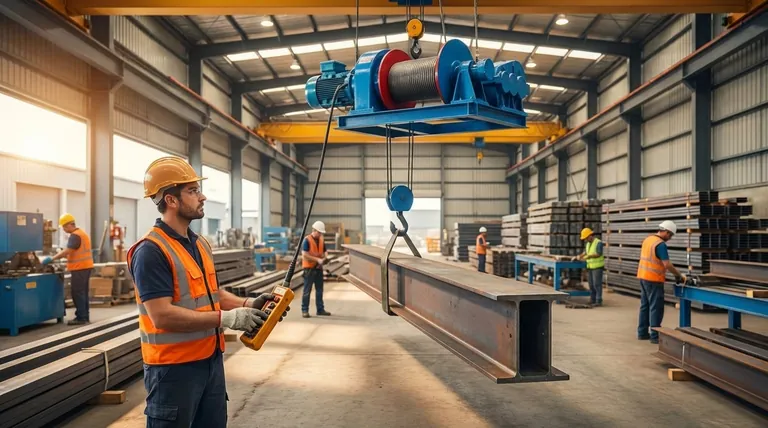
At their core, electric hoists reduce worker fatigue by directly replacing strenuous manual labor with mechanical power. By taking on the physical burden of lifting and moving heavy loads, these machines significantly lower the energy operators must expend. This allows workers to maintain higher levels of focus, productivity, and accuracy throughout their entire shift without the performance degradation that comes with physical exhaustion.
The fundamental benefit of an electric hoist isn't just lifting heavy objects—it's the preservation of a worker's physical and mental energy. By automating the most demanding tasks, hoists create a positive ripple effect of improved safety, sustained productivity, and enhanced precision.
The True Cost of Manual Labor
Relying on manual labor for repetitive lifting creates a cycle of fatigue that carries significant, often hidden, costs. Understanding this cycle is key to appreciating the full impact of an electric hoist.
The Physical Toll of Repetitive Strain
Manual lifting, especially when repetitive, is a leading cause of workplace injuries. Tasks that involve heavy or awkward loads put immense stress on the musculoskeletal system.
This physical demand directly leads to common injuries like strains and sprains, which are not only painful for the employee but also costly for the business in terms of downtime and compensation.
How Fatigue Degrades Performance
As a worker becomes physically tired, their mental acuity and fine motor skills decline. This degradation has a direct impact on performance.
Accuracy suffers, leading to errors and potential rework. The pace of work slows down, and the risk of accidents increases as focus wanes.
The Inefficiency of Human Limits
There is a hard limit to what a person can lift safely and efficiently. Pushing past these limits is both dangerous and unproductive.
Manual hoisting methods are inherently slower and less consistent than mechanized solutions, creating a bottleneck in the operational workflow.
How Electric Hoists Break the Cycle
An electric hoist is more than just a lifting device; it's a strategic tool that systematically dismantles the sources of worker fatigue and operational inefficiency.
Eliminating Direct Physical Exertion
The most obvious benefit is the removal of manual effort. The hoist's motor does the work that would otherwise drain an operator's energy.
This frees the worker to focus on guiding the load with precision rather than struggling with its weight, conserving their physical stamina for an entire shift.
Enhancing Precision and Control
Electric hoists provide smooth, controlled vertical movement that is nearly impossible to replicate manually.
This level of control reduces the risk of dropping or damaging valuable materials. It allows operators to place heavy loads with an accuracy that fatigue would otherwise compromise.
Increasing Operational Speed
Compared to manual alternatives, electric hoists operate at significantly higher and more consistent speeds.
This capability allows more tasks to be completed in less time, directly boosting throughput and overall operational efficiency.
Common Pitfalls to Avoid
While electric hoists offer clear benefits, their effectiveness can be undermined without proper implementation and oversight. Treating the hoist as a complete solution without considering its context is a common mistake.
Neglecting Operator Training
An untrained operator can be a danger to themselves and others. It is critical to ensure every user understands the hoist's controls, load limits, and emergency procedures.
Proper training ensures the equipment is used safely and effectively, maximizing the return on investment and preventing accidents.
Overlooking Maintenance Schedules
Like any mechanical equipment, hoists require regular inspection and maintenance to function reliably.
Skipping maintenance can lead to unexpected failures, costly downtime, and severe safety hazards. A proactive maintenance plan is essential.
Choosing the Wrong Tool for the Job
Not all hoists are created equal. Using a hoist that is underrated for the load's weight or unsuited for the environmental conditions is a critical error.
Careful selection based on capacity, duty cycle, and work environment is necessary to ensure both safety and longevity of the equipment.
Making the Right Choice for Your Goal
Integrating an electric hoist is a strategic decision that addresses several core business needs simultaneously.
- If your primary focus is safety: An electric hoist is your most effective tool for preventing lifting-related injuries by removing the source of physical strain.
- If your primary focus is productivity: The speed and consistency of an electric hoist allow for more work cycles per shift, directly increasing your team's output.
- If your primary focus is quality control: By reducing operator fatigue, hoists ensure the sustained focus and precision needed to handle valuable materials without error.
Ultimately, investing in the right lifting technology is an investment in the long-term health, safety, and effectiveness of your workforce.
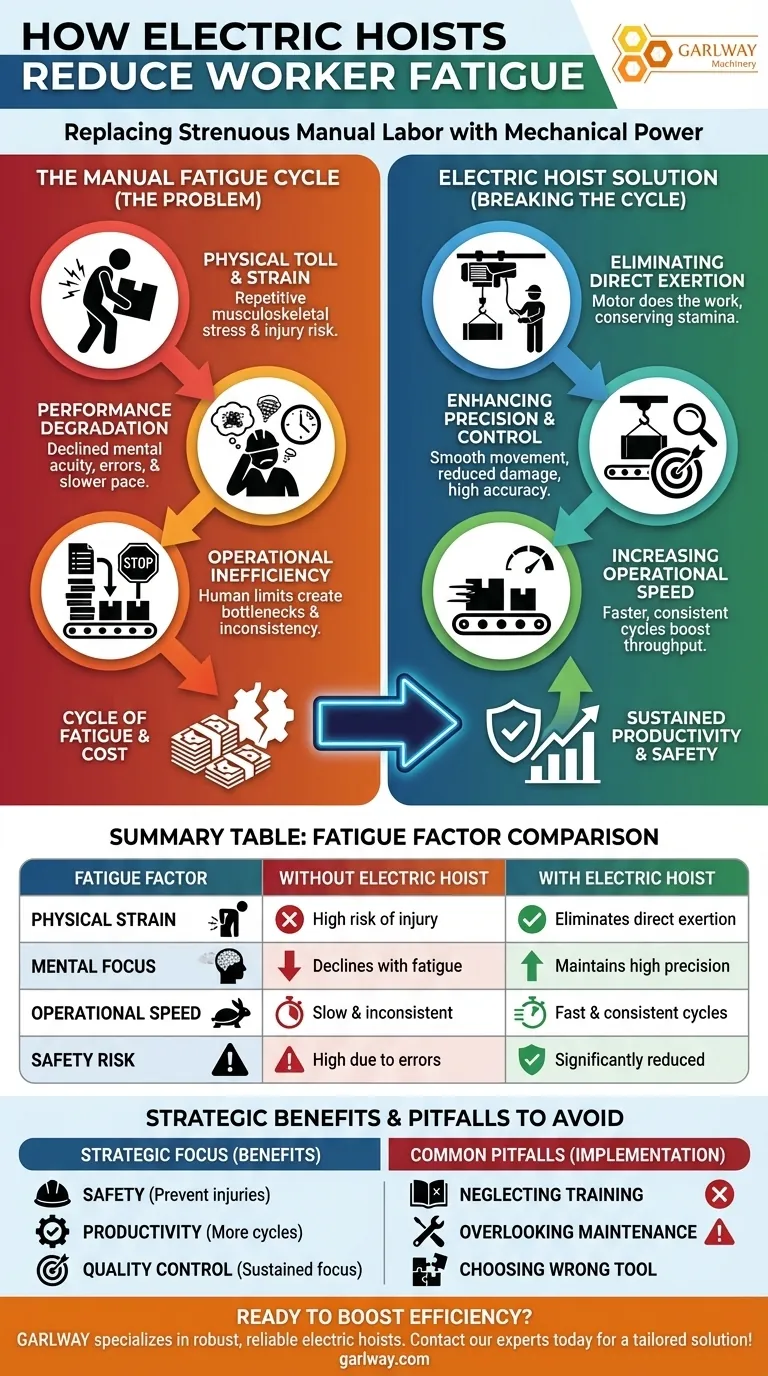
Summary Table:
| Fatigue Factor | Without Electric Hoist | With Electric Hoist |
|---|---|---|
| Physical Strain | High risk of musculoskeletal injury | Eliminates direct physical exertion |
| Mental Focus | Declines with fatigue | Maintains high precision and accuracy |
| Operational Speed | Slow and inconsistent | Fast and consistent cycles |
| Safety Risk | High due to fatigue-related errors | Significantly reduced |
Ready to reduce worker fatigue and boost your operational efficiency?
GARLWAY specializes in providing robust and reliable electric hoists for construction companies and contractors globally. Our hoists are engineered to handle heavy loads with precision, ensuring your team works safer, smarter, and more productively.
Let us help you select the perfect hoist for your needs. Contact our experts today to discuss your requirements and get a tailored solution!
Visual Guide
Related Products
- Electric Hoist Winch Boat Anchor Windlass for Marine Applications
- Electric and Hydraulic Winch for Heavy Duty Applications
- Hydraulic Winding Engine Harbor Freight Winch
- Heavy Duty Electric Boat Winch Windlass Anchor
- 12000 lb Electric Boat Trailer Winch with Windlass Anchor Warn
People Also Ask
- How does an electric anchor winch work? Power, Safety, and Reliable Operation Explained
- What are the advantages of installing an electric anchor winch on a boat? Boost Safety & Ease for Boaters
- What are the operational differences between electric hoists and winches? A Guide to Safe Lifting vs. Pulling
- What are the main benefits of a boat anchor winch? Boost Safety & Efficiency for Your Vessel
- How does a boat anchor winch work? A Guide to Reliable Anchor Handling