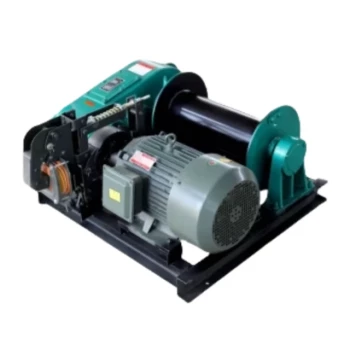
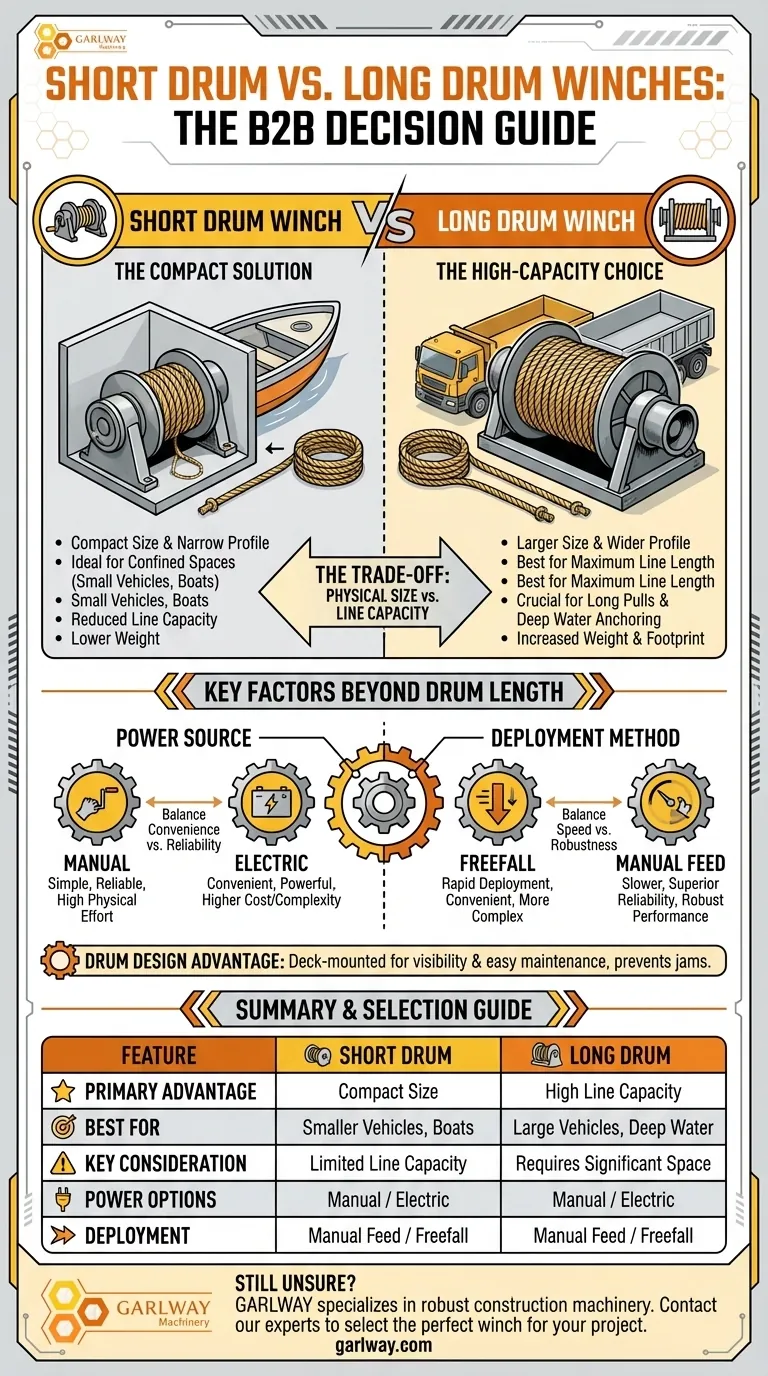
In essence, the difference between a short and long drum winch is a direct trade-off between physical size and line capacity. A short drum winch is compact and designed to fit in confined spaces, while a long drum winch is larger and built to hold a significantly greater length of rope or cable.
The choice is not merely about length, but about balancing your vehicle's or vessel's physical constraints against your operational requirements for line capacity. Understanding this fundamental trade-off is the first step in selecting the right tool for the job.
The Core Distinction: Size vs. Capacity
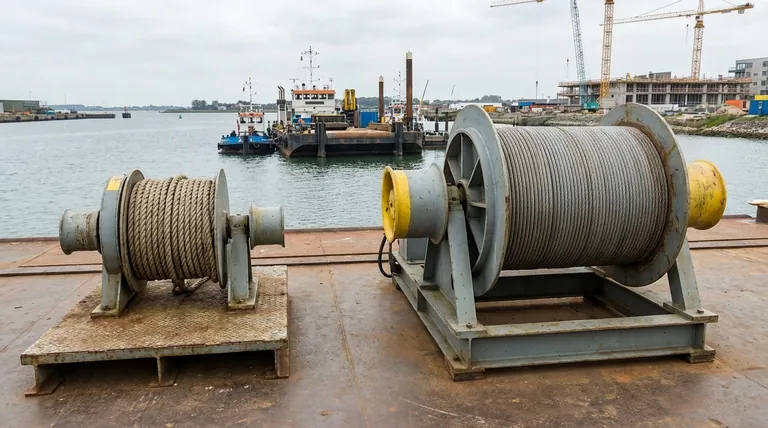
The names "short drum" and "long drum" refer to the horizontal width of the spool that holds the line. This single dimension dictates the primary characteristics and best-use cases for each type.
Short Drum Winches: The Compact Solution
A short drum winch is engineered for applications where mounting space is a major constraint. Its narrower profile makes it the ideal choice for smaller vehicles, boats, or custom installations with tight clearances.
The compromise for this compact footprint is a reduced line capacity. It simply cannot hold as much rope or cable as its larger counterpart.
Long Drum Winches: The High-Capacity Choice
A long drum winch is the preferred option when space is not a limiting factor and holding the maximum amount of line is beneficial. This is crucial for applications requiring long pulls, deep water anchoring, or recovery operations where extra reach is a safety margin.
The obvious downside is its larger size and weight, which can make installation more challenging and may not be feasible on smaller platforms.
Key Factors Beyond Drum Length
While drum length is a critical starting point, a truly informed decision requires looking at the winch as a complete system. Several other design factors will heavily influence its performance and suitability for your needs.
Power Source: Manual vs. Electric
Most modern drum winches are electric, but it's a key distinction. Manual winches rely on your physical effort, making them simple and reliable but impractical for heavy or frequent use.
Electric winches use a motor powered by your vehicle or vessel's electrical system. They offer convenience, power, and precise control, often through wired or wireless remotes, but come at a higher cost and add complexity.
Deployment Method: Freefall vs. Manual Feed
This feature dramatically changes the user experience, particularly in anchoring. A freefall drum winch allows the anchor to drop rapidly at the push of a button, which is highly convenient. However, this added mechanical complexity can make them more prone to failure.
A non-freefall (or manual feed) winch requires you to power the line out, offering slower deployment. In exchange for this extra effort, these systems are known for their superior reliability and robust performance, even in demanding conditions.
The Overall Advantage of a Drum Design
It's important to remember why you might choose a drum winch over other designs like a windlass. Drum winches are typically mounted entirely on the deck, requiring no below-deck space.
This provides the operator with full visibility of the line, makes maintenance easier, and often allows for the use of thinner, more cost-effective ropes. They are also generally less prone to the line jamming that can plague other systems.
Understanding the Trade-offs
Every equipment choice involves balancing competing priorities. Selecting a drum winch is no different.
The Space Constraint
The most significant trade-off is physical footprint. A long drum winch's superior capacity is useless if you cannot physically mount it. Always measure your available space before making any other consideration.
Convenience vs. Reliability
Features that add convenience, such as electric power and freefall capability, also introduce more potential points of failure. The simplest, manual-feed systems are often the most mechanically robust and reliable over the long term.
Cost
There is a substantial cost difference between winch types. A simple, short-drum manual winch will be far less expensive than a feature-rich, long-drum electric model with freefall capability. Your budget will naturally guide your selection.
Making the Right Choice for Your Application
Answering a few key questions about your primary goal will lead you to the correct configuration.
- If your primary focus is fitting a winch onto a smaller vehicle or boat with limited space: A short drum winch is the clear and often only practical choice.
- If your primary focus is maximizing line length for long recovery pulls or deep water anchoring: A long drum winch is superior, provided you have the space to accommodate it.
- If your primary focus is absolute reliability and simplicity for critical operations: A manual-feed, non-freefall drum winch offers the most robust and dependable performance.
- If your primary focus is speed and convenience for frequent use: An electric, freefall-capable drum winch provides the most effortless and efficient operation.
By understanding these core trade-offs, you can select a drum winch that serves as a reliable tool perfectly matched to your specific operational needs.
Summary Table:
| Feature | Short Drum Winch | Long Drum Winch |
|---|---|---|
| Primary Advantage | Compact size for tight spaces | High line capacity for long pulls |
| Best For | Smaller vehicles, boats, custom installations | Large vehicles, deep water anchoring, long recoveries |
| Key Consideration | Limited line capacity | Requires significant mounting space |
| Power Options | Manual or Electric | Manual or Electric |
| Deployment | Manual Feed or Freefall | Manual Feed or Freefall |
Still Unsure Which Winch is Right for Your Project?
GARLWAY specializes in providing robust construction machinery, including a wide range of winches, concrete mixers, and concrete batching plants. Our experts can help you select the perfect winch—whether a compact short drum or a high-capacity long drum—to meet the specific demands of your construction company or contracting business.
Contact GARLWAY today for a personalized consultation and discover how our reliable equipment can enhance your operational efficiency and safety.
Visual Guide
Related Products
- Best 18000 Pound Drum Anchor Trailer Winch
- Portable Small Trailer Winch
- Small Electric Winch 120V and 240V for Compact Applications
- Quick Windlass Portable Winch for Truck and Boat Best Boat Winch
- Warn Winch Windlass Boat Trailer Winch
People Also Ask
- In what scenarios is a winch particularly useful for trailers? Load Heavy Items Safely & Efficiently
- How do you install a trailer winch? A Step-by-Step Guide for a Safe & Secure Setup
- What should be considered when mounting a winch on a trailer? Ensure a Safe, Aligned Installation
- What are the considerations for equipping a trailer with a winch for hauling a car? A Guide to Safe and Efficient Vehicle Loading
- What are the main types of trailer winches? Choose the Right Power Source for Your Load