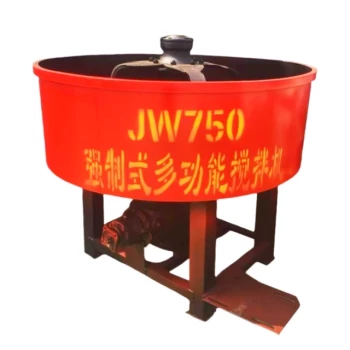
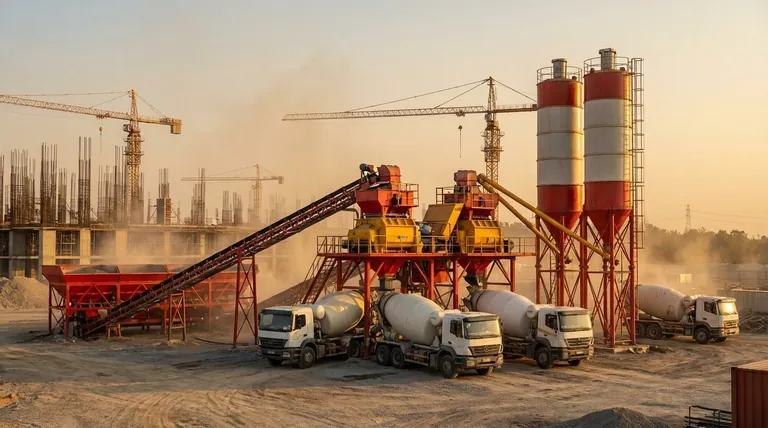
Choosing the right concrete plant is a critical strategic decision, not merely a procurement task. It directly influences the quality, cost, timeline, and even regulatory compliance of a construction project by determining the consistency and availability of its most fundamental material.
The selection of a concrete plant extends far beyond sourcing a material; it is about securing a partner whose performance in quality control, logistical efficiency, and adaptability directly translates into project success or failure.
The Core Pillars: Quality, Efficiency, and Cost
The impact of your concrete plant choice is felt across the three most critical areas of project management. A mismatch in any area creates significant downstream risk.
Ensuring Consistent Concrete Quality
A high-quality plant provides unwavering consistency from the first batch to the last. This is essential for meeting structural engineering specifications and ensuring the long-term integrity of the build.
Modern plants use automated systems to guarantee precise mix ratios. This ability to produce customized mixtures is vital, as performance requirements can change based on construction methods or environmental conditions on site.
Driving Operational Efficiency
The right plant functions as a seamless extension of your project schedule. Timely delivery of concrete is paramount to avoiding costly downtime for your crews and equipment.
Features that maintain mix quality during transport, such as specialized tanks, reduce manual labor and save time on-site without compromising the final product. This keeps the project moving forward without delay.
Achieving True Cost-Effectiveness
The financial benefits are realized through precision and waste reduction. An efficient plant minimizes the over-ordering of materials and optimizes the use of resources like cement, water, and aggregates.
This cost-effectiveness is not just about the price per yard of concrete; it's about eliminating the significant expenses associated with material wastage, project delays, and potential rework.
Understanding the Risks of a Poor Choice
Failing to properly vet your concrete supplier introduces unacceptable risks that can jeopardize the entire project. Understanding these trade-offs is crucial.
The Risk of Inconsistent Quality
An unreliable plant can deliver batches that fail to meet specifications. This can lead to failed inspections, mandated rework, and, in the worst-case scenario, compromised structural integrity.
The Hidden Costs of Unreliability
A supplier that cannot meet your delivery schedule creates a cascade of expensive problems. Idle crews, rented equipment sitting unused, and a shattered project timeline are the direct results of poor logistical performance.
The Threat of Environmental Non-Compliance
Modern construction increasingly demands adherence to environmental standards. A plant that disregards regulations on emissions, dust, and resource usage can create legal and reputational liabilities for your project.
Choosing a sustainable plant with lower energy consumption and minimized waste generation aligns your project with environmentally friendly practices.
Making the Right Choice for Your Goal
Your project's specific priorities should guide your selection criteria. Evaluate potential concrete plants based on your primary objective.
- If your primary focus is large-scale infrastructure: Prioritize a plant's capacity for high-volume, continuous production and its documented history of logistical reliability.
- If your primary focus is technical or architectural builds: Scrutinize the plant's quality control systems and its ability to consistently produce complex, customized mix designs.
- If your primary focus is budget control and efficiency: Analyze the plant's processes for minimizing material waste and ensuring on-time delivery to prevent costly project delays.
- If your primary focus is sustainability and compliance: Demand proof of the plant's environmental controls, low-emission operations, and resource optimization practices.
Ultimately, selecting the right concrete plant is an investment in certainty for your project's budget, schedule, and quality.
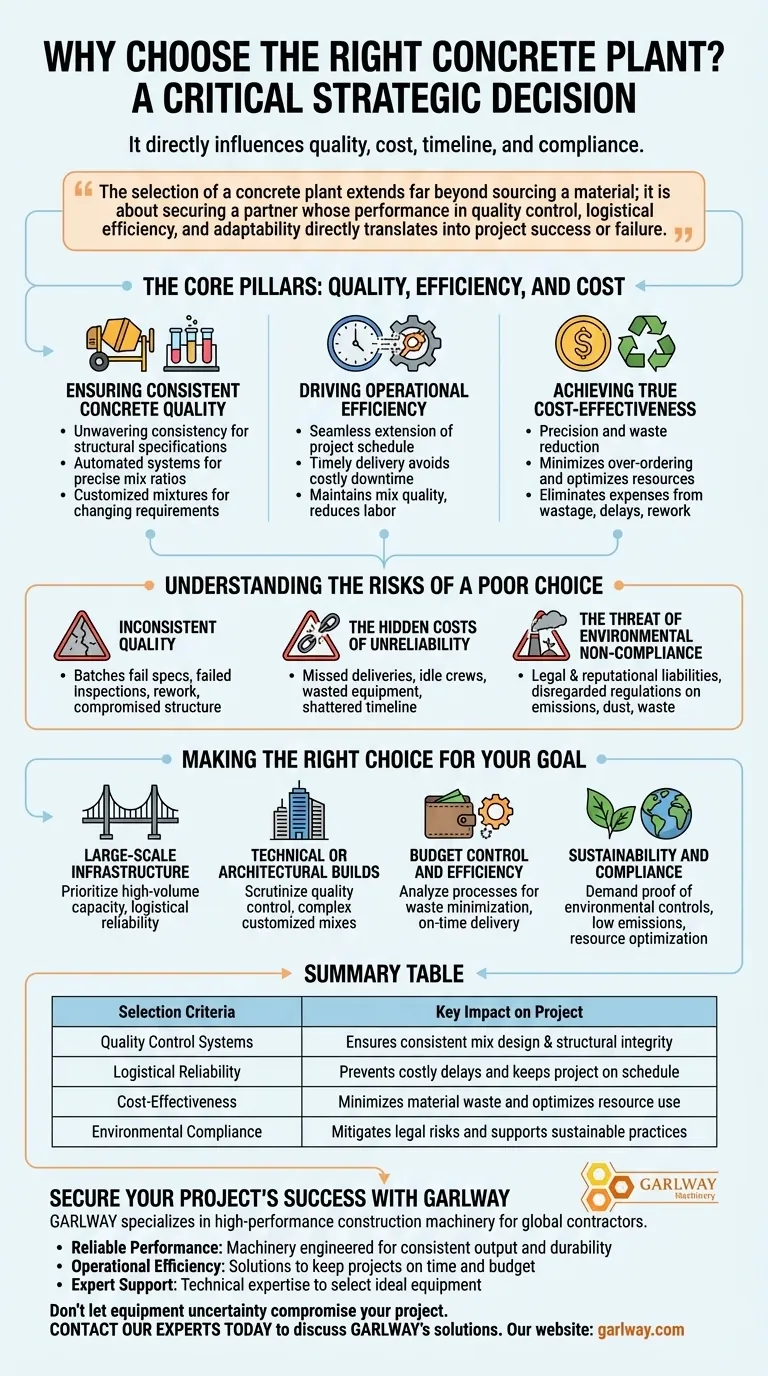
Summary Table:
| Selection Criteria | Key Impact on Project |
|---|---|
| Quality Control Systems | Ensures consistent mix design & structural integrity |
| Logistical Reliability | Prevents costly delays and keeps project on schedule |
| Cost-Effectiveness | Minimizes material waste and optimizes resource use |
| Environmental Compliance | Mitigates legal risks and supports sustainable practices |
Secure Your Project's Success with GARLWAY
Choosing the right equipment partner is as crucial as selecting the right concrete plant. GARLWAY specializes in providing high-performance construction machinery—including robust concrete batching plants, mixers, and winches—for construction companies and contractors globally.
By partnering with GARLWAY, you gain:
- Reliable Performance: Machinery engineered for consistent output and durability.
- Operational Efficiency: Solutions designed to keep your projects on time and on budget.
- Expert Support: Technical expertise to help you select the ideal equipment for your specific project goals.
Don't let equipment uncertainty compromise your project. Contact our experts today to discuss how GARLWAY's solutions can deliver the quality and reliability your project demands.
Visual Guide
Related Products
- HZS180 Ready Mix Concrete Plant for Foundations with Sand and Cement
- HZS35 Small Cement Concrete Mixing Batch Plant
- HZS75 Concrete Batching Plant Cement Mixer Price Concrete Mixer Bunnings Mixing Plant
- Commercial Electric Concrete Mixer Machine HZS 50 Small Batch Plant for Sale
- HZS120 Ready Mix Concrete Batching Plant Commercial Mud Cement Mixer
People Also Ask
- What is a ready mix concrete batching plant? The Engine of Modern Construction
- What is the name of the machine used in ready mix? Unpacking the Complete Concrete System
- What systems are included in a ready-mix concrete plant? A Guide to the 6 Core Systems
- How does a ready-mix concrete plant work? A Guide to Efficient, High-Quality Production
- What are the components of a ready mix concrete plant? A Guide to Precision and Efficiency