
In modern construction, concrete batch plants are essential because they provide a direct, controllable, and highly efficient method for producing the large volumes of quality-consistent concrete required to meet demanding project schedules. They fundamentally shift concrete from a purchased commodity to an on-demand, site-managed resource, giving companies direct command over their most critical material.
The core value of a concrete batch plant isn't just making concrete; it's about gaining strategic control over a project's timeline, quality, and budget. This control translates directly into higher consistency, reduced logistical risk, and significant cost efficiencies, especially for large-scale or remote projects.
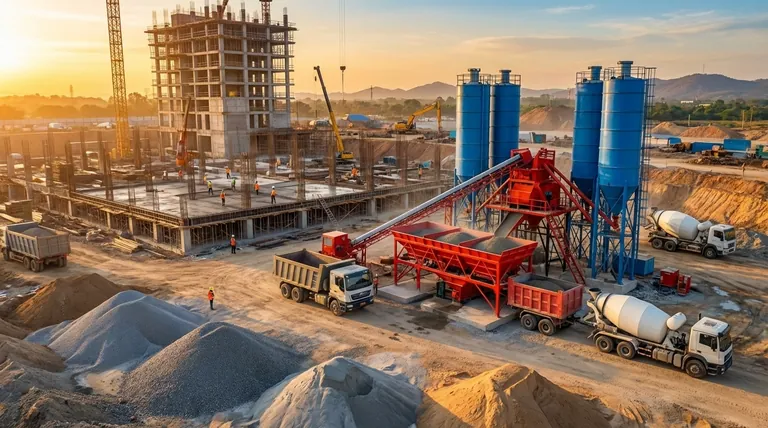
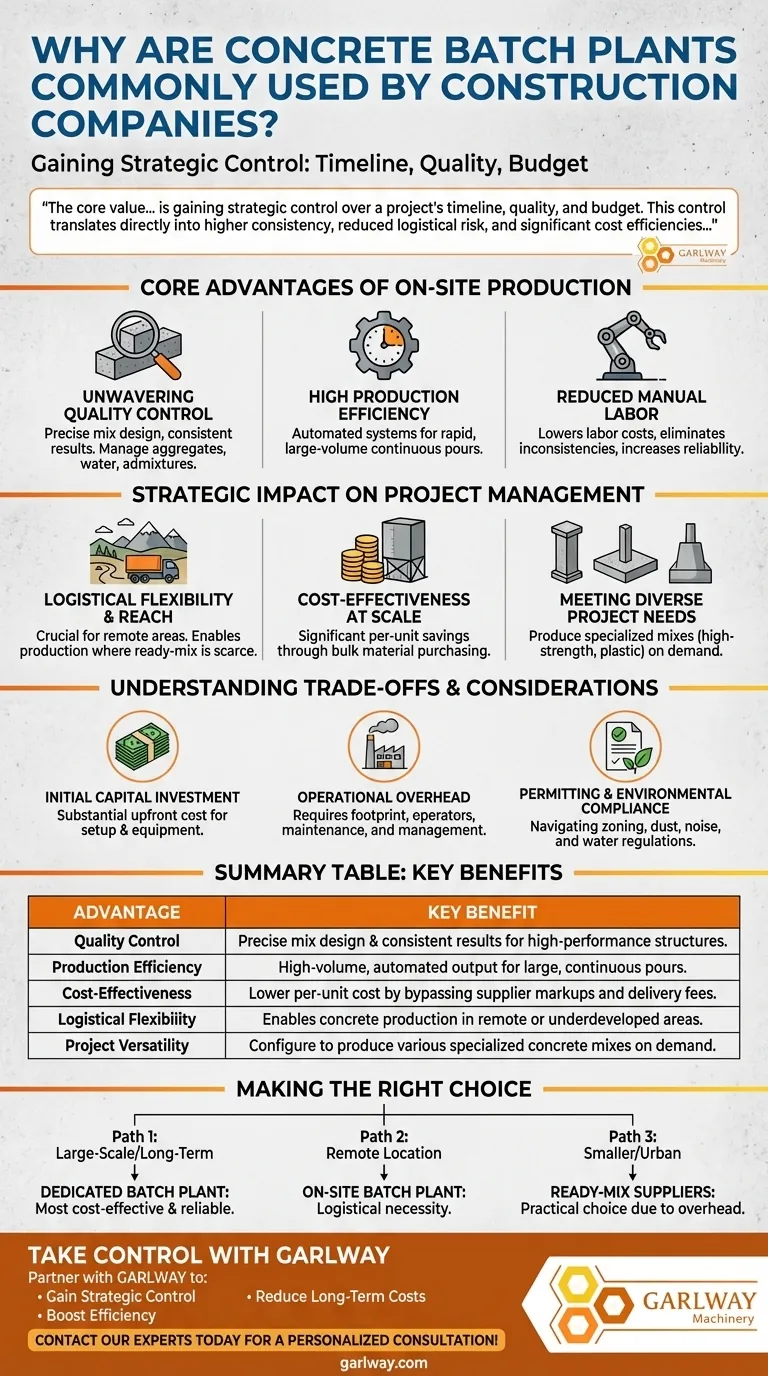
The Core Advantages of On-Site Production
To understand the widespread use of batch plants, you must look beyond the concrete itself and focus on the operational advantages they provide. They solve fundamental challenges related to quality, speed, and labor.
Unwavering Quality Control
A batch plant puts engineers and project managers in direct control of the concrete mix. This allows for precise management of aggregates, water-to-cement ratios, and admixtures to meet specific structural requirements. This consistent, verifiable quality is crucial for high-performance structures and difficult to guarantee when relying on multiple third-party deliveries over a long project timeline.
High Production Efficiency
Modern batch plants are highly automated systems designed for output. Their high mixing efficiency enables the rapid production of large, continuous volumes of concrete. This is critical for major pours, such as building foundations or bridge decks, where stopping midway is not an option.
Reduced Manual Labor
The automation inherent in a batch plant drastically reduces the need for manual mixing. This not only lowers labor costs but also eliminates the inconsistencies and quality variations that are common with manual processes, leading to a more reliable final product.
The Strategic Impact on Project Management
For a construction company, a batch plant is a strategic asset that directly impacts logistics, cost, and overall project viability. It provides a level of independence that is invaluable in a complex industry.
Logistical Flexibility and Reach
Batch plants are indispensable for projects in remote or underdeveloped areas. In locations where reliable ready-mix suppliers are non-existent or transportation is prohibitively expensive, an on-site plant is often the only feasible way to source high-quality concrete.
Cost-Effectiveness at Scale
While requiring an initial investment, a batch plant significantly reduces the per-unit cost of concrete on large projects. By purchasing raw materials like cement, sand, and aggregate in bulk, companies bypass supplier markups and delivery fees, leading to substantial savings over the project's lifecycle.
Meeting Diverse Project Needs
A single batch plant can be configured to produce various kinds of concrete on demand. Whether a project requires high-strength concrete for columns, plastic concrete for foundations, or other specialized mixes, the plant can be adjusted to meet the specific engineering needs of each component without delay.
Understanding the Trade-offs and Considerations
Despite their advantages, batch plants are not a universal solution. An objective assessment requires acknowledging their limitations and operational demands.
Initial Capital Investment
The most significant barrier is the upfront cost. Acquiring or leasing, transporting, and setting up a concrete batch plant requires a substantial capital investment that may not be justifiable for smaller companies or projects.
Operational Overhead
A plant is not a "set it and forget it" machine. It requires a dedicated physical footprint for the plant and for stockpiling raw materials. It also necessitates skilled operators, a consistent maintenance schedule, and robust site management to function effectively.
Permitting and Environmental Compliance
Setting up a batch plant often involves navigating local zoning regulations and environmental permits. Management of dust, noise, and water runoff are critical considerations that add a layer of administrative complexity to the project.
Making the Right Choice for Your Goal
The decision to use a concrete batch plant should be driven by the specific goals and constraints of your construction project.
- If your primary focus is a large-scale or long-term project: A dedicated batch plant is often the most cost-effective and reliable solution for ensuring a consistent supply of quality-controlled concrete.
- If your primary focus is a project in a remote location: An on-site batch plant becomes a logistical necessity, eliminating the challenges and high costs of long-haul ready-mix transportation.
- If your primary focus is a smaller, short-duration urban project: The overhead, footprint, and capital cost of a batch plant are likely impractical, making traditional ready-mix suppliers the more logical choice.
Ultimately, integrating a concrete batch plant is a strategic decision that empowers a construction company with definitive control over its project's timeline, quality, and financial success.
Summary Table:
| Advantage | Key Benefit |
|---|---|
| Quality Control | Precise mix design & consistent results for high-performance structures. |
| Production Efficiency | High-volume, automated output for large, continuous pours. |
| Cost-Effectiveness | Lower per-unit cost by bypassing supplier markups and delivery fees. |
| Logistical Flexibility | Enables concrete production in remote or underdeveloped areas. |
| Project Versatility | Configure to produce various specialized concrete mixes on demand. |
Ready to take control of your project's concrete supply, timeline, and budget?
At GARLWAY, we specialize in providing robust and efficient concrete batching plants for construction companies and contractors globally. Our plants are engineered to deliver the quality, efficiency, and reliability your large-scale or remote projects demand.
Partner with GARLWAY to:
- Gain Strategic Control: Manage your concrete mix, schedule, and costs directly.
- Boost Efficiency: Our automated systems ensure high-volume production to meet tight deadlines.
- Reduce Long-Term Costs: Save significantly by producing concrete on-site.
Let's discuss how a GARLWAY concrete batch plant can be the strategic asset your next project needs. Contact our experts today for a personalized consultation!
Visual Guide
Related Products
- HZS120 Ready Mix Concrete Batching Plant Commercial Mud Cement Mixer
- HZS35 Small Cement Concrete Mixing Batch Plant
- HZS75 Concrete Batching Plant Cement Mixer Price Concrete Mixer Bunnings Mixing Plant
- Commercial Electric Concrete Mixer Machine HZS 50 Small Batch Plant for Sale
- HZS180 Ready Mix Concrete Plant for Foundations with Sand and Cement
People Also Ask
- What is a ready mix concrete batching plant? The Engine of Modern Construction
- What is the name of the machine used in ready mix? Unpacking the Complete Concrete System
- What is the core component of a concrete batching plant? The Mixer Unit Defines Your Concrete Quality
- What are the types of concrete mixers used in batching plants? Choose the Right Mixer for Your Project
- What are the advantages and disadvantages of concrete batching plants? Maximize Quality & Efficiency





