
For a drum winch, the best rope choices are high-strength Dyneema or reliable Nylon double braid. While the design of a drum winch makes it mechanically compatible with nearly any type of rope, the demands of anchoring mean that material properties like strength and shock absorption are what truly matter for a safe and effective system.
The core principle to understand is that while a drum winch can physically spool almost any rope, your choice should be dictated by the unique demands of anchoring—not just the mechanics of the winch itself. The best rope provides the right balance of strength, shock absorption, and durability for your vessel.
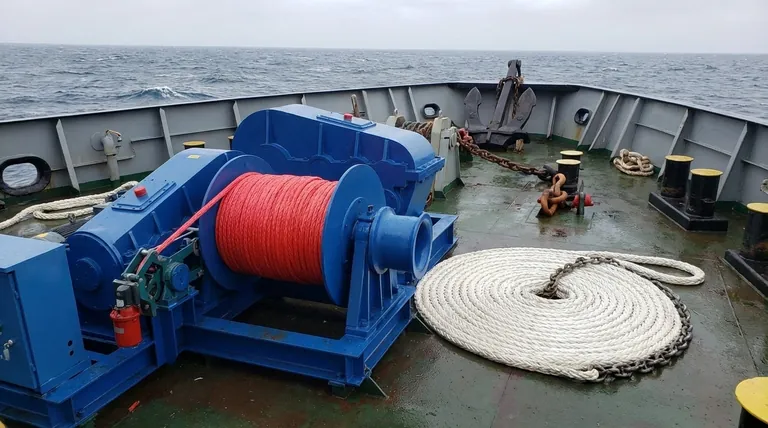
Why Drum Winches Are So Forgiving
A drum winch's primary advantage is its simple, robust design. Understanding this helps clarify why you have more flexibility in your rope choice compared to other systems.
The Key Design Difference: No Gypsy
Traditional anchor windlasses use a grooved wheel called a gypsy to grip the links of a chain or the strands of a rope. This requires a precise match between the rope/chain size and the gypsy, and it puts significant stress on the rope as it's pulled through.
A drum winch simply spools the rope directly onto a large drum. There is no gypsy, meaning the rope is laid down smoothly without being squeezed or bent through a tight channel.
The Benefit: Reduced Wear and Flawless Performance
This direct-spooling design drastically reduces wear and tear on the anchor rode. It eliminates a common point of failure and ensures the winch can retrieve the rode without slipping or jamming, regardless of the specific rope construction.
The Best Rope Materials for the Job
While the winch is versatile, the rope itself must perform under load. Here are the top materials evaluated for anchoring.
The Premium Choice: Dyneema
Dyneema (also known as HMPE) is an ultra-high-strength, low-stretch synthetic fiber. Using 4mm or 5mm Dyneema allows you to fit a tremendous length of strong line onto your drum.
Its primary drawback is its high cost. Furthermore, its low-stretch nature provides very little shock absorption, making it critical to use with a sufficient length of chain to handle shock loads.
The Proven Workhorse: Nylon Double Braid
Nylon is the traditional and most common choice for anchor rodes for good reason. It has excellent inherent shock absorption due to its ability to stretch under load, which reduces stress on your boat and anchor system.
While not as strong as Dyneema for its diameter, it is significantly more affordable and provides a more comfortable, forgiving anchoring experience.
The Material to Avoid: Polypropylene
Polypropylene rope should not be used for anchoring. While inexpensive and lightweight (it floats), it has poor resistance to UV degradation and, most importantly, performs very poorly under shock loading. A sudden gust of wind can cause it to snap with little warning.
Understanding the Trade-offs
Choosing the right rope means balancing competing factors. What you gain in one area, you often sacrifice in another.
Strength vs. Shock Absorption
Dyneema offers unrivaled strength for its size, but its low stretch is a double-edged sword. Nylon provides crucial elasticity that protects your deck hardware from jarring loads in choppy conditions. An all-Dyneema rode without chain or a snubber can create a harsh, jerky experience at anchor.
A Hybrid Approach for Durability
A common and highly effective strategy is to use a heavier, more chafe-resistant rope for the last 10-20 meters of the rode. This "top shot" is the section most likely to rub on the seabed or bow roller, and using a tougher material here protects the main length of your line.
Cost vs. Performance
Dyneema is a significant investment. Nylon double braid offers excellent and safe performance for a fraction of the cost, making it the most practical choice for the majority of boaters.
Making the Right Choice for Your Vessel
Your decision should be based on your primary goal for your anchoring system.
- If your primary focus is maximum strength and drum capacity: Dyneema is the superior choice, but ensure it's paired with enough anchor chain to absorb shock loads.
- If your primary focus is safety, reliability, and comfort: Nylon double braid offers the best all-around performance with its built-in elasticity.
- If your primary focus is a practical, budget-conscious setup: Nylon provides a safe, proven, and cost-effective solution without compromising on the essential qualities of a good anchor rode.
Ultimately, selecting the right rope is about creating a secure and reliable system tailored to your vessel and anchoring style.
Summary Table:
| Rope Type | Key Features | Best For |
|---|---|---|
| Dyneema (HMPE) | Ultra-high strength, low-stretch, small diameter | Maximum strength and drum capacity |
| Nylon Double Braid | Excellent shock absorption, durable, cost-effective | Safety, reliability, and comfort |
| Polypropylene | Lightweight, floats, inexpensive | Not recommended for anchoring (poor UV/shock resistance) |
Ready to build a secure and reliable anchoring system for your vessel? GARLWAY specializes in robust construction machinery, including winches designed for demanding marine and industrial applications. Our expertise ensures you get the right equipment tailored to your needs. Contact us today to discuss your project and get a personalized solution!
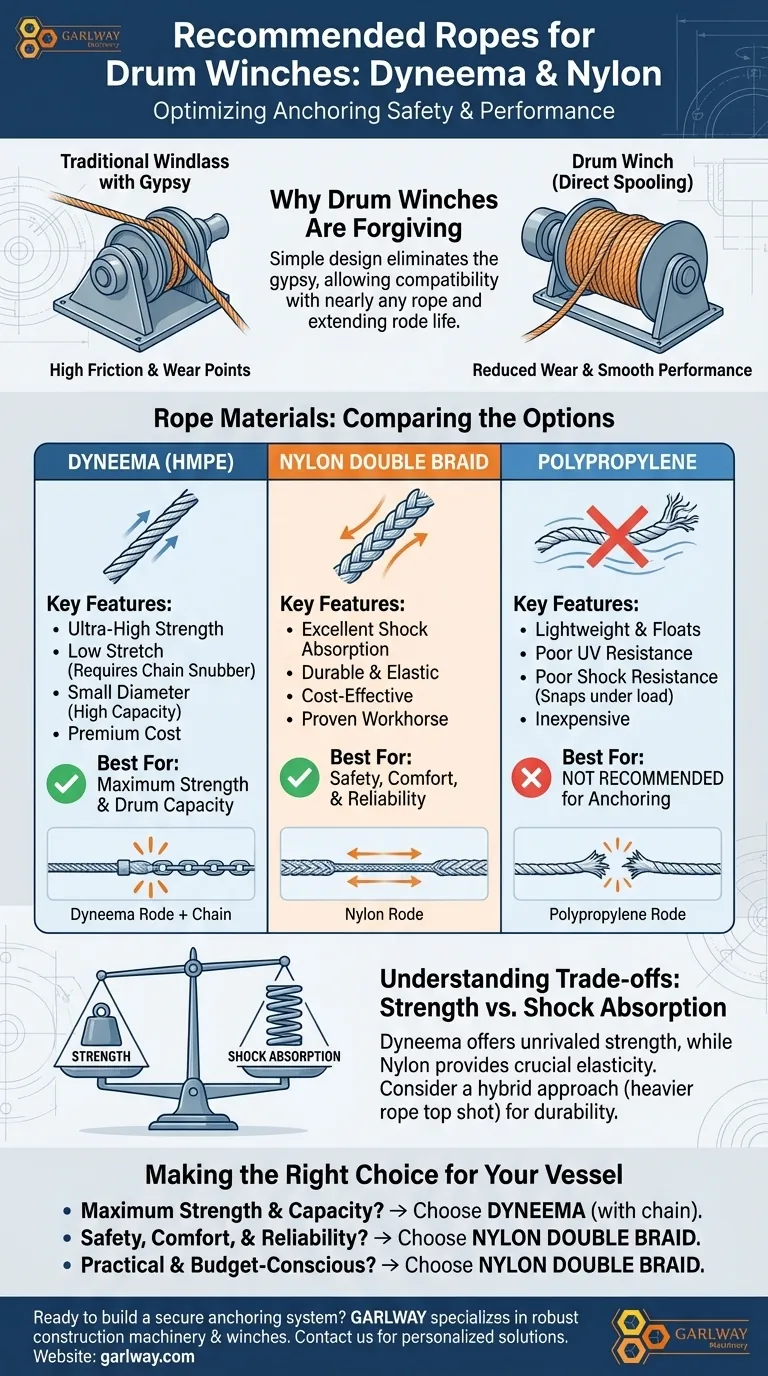
Visual Guide
Related Products
People Also Ask
- In what scenarios is a winch particularly useful for trailers? Load Heavy Items Safely & Efficiently
- How do you install a trailer winch? A Step-by-Step Guide for a Safe & Secure Setup
- What should be considered when mounting a winch on a trailer? Ensure a Safe, Aligned Installation
- What are the considerations for equipping a trailer with a winch for hauling a car? A Guide to Safe and Efficient Vehicle Loading
- What are the main types of trailer winches? Choose the Right Power Source for Your Load
