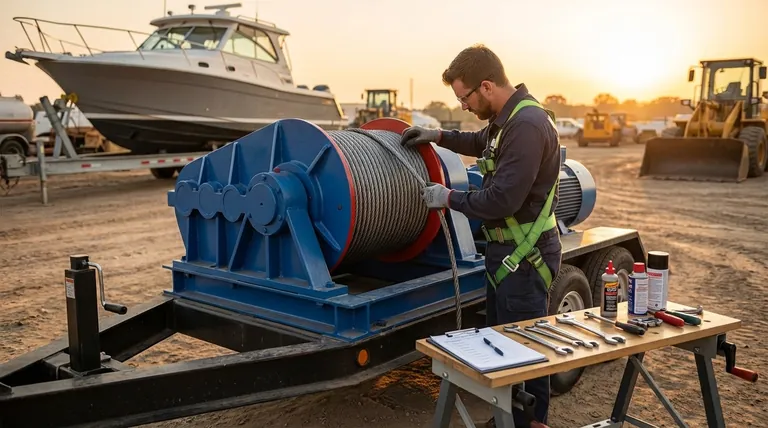
At its core, maintaining a trailer winch is critical for ensuring safety and reliability under heavy load. A well-kept winch functions as a predictable, controlled tool for moving thousands of pounds, while a neglected one becomes a significant point of failure that can lead to catastrophic damage to your equipment and serious personal injury.
A trailer winch is not just a tool for convenience; it is a critical safety system. Proper maintenance transforms it from a potential liability into a dependable asset that protects your boat, your vehicle, and most importantly, yourself.
Why a Functional Winch is Non-Negotiable
A well-maintained winch does more than just pull; it provides control, safety, and efficiency during a process where forces are high and the margin for error is low.
Ensuring Operational Reliability
A winch is often the only practical way to load a heavy boat or a disabled vehicle. Its failure doesn't just cause an inconvenience; it can leave you completely stranded at the boat ramp or on the side of the road.
Providing Control Over Heavy Loads
The primary function of a winch is to provide a slow, controlled pull. This precision is essential for maneuvering heavy items accurately onto a trailer, preventing the sudden, uncontrolled movements that can cause significant damage.
Simplifying One-Person Operation
A reliable winch makes it possible for a single person to safely load a boat or car. This is especially critical when dealing with a vehicle that cannot be driven onto the trailer due to damage or a locked drivetrain.
The Critical Role of Maintenance in Safety
Neglecting winch maintenance directly compromises the safety of the entire loading operation. The risks involved are both mechanical and personal.
Preventing Sudden Equipment Failure
The winch strap or cable is under immense tension during operation. Regular inspection for fraying, cuts, or corrosion is vital to prevent it from snapping, which can send the load rolling backward and cause violent, unpredictable damage.
Minimizing Physical Strain and Injury
A winch eliminates the need for manual pushing, which carries a high risk of back strain, slips, and falls. It provides a safe, mechanical advantage that protects your body from the extreme forces involved.
Mitigating Risks in Adverse Conditions
Loading on wet, slick, or uneven surfaces is inherently dangerous. A winch provides the consistent and controlled traction necessary to perform the task safely when manual methods would be extremely hazardous.
Understanding the Trade-offs
The decision to maintain your winch is a simple calculation of minimal effort versus potentially devastating consequences.
The Cost of Neglect
A failed winch can lead to a cascade of problems. A boat can roll off its trailer, damaging the hull and the trailer itself. A car can suffer damage to its undercarriage, suspension, or body panels. In the worst case, a snapped cable can cause serious injury.
Proper Installation is Foundational
Maintenance begins with correct installation. An improperly mounted winch can fail at its base or distribute the load unevenly, putting dangerous stress on the trailer frame and the winch housing itself, leading to premature failure.
The True Investment
The time and minimal cost required to inspect a winch strap, check mounting bolts, and ensure smooth gear function are insignificant compared to the potential repair bills or medical costs resulting from an accident.
How to Apply This to Your Process
Your approach to winch maintenance should align directly with your primary goals for using the equipment.
- If your primary focus is safety: The single most important task is the regular, thorough inspection of the winch strap or cable for any signs of wear, fraying, or damage.
- If your primary focus is reliability: Before every trip, confirm that the winch is mounted securely to the trailer and that the gear mechanism operates smoothly to avoid failure at a critical moment.
- If your primary focus is convenience: Proper upkeep ensures the winch works effortlessly every time, protecting your tow vehicle's clutch and making solo loading a simple, stress-free process.
Ultimately, consistently maintaining your trailer winch is about converting a potential point of failure into your most dependable loading asset.
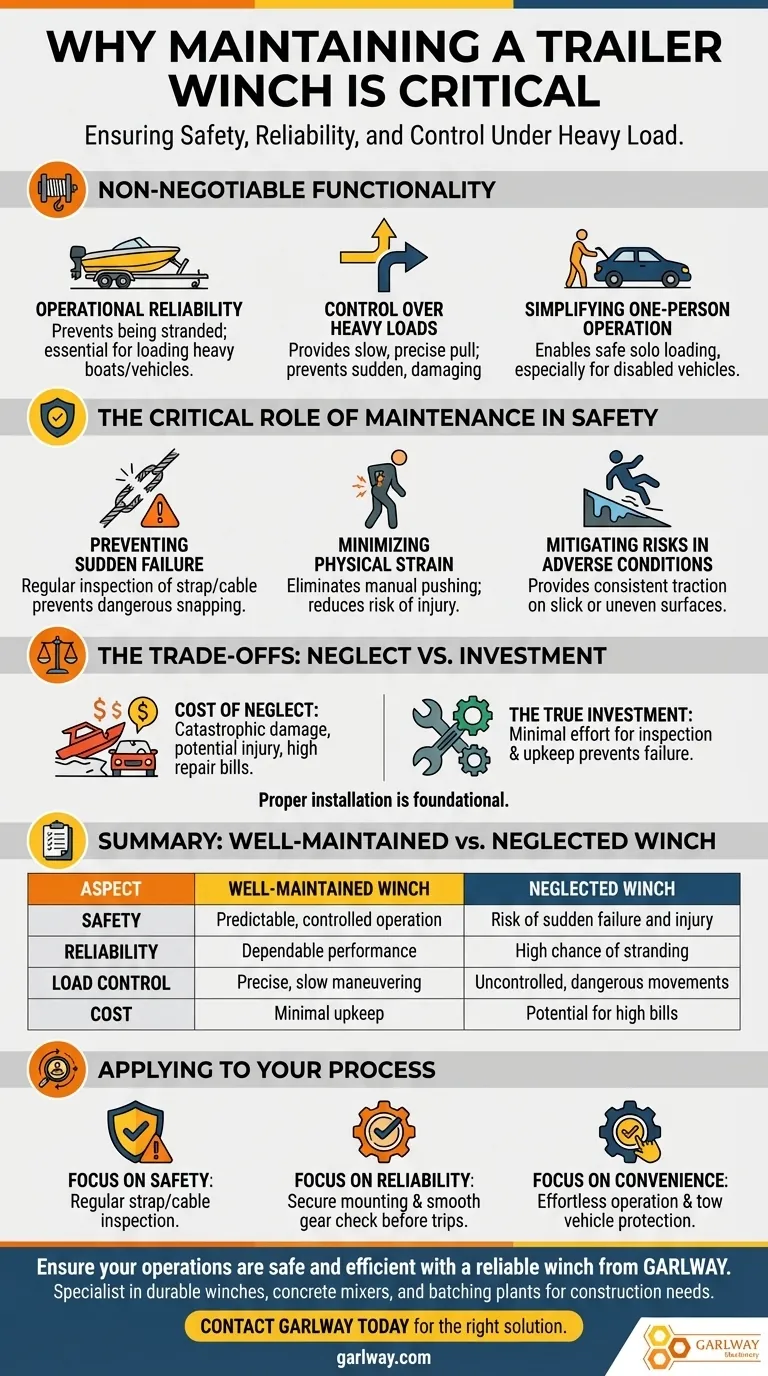
Summary Table:
| Aspect | Well-Maintained Winch | Neglected Winch |
|---|---|---|
| Safety | Predictable, controlled operation | Risk of sudden failure and injury |
| Reliability | Dependable performance when needed | High chance of stranding or failure |
| Load Control | Precise, slow maneuvering | Uncontrolled, dangerous movements |
| Cost | Minimal upkeep cost | Potential for high repair/medical bills |
Ensure your operations are safe and efficient with a reliable winch from GARLWAY.
As a specialist in construction machinery, GARLWAY provides durable winches, concrete mixers, and batching plants designed for the demanding needs of construction companies and contractors worldwide. Don't let equipment failure risk your safety or project timeline.
Contact GARLWAY today to find the right winch solution for your heavy-duty requirements and experience the reliability we build into every product.
Visual Guide
Related Products
- 12000 lb Electric Boat Trailer Winch with Windlass Anchor Warn
- Portable Small Trailer Winch
- Best 18000 Pound Drum Anchor Trailer Winch
- Warn Winch Windlass Boat Trailer Winch
- Quick Windlass Portable Winch for Truck and Boat Best Boat Winch
People Also Ask
- How does an electric boat trailer winch differ from a manual one? Effort vs. Control Explained
- What size winch do I need for my boat? Get the Right Capacity for Safe Hauling
- How should a boat trailer winch be properly used? A Step-by-Step Guide for Safe Loading
- What maintenance steps are specific to boat trailer winches? Ensure Safety & Reliability at the Ramp
- How strong of a winch do I need for my boat? Get the Right Pulling Power for Trailering & Anchoring