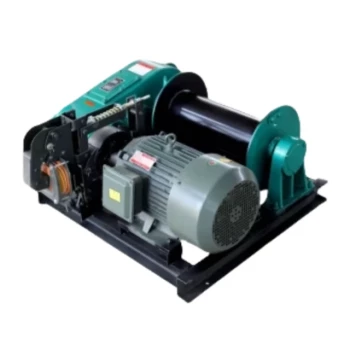
At their core, hydraulic winches in the marine and shipping industry are indispensable tools for managing immense forces in three primary operations: anchoring the vessel, mooring it securely, and towing other ships or objects. Their design provides the raw power and precise control necessary to handle the extreme loads and harsh conditions inherent to maritime work, from securing multi-ton anchors to safely docking supertankers.
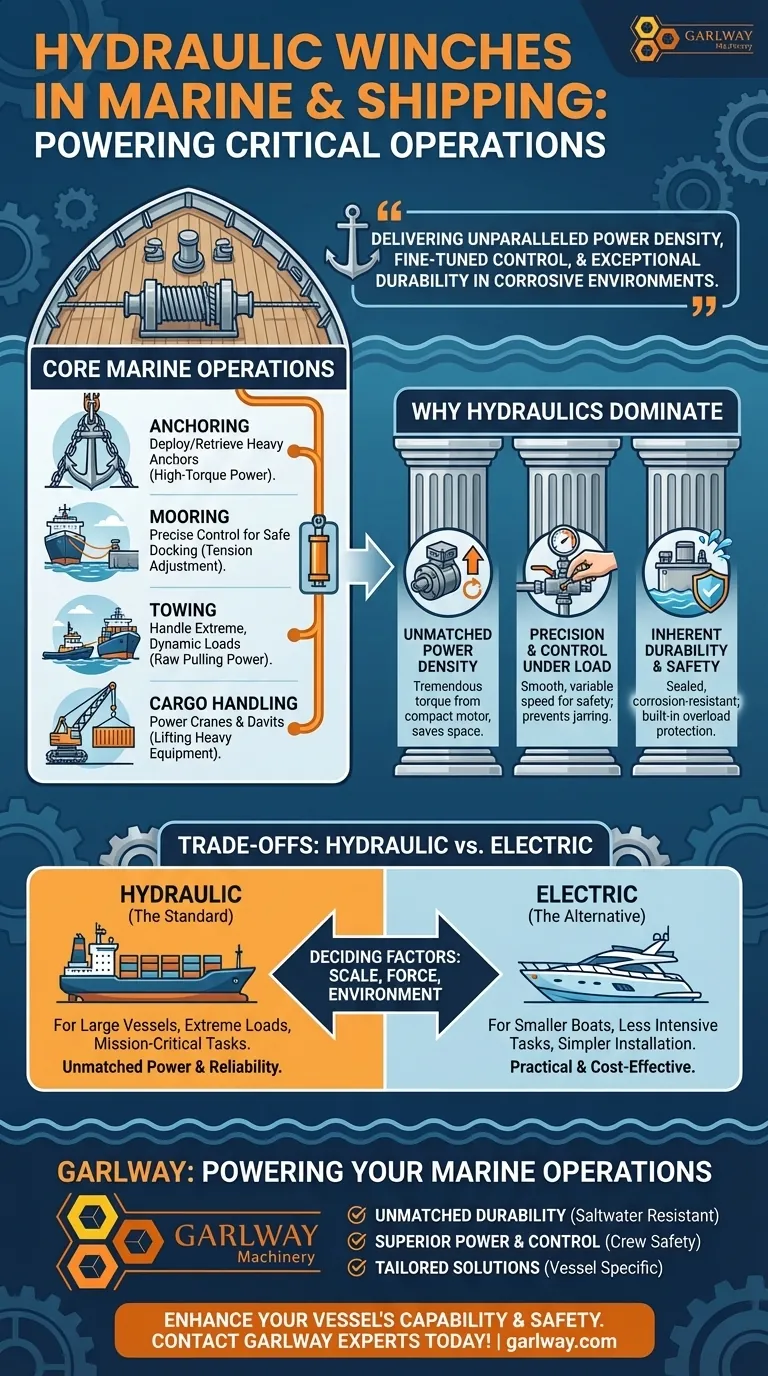
The central reason hydraulic winches are ubiquitous in marine applications is their ability to deliver unparalleled power density, fine-tuned control, and exceptional durability in a corrosive saltwater environment, ensuring both operational efficiency and crew safety.
Core Marine Operations Powered by Hydraulic Winches
Hydraulic systems are the workhorses behind the most critical and physically demanding tasks on a vessel. Their function goes beyond simple pulling; it's about the controlled application of massive force.
Anchoring
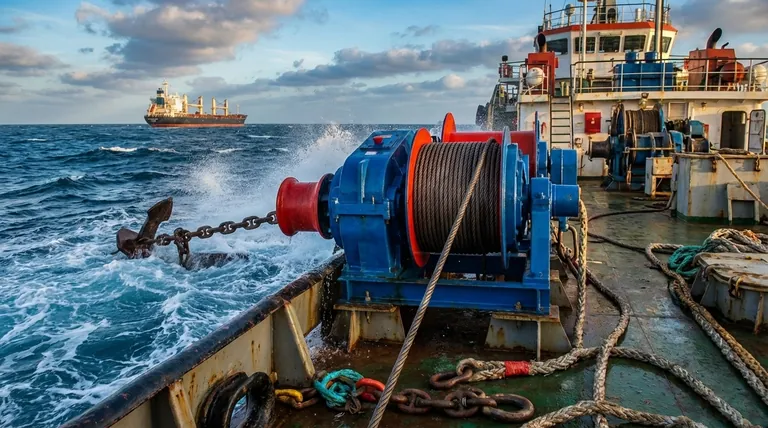
A ship's anchor can weigh many tons, and the forces exerted on its chain by wind and current are enormous. Hydraulic winches, often called windlasses in this context, provide the sustained, high-torque power needed to reliably deploy and retrieve these heavy anchors from significant depths.
Mooring and Docking
When a vessel is secured to a dock, pier, or another ship, mooring winches are used to handle the lines. This task requires not just strength but incredible precision. Hydraulic systems allow operators to finely adjust line tension, pulling the vessel into position slowly and safely without snapping lines or damaging the hull or dock.
Towing and Salvage
Towing another vessel, be it a barge or a disabled ship, places extreme and often dynamic loads on the winch. Hydraulic winches excel here due to their raw pulling power and their ability to withstand the shock loads that can occur in rough seas, making them essential for tugboats and salvage operations.
Cargo and Equipment Handling
On deck, hydraulic winches function as the power source for cranes and davits used to lift and move heavy cargo, equipment, or even smaller boats. This versatility makes them a key component in the vessel's logistical and operational capabilities, ensuring materials can be loaded and unloaded efficiently.
Why Hydraulics Dominate the Marine Environment
While other types of winches exist, the marine industry has long standardized on hydraulic systems for its most demanding applications. This preference is based on a unique combination of performance characteristics perfectly suited to life at sea.
Unmatched Power Density
Hydraulic systems generate tremendous torque from a relatively compact motor. This is a critical advantage on a ship where space is always at a premium. They can produce more pulling power for their size and weight than almost any other system.
Precision and Control Under Load
The ability to minutely control the speed and force of the winch is paramount for safety. Hydraulic fluid flow can be adjusted with great precision, allowing for smooth starts, stops, and variable speed operation, even when handling millions of pounds of force. This prevents jarring movements that could part a line or endanger the crew.
Inherent Durability and Safety
The marine environment is relentlessly corrosive. Hydraulic systems are typically sealed, robust units that are inherently resistant to saltwater, humidity, and extreme temperatures. Furthermore, they have built-in safety mechanisms like pressure relief valves that prevent overloading, protecting both the equipment and the vessel.
Understanding the Trade-offs: Hydraulic vs. Electric
While hydraulic winches are the standard for heavy-duty marine work, they are not the only option. Understanding their alternative helps clarify their specific advantages.
The Case for Hydraulic
For large commercial vessels, tugboats, and any application involving extreme loads—such as deep-water anchoring or large-scale towing—hydraulic systems are the definitive choice. Their power, reliability, and fine control are simply unmatched for these mission-critical tasks.
When Electric Makes Sense
Electric winches are a viable and common solution for smaller boats and less intensive auxiliary tasks. They are often simpler to install, as they don't require the complex plumbing of a hydraulic system. For anchoring a yacht or handling light equipment, an electric winch can be a more practical and cost-effective option.
The Key Deciding Factors
Ultimately, the choice between hydraulic and electric comes down to the scale of the operation. The required pulling force, the duty cycle, and the operational environment dictate which technology is the appropriate tool for the job.
Making the Right Choice for Your Goal
Selecting the correct winch technology is a fundamental decision for ensuring safe and efficient maritime operations. Your primary objective should guide your choice.
- If your primary focus is maximum power for heavy-duty operations: Hydraulic winches are the non-negotiable standard for large anchors, commercial towing, and heavy cargo on large vessels.
- If your primary focus is safety and precision in docking: The fine control offered by hydraulic mooring winches is essential for safely managing high-tension lines on commercial ships.
- If your primary focus is simplicity on smaller vessels: Electric winches provide a practical and efficient solution for anchoring and general use on recreational or smaller commercial boats.
Choosing the right winch system is a critical investment in the safety, reliability, and capability of any vessel.
Summary Table:
| Key Marine Task | Primary Function of Hydraulic Winch |
|---|---|
| Anchoring | Deploy/retrieve heavy anchors with high-torque power. |
| Mooring | Precisely adjust lines for safe docking. |
| Towing | Handle extreme, dynamic loads in salvage operations. |
| Cargo Handling | Power cranes and davits for lifting heavy equipment. |
Ready to power your marine operations with reliability and precision?
At GARLWAY, we specialize in high-performance construction and marine machinery, including robust hydraulic winches built for the toughest conditions. Our winches deliver the power density and fine control essential for safe anchoring, mooring, and towing.
We serve: Construction companies, marine contractors, and shipping operators globally.
Our expertise ensures:
- Unmatched Durability: Built to withstand corrosive saltwater environments.
- Superior Power & Control: Handle immense loads with precision for crew safety.
- Tailored Solutions: Winches designed for your specific vessel and operational needs.
Let's discuss how a GARLWAY hydraulic winch can enhance your vessel's capability and safety. Contact our experts today for a consultation!
Visual Guide
Related Products
- Hydraulic Winding Engine Harbor Freight Winch
- Electric and Hydraulic Winch for Heavy Duty Applications
- Small Electric Winch 120V and 240V for Compact Applications
- Electric 120V Boat Winch by Badlands
- 12000 lb Electric Boat Trailer Winch with Windlass Anchor Warn
People Also Ask
- What role does hydraulic fluid play in hydraulic winches? It's the Lifeblood of Your Heavy-Duty Pulling Power
- What vehicles commonly use hydraulic winches? For Industrial Trucks Needing Unmatched Power
- What are the features of hydraulic winches? Unmatched Power and Continuous Duty for Heavy Loads
- What preventive measures can be taken to avoid oil leakage in hydraulic winches? Ensure Long-Term Reliability
- What does 'power out' mean in a hydraulic winch? Achieve Absolute Control When Lowering Heavy Loads