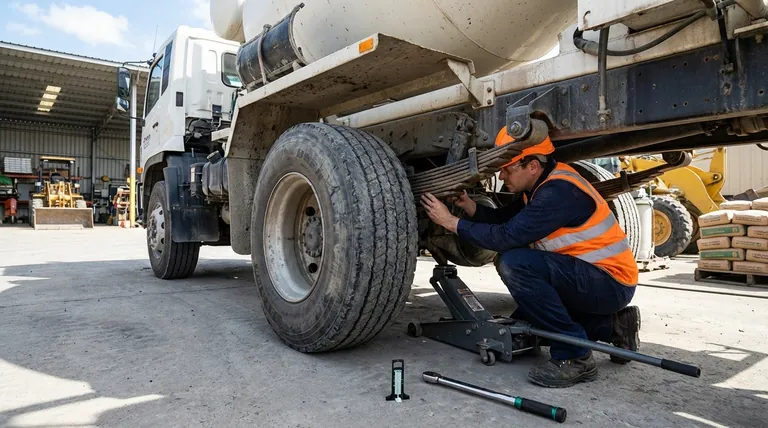
At its core, a proper inspection of a concrete mixer's undercarriage requires a detailed examination of the tires for any signs of wear, cracking, or damage, and a thorough check of the suspension system for any loose, worn, or broken components. This ensures the vehicle can safely manage its uniquely heavy and dynamic load.
The integrity of a concrete mixer's tires and suspension is not merely about vehicle mobility. It is a critical safety system responsible for controlling the immense and constantly shifting weight of the rotating drum, making diligent inspection essential to prevent catastrophic failure.
Why These Components Are Mission-Critical
A concrete mixer is unlike a standard cargo truck. The rotating drum creates a dynamic load, a constantly shifting center of gravity that places enormous and unpredictable stress on the tires and suspension.
The Challenge of a Dynamic Load
The primary job of the suspension is to maintain stability. On a mixer, the concrete sloshing inside the rotating drum continuously alters the vehicle's balance.
A healthy suspension system counteracts this movement, keeping all tires firmly and evenly on the ground. Worn components can lead to excessive sway and a significantly increased risk of rollover, especially during turns or on uneven surfaces.
Tires: The Foundation of Control
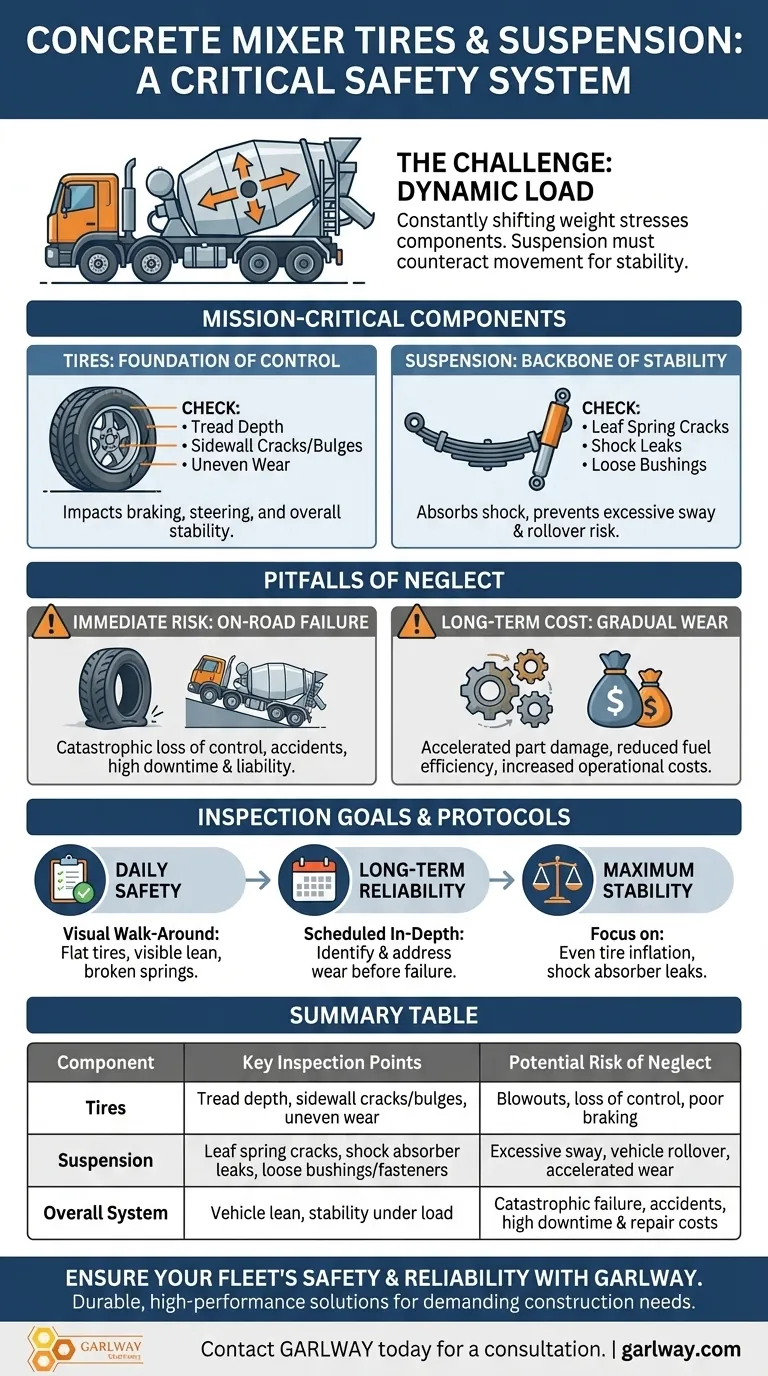
The tires are the vehicle's only connection to the road. Their condition directly impacts braking, steering, and overall stability.
When inspecting tires, look beyond simple air pressure. Examine the sidewalls for deep cracks or bulges, which signal structural failure. Check the tread for sufficient depth and any uneven wear patterns, as this can be an early indicator of a failing suspension or alignment problem.
Suspension: The Backbone of Stability
The suspension absorbs road shock and manages the vehicle's weight. Key components require close attention.
Inspect leaf springs for any cracks, fractures, or signs of sagging. Check shock absorbers for fluid leaks, which indicate they are no longer dampening movement effectively. Finally, examine all bushings and fasteners to ensure they are tight and not visibly degraded, as looseness here can lead to erratic handling.
Understanding the Pitfalls of Neglect
Ignoring tire and suspension maintenance on a heavy vehicle like a concrete mixer introduces unacceptable risks and costs. The consequences extend far beyond simple component replacement.
The High Cost of On-Road Failure
A tire blowout or suspension failure under a full load of concrete is a catastrophic event. It can easily lead to a complete loss of vehicle control, causing a serious accident that endangers the operator and the public.
The subsequent vehicle downtime, recovery costs, and potential legal liabilities far exceed the expense of routine preventive maintenance.
The Hidden Costs of Gradual Wear
Even without a sudden failure, worn components take a toll. A compromised suspension accelerates wear on other parts, including the tires, brakes, and drivetrain components.
This leads to reduced fuel efficiency, decreased vehicle lifespan, and a steady increase in long-term operational costs. Proactive inspection is an investment that minimizes these creeping expenses.
Making the Right Choice for Your Goal
Your inspection protocol should align with your primary objective, whether it's immediate safety or long-term reliability.
- If your primary focus is daily operational safety: Conduct a brief visual walk-around before every trip, looking for obvious issues like flat tires, a visible lean, or broken spring leaves.
- If your primary focus is long-term asset reliability: Implement a scheduled, in-depth inspection to identify and address component wear before it can lead to a costly failure.
- If your primary focus is maximum vehicle stability: Pay close attention to even tire inflation and any signs of fluid leaks from shock absorbers, as these are critical for managing the dynamic load.
Diligent inspection of these core systems transforms routine maintenance from a chore into a critical investment in safety, reliability, and operational excellence.
Summary Table:
| Component | Key Inspection Points | Potential Risk of Neglect |
|---|---|---|
| Tires | Tread depth, sidewall cracks/bulges, uneven wear | Blowouts, loss of control, poor braking |
| Suspension | Leaf spring cracks, shock absorber leaks, loose bushings/fasteners | Excessive sway, vehicle rollover, accelerated wear on other parts |
| Overall System | Vehicle lean, stability under load | Catastrophic failure, accidents, high downtime and repair costs |
Ensure your fleet's safety and reliability with GARLWAY.
As a specialist in construction machinery, we understand the immense stress that dynamic concrete loads place on your equipment. GARLWAY offers durable, high-performance solutions, including robust concrete mixers, designed for the demanding needs of construction companies and contractors globally.
Don't compromise on safety. Let our expertise help you maintain peak operational excellence and protect your most valuable assets.
Contact GARLWAY today for a consultation on reliable machinery and support.
Visual Guide
Related Products
- Construction Products Concrete Plant Machine Mixing Concrete Mixer
- Portable Cement Mixer with Lift Concrete Machine
- Portable Concrete Mixer Machine Equipment for Mixing Concrete
- Concrete Cement Mixer Machine Drum Mixer for Construction
- Hydraulic Concrete Mixer Machine Cement Mixing Equipment for Mixture Concrete
People Also Ask
- What factors should be considered when choosing between volumetric and traditional mixers? Optimize Your Concrete Project Strategy
- What is the difference between pan and planetary mixers? Choose the Right Mixer for Your Concrete Project
- When was the first concrete mixer developed and by whom? Discover the 1900 Breakthrough
- What is the average lifespan of a concrete mixer? Maximize Your Equipment's Lifespan & ROI
- What are the two broad types of concrete mixers? Choose the Right Mixer for Your Project