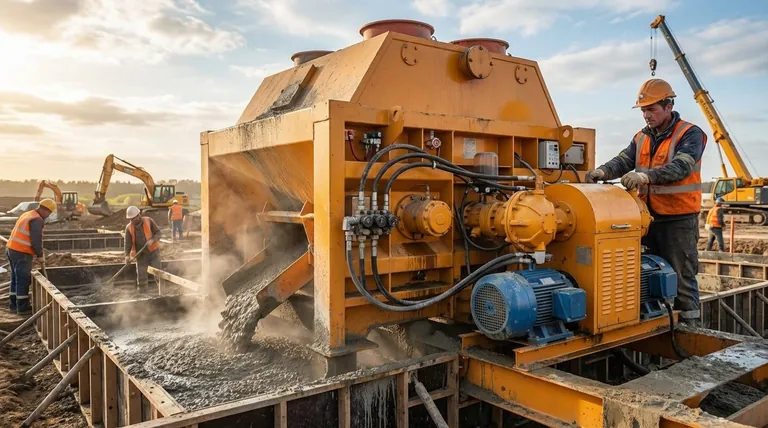
In essence, hydraulic systems are the heart and brain of a modern volumetric mixer. They provide both the raw power needed to move heavy materials and the precise control required to ensure every batch of concrete meets exact specifications. This system is directly responsible for managing the flow of aggregates and cement and for driving the mixing process itself.
A volumetric mixer's value is its ability to produce fresh, high-quality concrete on demand. The hydraulic system is the critical component that guarantees this quality and precision by giving the operator exact, repeatable control over every ingredient and the entire mixing process.
The Engine of Precision: How Hydraulics Control the Mix
A volumetric mixer works by combining specific proportions of raw materials in a continuous stream. The hydraulic system is what makes this proportional mixing possible with a high degree of accuracy.
Managing Raw Materials with Automated Gates
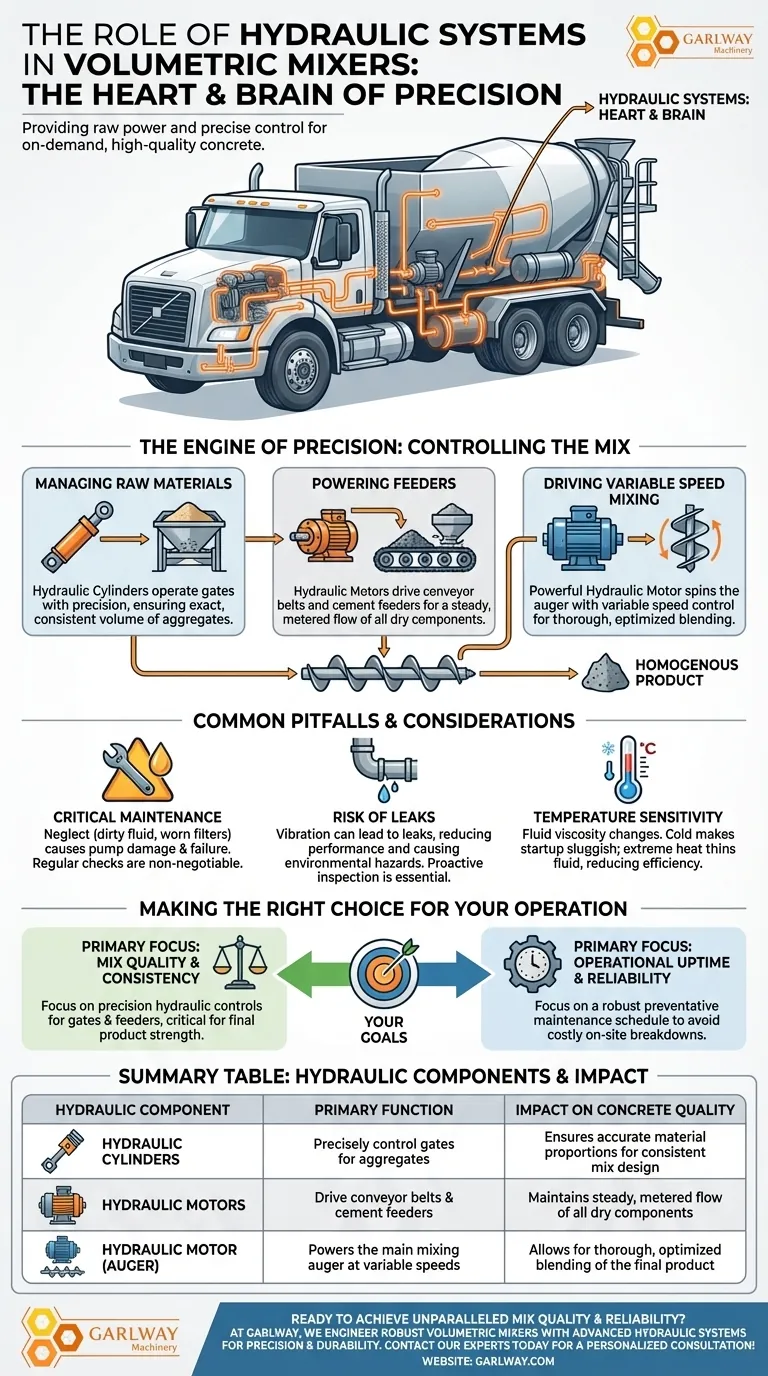
Hydraulic cylinders operate the gates on the sand and stone aggregate bins.
The precision of these hydraulic actuators allows the operator to open the gates to the exact degree needed, ensuring a consistent and correct volume of material flows onto the conveyor belt.
Powering Feeders for Consistent Flow
Hydraulic motors drive the main conveyor belt, which carries the aggregates forward. A separate hydraulic motor also powers the feeder that dispenses cement powder.
This ensures a steady, uninterrupted, and precisely metered flow of all dry components into the mixing auger, which is crucial for a homogenous final product.
Driving Variable Speed Mixing
The large mixing auger, where all the materials are blended, is spun by a powerful hydraulic motor.
This allows for variable speed control, a key feature for optimizing the mix. The operator can adjust the auger speed to match the specific mix design and production rate, ensuring thorough and consistent blending.
Common Pitfalls and Considerations
While powerful, hydraulic systems are not without their operational demands. Understanding their potential failure points is key to maintaining consistent performance.
The Criticality of Maintenance
Hydraulic systems are intolerant of neglect. Dirty or low hydraulic fluid can cause pump damage, and worn-out filters can lead to component failure.
Regular maintenance checks for fluid levels, filter conditions, and hose integrity are non-negotiable for reliable operation.
The Risk of Leaks
Any hydraulic system, especially one subjected to the vibration of a construction vehicle, is susceptible to leaks over time.
A leak not only reduces system performance but can also be an environmental hazard and a source of contamination on a job site. Proactive inspection is essential.
Sensitivity to Temperature
Hydraulic fluid viscosity changes with temperature. In very cold conditions, the system may be sluggish on startup. In extreme heat, the fluid can thin out, potentially reducing system efficiency and pressure.
Making the Right Choice for Your Operation
Understanding the role of the hydraulic system helps you focus on what matters for your specific goals.
- If your primary focus is mix quality and consistency: The precision of the hydraulic controls for gates and feeders is your most critical asset, as it directly determines the final product's strength.
- If your primary focus is operational uptime and reliability: A robust preventative maintenance schedule for the hydraulic system is the single most important factor in avoiding costly on-site breakdowns.
Ultimately, the hydraulic system elevates the volumetric mixer from a simple material hauler to a precise, mobile concrete production plant.
Summary Table:
| Hydraulic Component | Primary Function in Volumetric Mixer | Impact on Concrete Quality |
|---|---|---|
| Hydraulic Cylinders | Precisely control gates for aggregates (sand, stone) | Ensures accurate material proportions for consistent mix design |
| Hydraulic Motors | Drive conveyor belts and cement feeders | Maintains steady, metered flow of all dry components |
| Hydraulic Motor (Auger) | Powers the main mixing auger at variable speeds | Allows for thorough, optimized blending of the final concrete product |
Ready to achieve unparalleled mix quality and on-site reliability with your concrete production?
At GARLWAY, we specialize in engineering robust construction machinery, including advanced volumetric mixers with high-performance hydraulic systems. Our solutions are designed for construction companies and contractors who demand precision, durability, and maximum uptime on the job site.
Let us help you select the perfect mixer to power your projects. Contact our experts today for a personalized consultation!
Visual Guide
Related Products
- Harbor Freight JS1500 On Site Concrete Mixing Volumetric Cement Mixer
- Belle Cement Mixer JS2000 Volumetric Concrete Mixer for Harbor Freight
- JS1000 Volumetric Concrete Mortar Mixer for Sale Skid Steer Cement Mixer
- Portable Concrete Mixer Machine Equipment for Mixing Concrete
- JDC350 Small Cement Concrete Mortar Mixer
People Also Ask
- What is the basic working principle of volumetric concrete mixers? On-Demand Mixing for Zero Waste
- How does a volumetric concrete mixer contribute to sustainability? Reduce Waste, Water, and Emissions On-Site
- What is a volumetric concrete mixer? A Mobile Concrete Batch Plant for On-Demand Mixing
- What is the predicted future for volumetric concrete mixers? Growth Driven by On-Demand Efficiency
- How does volumetric concrete compare to ready-mix concrete? Choose the Right Method for Your Project