Mounting a trailer winch correctly is a matter of precision and structural integrity. The winch must be perfectly centered and aligned with the trailer's frame, with its height matching the anchor point on the vehicle or boat to ensure a straight, level pull that allows the cable to wind evenly onto the drum.
The fundamental goal of a proper winch installation is to create a straight, unobstructed line of pull from the winch drum to the load's anchor point. This alignment is non-negotiable for safe operation and the longevity of your equipment.

Principle 1: The Critical Importance of Alignment
Proper alignment prevents uneven spooling, which can damage the cable or strap, and ensures the pulling force is distributed correctly across the trailer frame.
Center the Winch on the Trailer
The winch must be mounted in the absolute center of the trailer's front. An off-center installation will cause the trailer to pull unevenly and can introduce dangerous twisting forces under load.
Match the Height to the Anchor Point
The winch's height should create a parallel line to the trailer deck. For boats, this means aligning it directly with the bow eye. For vehicles, it should align with a solid frame-mounted tow hook.
A pull that is too high or too low will cause the cable to pile up on one side of the winch drum, creating a risk of binding and damage.
Ensure a Straight, Unobstructed Path
The path from the winch to the anchor point must be completely clear. Any contact with parts of the trailer will cause friction, fray the cable, and reduce the effective pulling power.
Principle 2: Ensuring a Secure Foundation
The winch is only as strong as its mount. The forces involved in pulling a multi-ton load are immense, and the winch must be anchored to the strongest part of the trailer.
Mount Directly to the Frame
Whenever possible, bolt the winch or its mounting plate directly to the main frame or tongue of the trailer. This provides the most secure foundation capable of withstanding the winch's maximum pulling capacity.
Mark and Drill with Precision
Position the winch and mark your drill holes carefully. It is recommended to drill holes that are slightly larger than your bolts to allow for minor adjustments and prevent stress fractures.
Use High-Grade Hardware
Secure the winch using high-strength bolts, nuts, and appropriately sized washers. This hardware is what connects the pulling force to the trailer, so quality is paramount.
Key Considerations Before You Mount
The right installation begins with selecting the right winch for your specific needs. Answering these questions first will prevent costly mistakes.
Your Trailer Type and Space
An enclosed trailer often has significant space constraints near the front. In this case, a low-profile winch may be necessary to fit without obstructing the vehicle you are loading.
The Weight and Type of Your Cargo
Heavier loads naturally require winches with higher pulling capacities and more robust, deeper profiles. Always choose a winch rated significantly higher than the weight of the cargo you intend to pull.
Frequency of Use and Budget
If you use your trailer frequently, investing in a durable, standard-profile winch with features like a wireless remote offers significant convenience and is worth the cost. For infrequent use, a more basic model may suffice, but safety and capacity should never be compromised for budget.
How to Apply This to Your Project
Your specific goal will determine which installation factors are most critical.
- If your primary focus is loading a boat: Aligning the winch height perfectly with the boat's bow eye is your most important task to ensure a smooth and non-binding pull.
- If your primary focus is loading a car: Prioritize a strong, centered mount on the main trailer frame that aligns with a designated tow hook, ensuring a straight line of pull.
- If your primary focus is safety and convenience: Invest in a winch with a wireless remote and always use wheel chocks to stabilize the trailer before beginning any operation.
A properly mounted winch transforms a difficult task into a safe, controlled, and repeatable process.
Summary Table:
| Key Consideration | Why It Matters |
|---|---|
| Center Alignment | Prevents uneven pulling and dangerous twisting forces on the trailer frame. |
| Height Matching | Ensures a straight pull, preventing cable damage and uneven spooling on the drum. |
| Secure Frame Mount | Distributes immense pulling forces safely; the winch is only as strong as its foundation. |
| Correct Winch Capacity | Choosing a winch rated higher than your cargo weight is essential for safety and durability. |
Need a reliable winch for your trailer? GARLWAY specializes in construction machinery, offering durable winches, concrete mixers, and batching plants for construction companies and contractors globally. Our experts can help you select the right winch and provide guidance for a secure installation. Contact us today to discuss your project needs and ensure a safe, efficient setup!
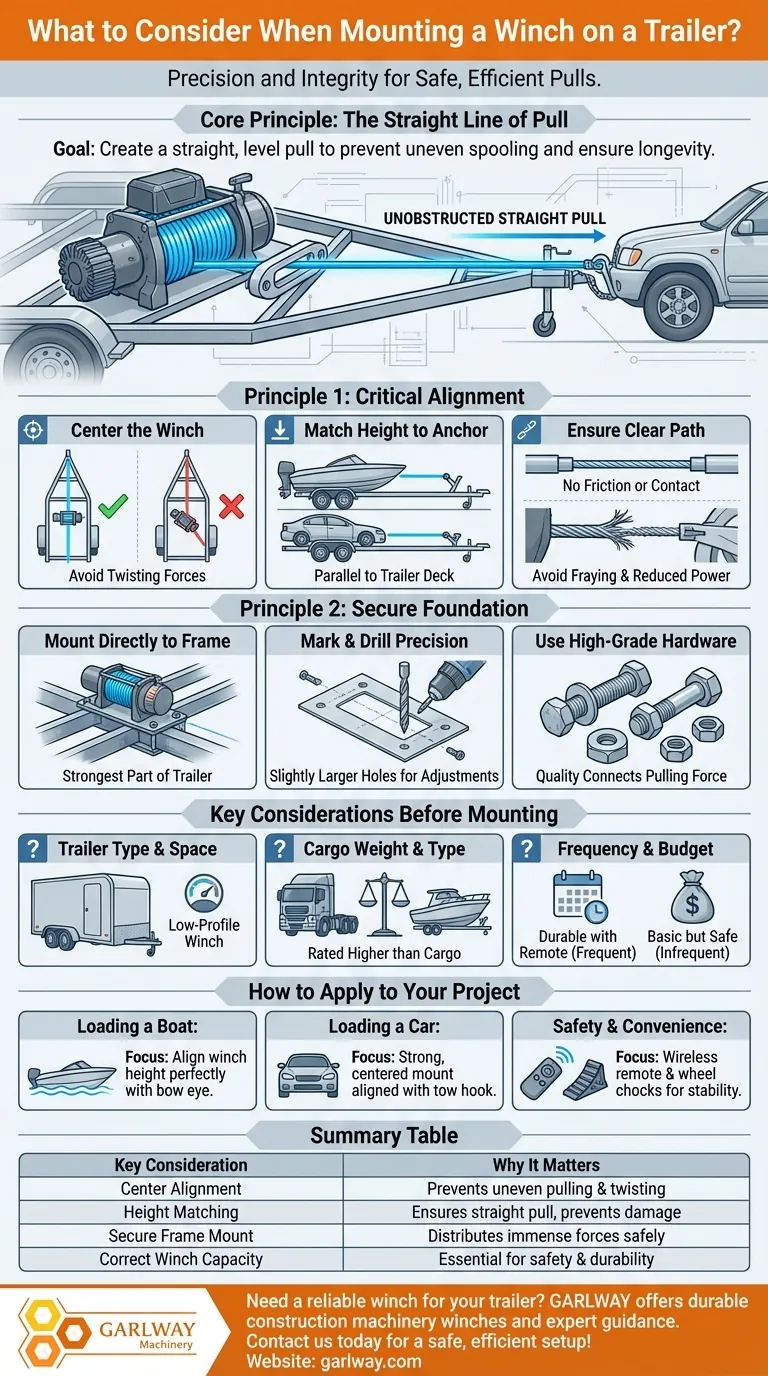
Visual Guide
Related Products
- Portable Small Trailer Winch
- 12000 lb Electric Boat Trailer Winch with Windlass Anchor Warn
- Warn Winch Windlass Boat Trailer Winch
- Best 18000 Pound Drum Anchor Trailer Winch
- Quick Windlass Portable Winch for Truck and Boat Best Boat Winch
People Also Ask
- What features were incorporated into the upgraded portable winch system? Boost Your Recovery Power & Safety
- What are some uses mentioned for portable winches beyond vehicle recovery? Essential Versatility for Property & Work
- How could the twisting issue with a portable winch be mitigated? Achieve Safe, Centered Pulls with Proper Rigging
- What is the significance of trailer winches in the boating industry? Ensure Safe and Efficient Boat Recovery
- How can a winch be powered on a trailer? A guide to choosing the right setup for your needs.