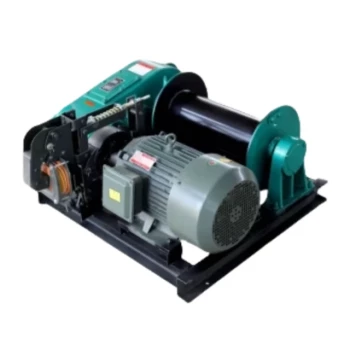
Choosing the right electric winch begins with a simple calculation, but making a truly effective and safe decision requires looking beyond the numbers. For vehicle recovery, the standard guideline is to select a winch with a rated capacity of at least 1.5 times your vehicle's Gross Vehicle Weight (GVW). This means a 5,000-pound truck needs a winch rated for at least 7,500 pounds to overcome the added resistance of mud, inclines, or other obstacles.
The core principle of selecting an electric winch is not just about finding one strong enough, but about matching the tool to the specific task. You must first distinguish whether you are pulling a load horizontally (winching) or lifting it vertically (hoisting), as this is the most critical safety distinction you will make.
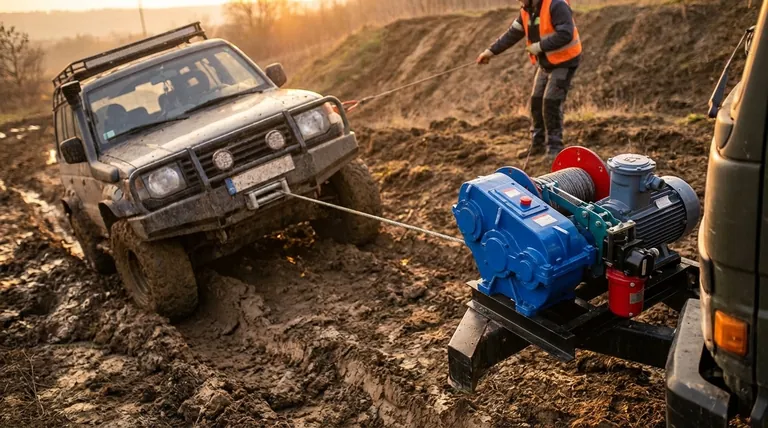
First, Define Your Task: Winch vs. Hoist
Before evaluating capacity or features, you must clarify the job. Using the wrong tool for the application is inefficient at best and extremely dangerous at worst.
The Role of a Winch: Horizontal Pulling
An electric winch is engineered for pulling heavy loads across a surface. Its braking system is designed to hold a static load but not to safely suspend one in the air.
This makes it the ideal tool for vehicle recovery, loading equipment onto a trailer, or dragging materials at a construction site.
The Role of a Hoist: Vertical Lifting
An electric hoist is specifically designed for lifting and lowering loads vertically. Hoists feature specialized braking systems that are far more robust, designed to lock and securely suspend a load overhead.
Using a winch for vertical lifting is a critical safety violation. If you need to lift something straight up, you must use a hoist.
Calculating Your Required Winch Capacity
Once you've confirmed a winch is the correct tool, you can determine the necessary pulling power.
The 1.5x Rule for Vehicle Recovery
The most common application is vehicle recovery. Start with your vehicle's Gross Vehicle Weight (GVW), which is the maximum loaded weight of your vehicle, found on the driver's side door jamb sticker.
Multiply your GVW by 1.5. This buffer accounts for the significant additional forces created by being stuck in mud, sand, or on a steep incline. Never use your vehicle's curb weight (empty weight) for this calculation.
Capacity for Other Loads
For non-vehicle loads, like pulling a log or a rolling chassis, the calculation is different. You must consider the object's dead weight and the friction of the surface it's on.
A load on wheels requires far less force than dragging the same load across rough ground. Always overestimate the required capacity to ensure a margin of safety.
Key Factors Beyond Raw Power
A winch is a system, and its performance depends on more than just its pulling rating.
Your Vehicle's Electrical System
Electric winches draw a tremendous amount of amperage, often exceeding 400 amps under heavy load. A weak battery or alternator will not be able to keep up.
Ensure your vehicle has a healthy, high-quality battery and a capable alternator. During any winching operation, always keep the vehicle's engine running to avoid completely draining your battery.
The Operating Environment
Consider where you will use the winch. If you operate in wet, muddy, or coastal areas, look for a winch with a high IP (Ingress Protection) rating for superior water and dust sealing.
Exposure to salt water or road salt demands a model with excellent corrosion resistance to prevent premature failure.
Rope Type: Steel Cable vs. Synthetic
You have two main choices for the winch line, each with distinct trade-offs.
Steel cable is highly durable and resistant to abrasion. However, it is heavy, can develop sharp burrs, and stores immense kinetic energy, making it extremely dangerous if it snaps.
Synthetic rope is lightweight, flexible, and much safer, as it stores less energy and falls to the ground if it breaks. Its primary drawbacks are a higher cost and susceptibility to abrasion and UV damage if not properly maintained.
Understanding the Trade-offs and Safety Imperatives
Choosing a winch also means accepting its operational limits and prioritizing safety above all else.
Duty Cycle and Overheating
Electric motors generate significant heat. An electric winch is not designed for continuous, heavy-duty use. It has a "duty cycle," meaning it requires a cool-down period after a hard pull.
For high-frequency, long-duration pulls, a hydraulic winch (powered by a vehicle's power steering pump) is often a better, albeit more complex, solution.
The Critical Importance of Mounting
A 12,000-pound winch is useless if its mount fails at 4,000 pounds. The winch must be connected to a firm, level foundation.
For vehicles, this means using a high-quality steel winch bumper or a properly engineered mounting plate that is securely bolted to the vehicle's frame.
Essential Safety Measures
Winching is a safety-critical operation that should only be performed by trained personnel. Always ensure the rope is in good condition, wear protective eyewear and gloves, and use safety features like overload protection.
Never operate a winch with people standing near the tensioned line, and always use a damper to reduce the risk of injury if the line breaks.
Making the Right Choice for Your Goal
To select the best electric winch, match its specifications to your exact needs.
- If your primary focus is off-road vehicle recovery: Prioritize a winch with a capacity of at least 1.5x your vehicle's GVW, consider a synthetic rope for its safety advantages, and confirm your electrical system is robust.
- If your primary focus is utility pulling (e.g., loading a trailer): Calculate the load's rolling resistance, choose a model with a suitable duty cycle for your tasks, and invest in a durable, weather-resistant design.
- If your primary focus is any form of vertical lifting: Do not buy a winch. You must purchase an electric hoist specifically designed and rated for overhead lifting to ensure operational safety.
By aligning the winch's capability with your specific application and environment, you ensure safe, reliable, and effective performance when you need it most.
Summary Table:
| Key Consideration | What to Look For |
|---|---|
| Primary Task | Winch for horizontal pulling; Hoist for vertical lifting. |
| Capacity (Vehicle) | Rated capacity of at least 1.5x your vehicle's Gross Vehicle Weight (GVW). |
| Rope Type | Steel cable for durability; Synthetic rope for safety and lighter weight. |
| Electrical System | Ensure your vehicle's battery and alternator can handle high amperage draws. |
| Safety | Always use a proper mount, wear protective gear, and never stand near the line. |
Ready to find the perfect electric winch for your project?
GARLWAY specializes in providing robust and reliable construction machinery, including high-performance electric winches, concrete mixers, and batching plants for construction companies and contractors worldwide. Our experts can help you select the right equipment to ensure safety and efficiency on your job site.
Contact GARLWAY today for a personalized consultation and discover how our solutions can power your success.
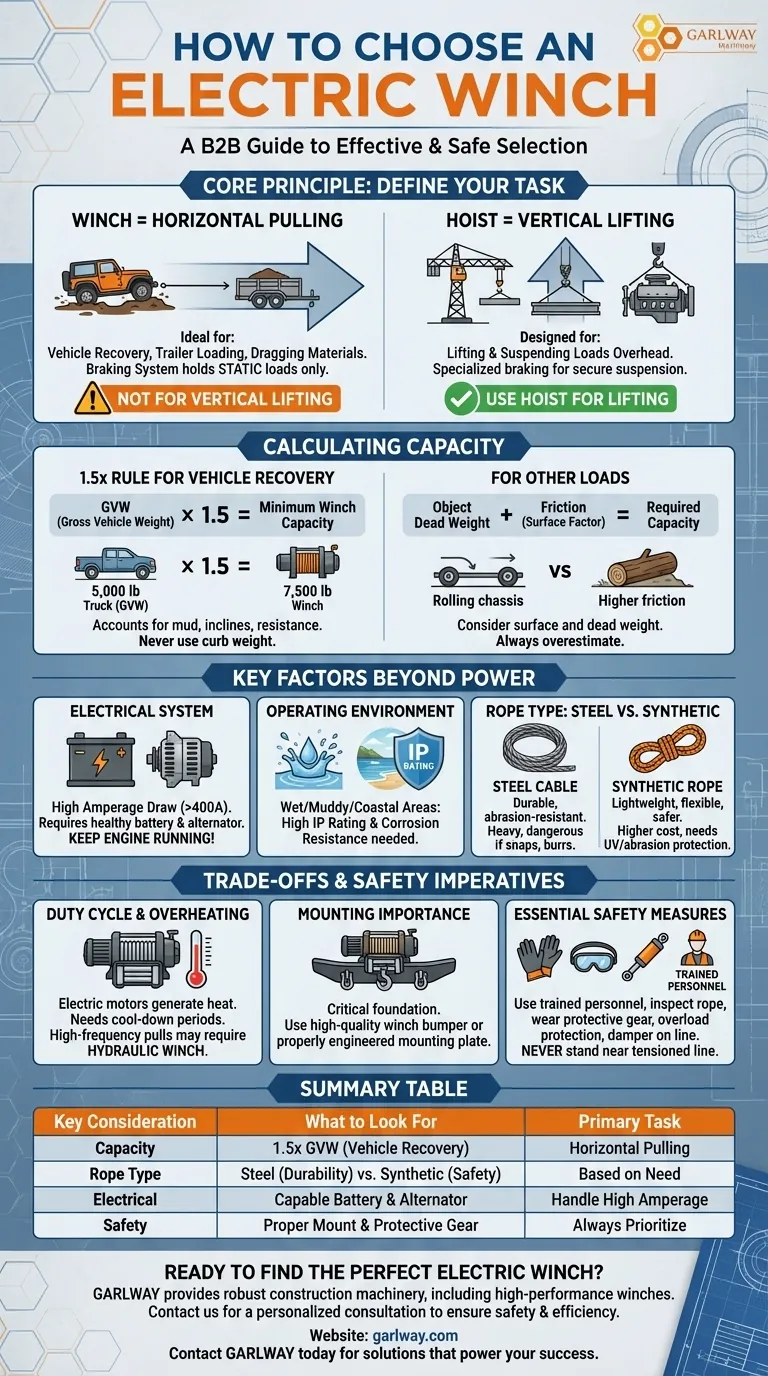
Visual Guide
Related Products
- Electric 120V Boat Winch by Badlands
- Small Electric Winch 120V and 240V for Compact Applications
- Electric and Hydraulic Winch for Heavy Duty Applications
- 12000 lb Electric Boat Trailer Winch with Windlass Anchor Warn
- Electric Hoist Winch Boat Anchor Windlass for Marine Applications
People Also Ask
- How do electric boat winches work? Unlock Effortless Launching & Retrieval
- How much current does an electric boat winch draw? Plan Your Electrical System for Peak Performance
- Can I run a winch straight from a battery? Essential Power Setup for Safe Operation
- What are the types of electric winches available? Choose the Right Winch for Your Job
- What are the uses of electric winches in mining and tunneling? Enhance Safety and Efficiency Underground