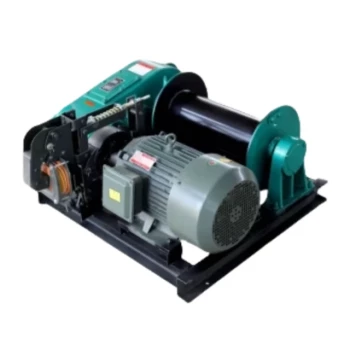
The primary safety advantages of electric winches are their ability to be operated remotely, their capacity for precise and controlled pulling, and their clean, self-contained power source. This combination transforms a potentially hazardous manual task into a more predictable and automated process, significantly reducing the risk to the operator and the equipment.
The core safety benefit of an electric winch is its ability to remove the operator from the immediate danger zone. By replacing manual effort with remote-controlled, motorized power, it creates a safer distance and grants more precise control over high-tension situations.
The Foundation of Control and Operator Safety
An electric winch fundamentally changes the user's relationship with the load. Instead of applying direct physical force in close proximity, the operator becomes a supervisor, directing the machine's power from a safer vantage point.
Remote Operation Creates Distance
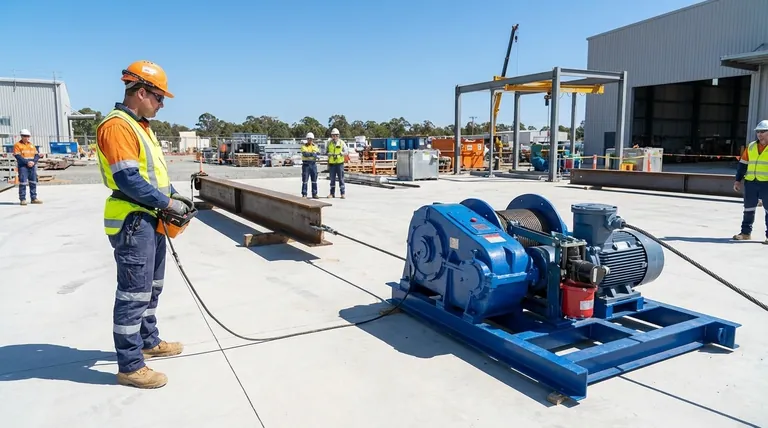
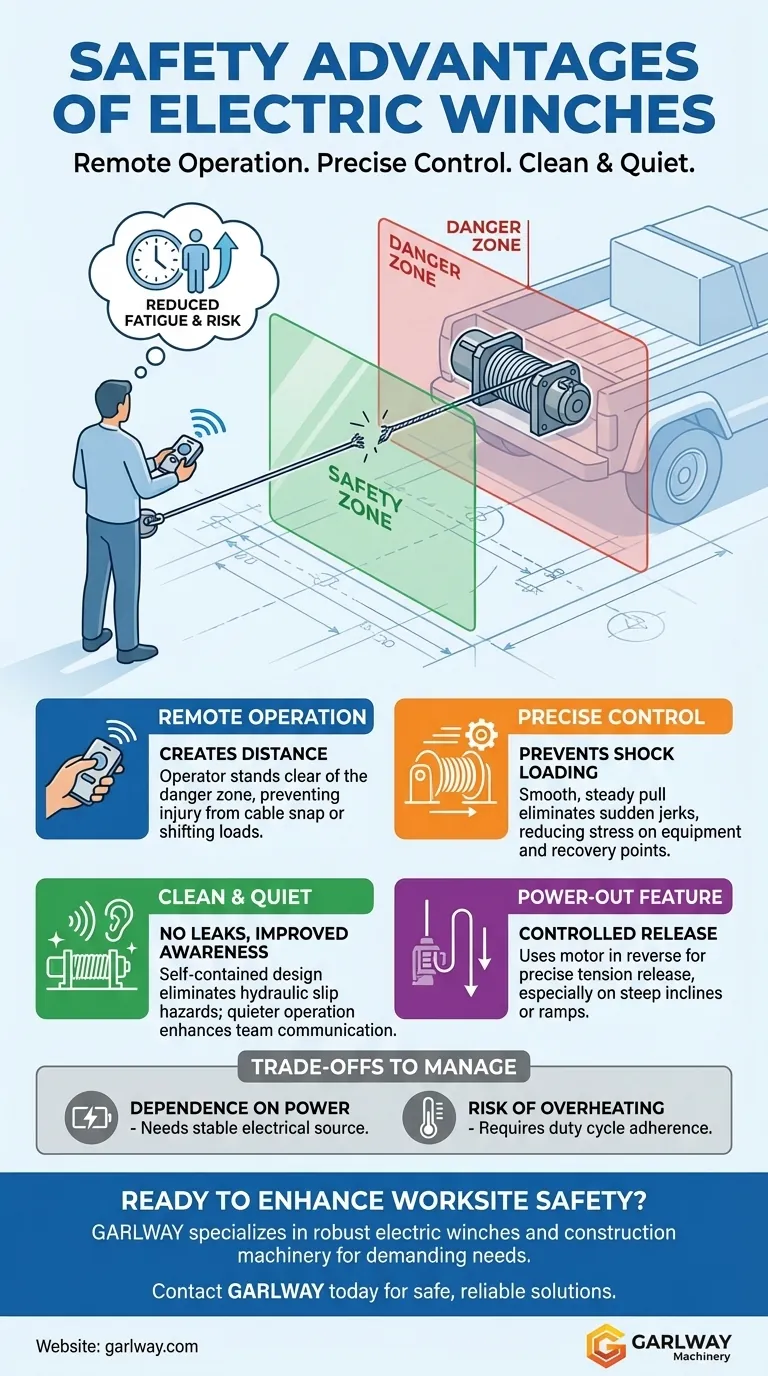
The single most important safety feature is the ability to operate the winch remotely. This allows the user to stand clear of the winch line, the vehicle, and the load.
In the event of a cable snap or a shifting load, being outside this danger zone is the critical factor in preventing serious injury.
Precision Prevents Shock Loading
Electric winches, especially those with variable frequency drives, offer highly precise control over speed and pulling force.
This eliminates the sudden jerks or "shock loading" common with manual methods, which can over-stress recovery points and cables, leading to catastrophic failure. A smooth, steady pull is always safer.
Automated Power Reduces Physical Strain
By motorizing the process, electric winches eliminate the intense physical exertion required for manual winching.
Operator fatigue is a major contributor to poor judgment and accidents. Automating the hard work allows the operator to focus on safely managing the recovery or lift, not on straining with a lever.
Inherent Mechanical and Environmental Advantages
Beyond direct operator control, the design of electric winches provides systemic safety benefits that reduce other, less obvious risks.
Clean Operation Eliminates Slip Hazards
Unlike hydraulic systems, electric winches do not use high-pressure fluids. There is no risk of hydraulic fluid leaks, which can create dangerous slip hazards on a workshop floor or in a recovery zone.
This self-contained design also means fewer potential failure points compared to systems with extensive hoses and fittings.
Quiet Performance Improves Awareness
Electric winches operate much more quietly than their hydraulic counterparts. This reduction in noise is a subtle but significant safety advantage.
A quieter environment allows for clear communication between team members and helps the operator hear audible signs of stress in the equipment or shifts in the load.
Controlled Release with Power-Out
Many electric winches feature a power-out option, which uses the motor in reverse to release the line under tension.
This provides far more control than simply disengaging the drum (free-spooling), which can cause a load to move uncontrollably. It is particularly crucial when lowering a vehicle or launching a heavy boat on a steep ramp.
Understanding the Trade-offs
While offering significant safety advantages, electric winches introduce their own set of considerations that must be managed.
Dependence on Electrical Power
An electric winch is entirely dependent on a stable electrical source, typically the vehicle's battery and alternator. A dead battery or a faulty electrical system renders the winch useless.
This creates a critical point of failure that must be monitored. Proper battery maintenance and engine operation during use are essential for safe, reliable performance.
Risk of Overheating
Electric winch motors can overheat during long, heavy pulls. This can lead to temporary shutdown or permanent motor damage, potentially causing the winch to fail mid-operation.
Operators must adhere to the winch's specified duty cycle—the recommended ratio of operating time to rest time—to prevent this risk.
Making the Right Choice for Your Goal
Selecting a winch based on its safety features requires matching its strengths to your most common application.
- If your primary focus is off-road vehicle recovery: The most critical safety feature is remote operation, allowing you to stand far from a tensioned line.
- If your primary focus is industrial lifting: Precision control is paramount, ensuring you can maneuver heavy, suspended loads without sudden movements.
- If your primary focus is launching and retrieving a boat: The power-out feature is essential for maintaining control on steep or slippery ramps.
Ultimately, an electric winch enhances safety by replacing brute force with controlled, predictable power.
Summary Table:
| Safety Advantage | Key Benefit |
|---|---|
| Remote Operation | Keeps operator clear of the danger zone (e.g., snapping cables). |
| Precise Control | Prevents shock loading for smooth, controlled pulls. |
| Clean Power Source | No hydraulic fluid leaks, eliminating slip hazards. |
| Power-Out Feature | Enables controlled release of tensioned loads. |
| Quiet Operation | Improves communication and situational awareness. |
Ready to enhance worksite safety with reliable electric winches?
GARLWAY specializes in providing robust construction machinery, including electric winches, concrete mixers, and batching plants, designed for the demanding needs of construction companies and contractors worldwide. Our equipment delivers the precise control and remote operation capabilities highlighted in this article, helping you protect your team and complete projects efficiently.
Contact GARLWAY today to discuss your specific requirements and discover how our solutions can bring safety and reliability to your operations.
Visual Guide
Related Products
- Electric 120V Boat Winch by Badlands
- Electric and Hydraulic Winch for Heavy Duty Applications
- Small Electric Winch 120V and 240V for Compact Applications
- 12000 lb Electric Boat Trailer Winch with Windlass Anchor Warn
- Electric Hoist Winch Boat Anchor Windlass for Marine Applications
People Also Ask
- How do electric boat winches work? Unlock Effortless Launching & Retrieval
- How much current does an electric boat winch draw? Plan Your Electrical System for Peak Performance
- Can I run a winch straight from a battery? Essential Power Setup for Safe Operation
- What are the types of electric winches available? Choose the Right Winch for Your Job
- What are the uses of electric winches in mining and tunneling? Enhance Safety and Efficiency Underground