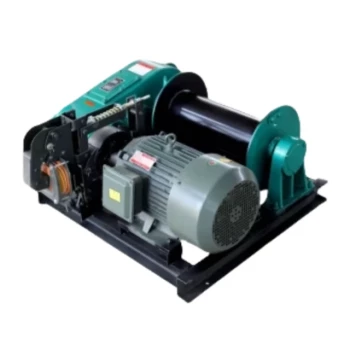
Electric winches enhance operational safety by integrating automated safeguards, providing precise operator control, and fundamentally removing personnel from immediate danger zones. These devices replace unpredictable manual effort with controlled mechanical force, utilizing features like automatic brakes, overload protection, and remote operation to mitigate the most common risks associated with moving heavy loads.
The core safety advantage of an electric winch is its ability to transform a dangerous, high-effort task into a controlled, predictable process. By creating physical distance and introducing automated safeguards, it systematically reduces human exposure to the most critical operational risks.
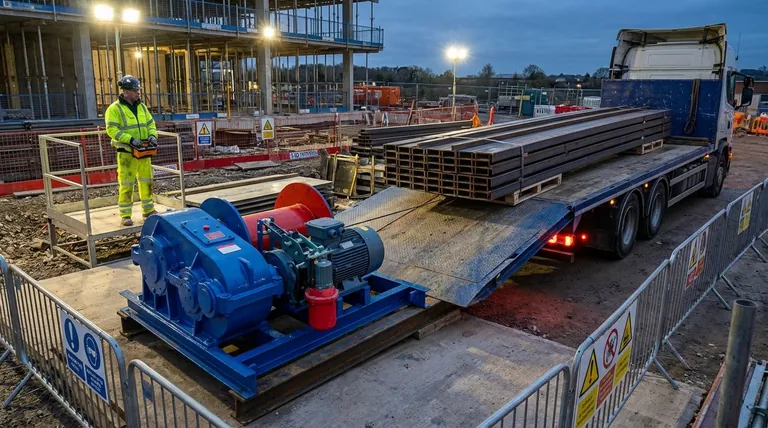
Integrated Safeguards: The First Line of Defense
The most significant safety enhancements in electric winches are the features engineered directly into the device to prevent common failure scenarios.
Automatic Braking Systems
An automatic brake is a critical safety component. It engages the moment the operator stops powering the winch, locking the drum in place.
This prevents the load from slipping or free-spooling, which is essential for both security and operator confidence during pauses in operation.
Overload Protection
Many winches include overload protection or load-limiting systems. These mechanisms prevent the winch from attempting to pull a weight that exceeds its rated capacity.
By automatically stopping the operation, this feature protects the motor, the cable, and the rigging from catastrophic failure caused by excessive strain.
Emergency Shut-Off Switches
In a rapidly developing incident, the ability to cut power instantly is vital. Emergency shut-off switches or "e-stops" provide this immediate control.
This allows the operator to halt all movement instantly, preventing further damage to the load or injury to personnel.
Operator Control and Precision
Beyond automated features, electric winches give the operator a level of control that is impossible to achieve with manual methods, directly translating to a safer operation.
Controlled and Predictable Force
Electric winches apply a smooth, predictable pulling force. This eliminates the sudden jerks and uneven tension common in manual pulling, which can lead to accidents and equipment damage.
This controlled application of force is especially critical in delicate operations like vehicle recovery or precise positioning of materials.
Precise Speed and Direction Management
Advanced control systems, often managed via a remote, allow operators to finely tune the speed and direction of the pull.
This precision ensures the safe and accurate maneuvering of heavy loads, reducing the risk of collisions or improper placement.
Removing Personnel from the Danger Zone
One of the simplest yet most effective safety benefits of an electric winch is its ability to create distance.
The Power of Remote Operation
Most electric winches feature a wired or wireless remote control. This allows the operator to manage the pull from a safe distance with a clear vantage point.
Keeping personnel away from a line under tension is a fundamental principle of safe winching, and remote operation makes this standard practice.
Reducing Direct Manual Handling
By mechanizing the lifting and pulling process, winches drastically reduce the need for personnel to exert force manually.
This minimizes the risk of musculoskeletal injuries, strains, and fatigue, which are common causes of workplace accidents.
Understanding the Limitations and Common Pitfalls
While highly effective, the safety of an electric winch is not absolute. Understanding its limitations is key to preventing misuse.
Not a Substitute for Proper Rigging
The winch is only one component of a larger system. Its safety features are rendered ineffective by improper rigging, worn-out straps, or damaged anchor points.
The Risk of Complacency
The ease of use can lead operators to underestimate the immense forces at play. Adherence to established safety protocols, like maintaining a clear exclusion zone, remains critical.
Dependence on a Power Source
An electric winch relies on a stable power source, typically a vehicle's battery. A depleted or failing battery can compromise an operation mid-pull, creating a hazardous situation.
Maintenance is Non-Negotiable
The safety of a winch depends on its condition. A frayed cable, a faulty brake, or a corroded electrical connection undermines all built-in safety mechanisms. Regular inspection is essential.
How to Apply This to Your Operation
Choosing and using a winch correctly depends entirely on your primary goal.
- If your primary focus is industrial lifting: Prioritize models with advanced overload protection and precise, variable-speed remote controls for maximum material safety.
- If your primary focus is vehicle recovery: Ensure the winch has a robust automatic braking system and a horsepower rating sufficient for unexpected terrain and conditions.
- If your primary focus is overall team safety: Implement mandatory training that emphasizes remote operation, proper rigging techniques, and strict pre-use inspection protocols.
By understanding these principles, you can leverage an electric winch not just as a tool for power, but as a strategic asset for a safer work environment.
Summary Table:
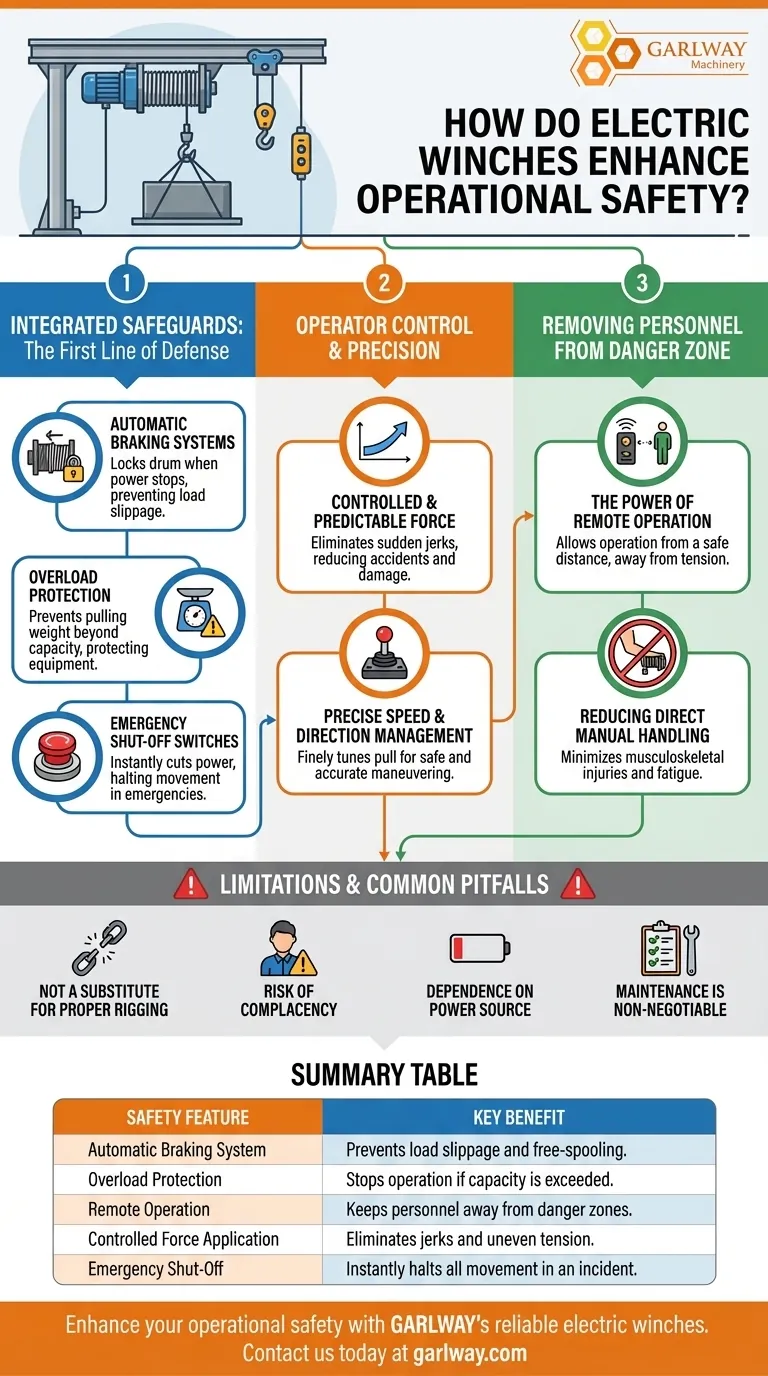
| Safety Feature | Key Benefit |
|---|---|
| Automatic Braking System | Prevents load slippage and free-spooling |
| Overload Protection | Stops operation if capacity is exceeded |
| Remote Operation | Keeps personnel away from danger zones |
| Controlled Force Application | Eliminates jerks and uneven tension |
| Emergency Shut-Off | Instantly halts all movement in an incident |
Enhance your operational safety with GARLWAY's reliable electric winches. Designed for construction companies and contractors globally, our winches feature automatic brakes, overload protection, and precise remote control to keep your team safe and your projects on track. Contact us today to find the perfect winch for your needs and build a safer work environment.
Visual Guide
Related Products
- Electric 120V Boat Winch by Badlands
- Electric and Hydraulic Winch for Heavy Duty Applications
- Small Electric Winch 120V and 240V for Compact Applications
- 12000 lb Electric Boat Trailer Winch with Windlass Anchor Warn
- Electric Hoist Winch Boat Anchor Windlass for Marine Applications
People Also Ask
- How do electric boat winches work? Unlock Effortless Launching & Retrieval
- How much current does an electric boat winch draw? Plan Your Electrical System for Peak Performance
- Can I run a winch straight from a battery? Essential Power Setup for Safe Operation
- What are the types of electric winches available? Choose the Right Winch for Your Job
- What are the uses of electric winches in mining and tunneling? Enhance Safety and Efficiency Underground