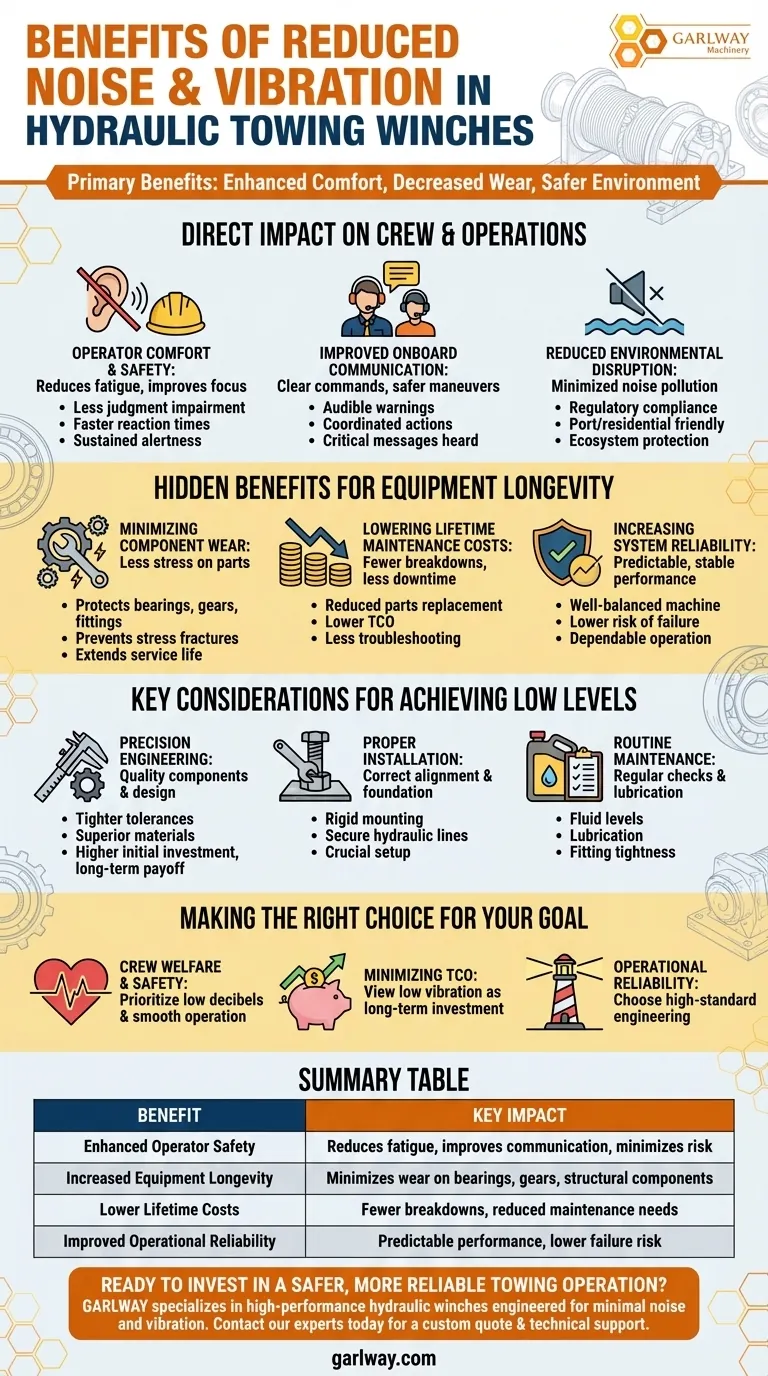
The primary benefits of reduced noise and vibration in hydraulic towing winches are a significant improvement in operator comfort, a marked decrease in equipment wear and tear, and a safer, less disruptive working environment. These factors contribute directly to enhanced operational safety, lower long-term maintenance costs, and better crew well-being.
While raw power is often the main focus, reduced noise and vibration are the clearest indicators of a high-quality, well-engineered winch. They translate directly into greater operational safety, increased equipment longevity, and a more sustainable working environment for the crew.
The Direct Impact on Crew and Operations
Excessive noise and vibration are not just minor annoyances; they are operational hazards that have a tangible impact on crew performance and safety.
Enhancing Operator Comfort and Safety
Constant exposure to loud noise and jarring vibrations leads to operator fatigue. This fatigue can impair judgment, slow reaction times, and increase the risk of accidents during critical towing operations.
Reducing these stressors creates a more comfortable and sustainable working condition, allowing operators to remain focused and alert for longer periods.
Improving Onboard Communication
A quieter winch dramatically improves communication on deck. Clear, audible commands and warnings are essential for safe and coordinated maneuvers, and reducing the winch's background noise ensures these critical messages are not missed.
Reducing Environmental Disruption
Lower noise output minimizes noise pollution, which is a critical consideration for operations in or near ports, residential areas, or environmentally sensitive marine ecosystems. This can be a key factor for regulatory compliance.
The Hidden Benefits for Equipment Longevity
Vibration is essentially wasted energy that actively works to break down your equipment over time. Minimizing it is key to maximizing the winch's service life.
Minimizing Component Wear and Tear
Excessive vibration accelerates wear on bearings, gears, and hydraulic fittings. It can cause fasteners to loosen and lead to stress fractures in structural components, leading to premature failure.
A smoother-running winch experiences significantly less mechanical stress, ensuring all parts function within their designed tolerances for much longer.
Lowering Lifetime Maintenance Costs
The connection is simple: less wear means fewer breakdowns. A low-vibration winch requires less frequent parts replacement and troubleshooting, directly reducing its total cost of ownership over its lifespan.
Increasing System Reliability
Reduced noise and vibration are hallmarks of a well-balanced and precisely manufactured machine. This inherent quality translates to more predictable, reliable performance and reduces the likelihood of unexpected failures during a critical operation.
Understanding the Key Considerations
Achieving low noise and vibration levels is not an accident; it is the result of deliberate design choices and proper upkeep.
The Role of Precision Engineering
Quieter, smoother winches are typically built with higher-quality components, superior gear design, and tighter manufacturing tolerances. This level of precision often correlates with a higher initial investment but pays dividends in reliability and longevity.
The Importance of Proper Installation
Even the best-designed winch will perform poorly if installed improperly. Correct alignment, a rigid mounting foundation, and properly secured hydraulic lines are crucial for minimizing vibration from the outset.
The Necessity of Routine Maintenance
Regular maintenance, including checking hydraulic fluid levels, lubricating moving parts, and tightening fittings, is essential. A well-maintained winch will continue to operate smoothly, while a neglected one will inevitably become louder and more prone to vibration.
Making the Right Choice for Your Goal
When evaluating a hydraulic towing winch, consider how noise and vibration align with your specific operational priorities.
- If your primary focus is crew welfare and safety: Prioritize winches with documented low decibel ratings and smooth operation to reduce operator fatigue and ensure clear communication.
- If your primary focus is minimizing total cost of ownership: View low vibration as a direct investment in the winch's long-term health, leading to fewer repairs and a longer service life.
- If your primary focus is operational reliability in demanding environments: Choose a winch where low noise and vibration indicate a higher standard of engineering and manufacturing quality.
Ultimately, looking beyond the spec sheet for power and speed to consider noise and vibration will lead you to a safer, more reliable, and cost-effective solution.
Summary Table:
| Benefit | Key Impact |
|---|---|
| Enhanced Operator Safety | Reduces fatigue, improves communication, and minimizes accident risk. |
| Increased Equipment Longevity | Minimizes wear on bearings, gears, and structural components. |
| Lower Lifetime Costs | Fewer breakdowns and reduced maintenance needs lower the total cost of ownership. |
| Improved Operational Reliability | Predictable performance with a lower risk of unexpected failure. |
Ready to invest in a safer, more reliable, and cost-effective towing operation?
GARLWAY specializes in high-performance construction and marine machinery, including robust hydraulic winches engineered for minimal noise and vibration. Our winches are designed to enhance crew safety, extend equipment life, and reduce your long-term operating costs.
Contact our experts today to discuss how a GARLWAY winch can be the reliable solution for your construction or marine project.
Get a Custom Quote & Technical Support
Visual Guide
Related Products
- Electric and Hydraulic Winch for Heavy Duty Applications
- Hydraulic Winding Engine Harbor Freight Winch
- Warn Winch Windlass Boat Trailer Winch
- 12000 lb Electric Boat Trailer Winch with Windlass Anchor Warn
- Portable Small Trailer Winch
People Also Ask
- What are the differences between electric and hydraulic winches? Choose the Right Winch for Your Job
- What are some common uses for a heavy-duty winch? Power Your Construction & Industrial Projects
- What are electro-hydraulic winches and their applications? The Integrated Power Solution for Heavy-Duty Operations
- How do winches assist in bridge launching? Accelerate Bridge Placement with Controlled Pulling Power
- What are the benefits of using heavy-duty winches for large projects? Boost Efficiency & Safety