
In commercial fishing, the most common application for a reel winch is deep-water anchoring. This specialized system, typically combining the winch with galvanized cable and a length of heavy chain, is designed to automate the strenuous process of managing an anchor rode. Its purpose is to deploy and retrieve the anchor with speed and minimal physical effort, directly increasing a vessel's operational efficiency.
The core function of a reel winch in a commercial fishing context is to convert anchoring from a slow, labor-intensive task into a fast, automated one. This critical shift maximizes the time available for actual fishing, directly impacting the vessel's profitability and safety.
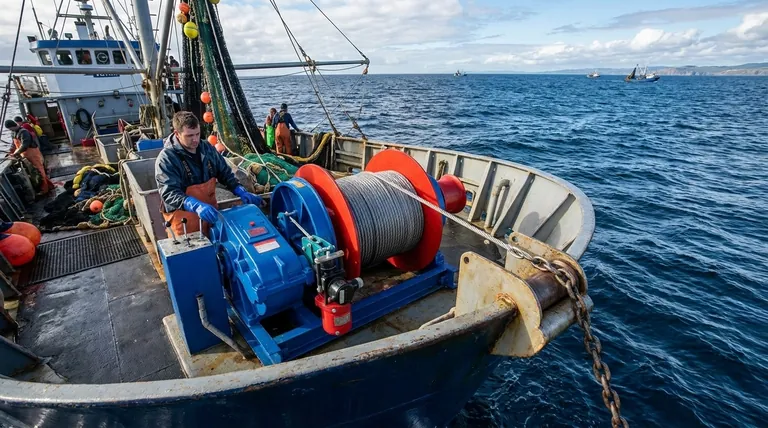
The Components of a Commercial Anchoring System
A reel winch is the heart of a system where each component serves a distinct and vital purpose. Understanding how they work together reveals why this setup is the standard for serious deep-water operations.
The Reel Winch: The Powerhouse
The winch itself provides the immense mechanical power needed for the job. It is engineered to handle the significant weight of the anchor, chain, and hundreds of feet of water-laden cable without straining the crew.
Galvanized Cable: The Backbone
Instead of traditional rope, galvanized steel cable is used for the main length of the rode. The cable is exceptionally strong, abrasion-resistant, and spools evenly onto the winch drum, preventing tangles. The galvanization process provides essential protection against corrosion in the harsh saltwater environment.
The Chain Lead: The Critical Foundation
A length of heavy chain connects the cable to the anchor. This chain serves two purposes: it provides the necessary weight to ensure the anchor sets properly on the seabed, and its durability protects the main rode from abrasion on rocks and debris.
The Operational Advantage: Speed and Efficiency
Adopting a reel winch system is not about convenience; it is a strategic business decision driven by clear performance benefits.
Rapid Deployment and Retrieval
What could take a crew significant time and effort to do manually can be accomplished in minutes with a reel winch. This speed allows the vessel to set, reposition, and retrieve its anchor quickly to stay on top of the fish.
Maximizing Fishing Time
Every minute spent handling gear is a minute not spent fishing. By automating the anchoring process, the winch system directly translates into more time with lines or nets in the water, which is the sole purpose of the operation.
Reducing Crew Fatigue and Risk
Manually hauling a heavy anchor and rode is one of the most physically demanding jobs on a vessel. Automating this task with a winch dramatically reduces crew fatigue and the risk of back injuries, slips, and falls associated with manual gear handling.
Understanding the Trade-offs
While highly effective, a commercial-grade reel winch system is not without its considerations. Objectivity requires acknowledging its downsides.
Initial Cost and Installation
These are powerful, industrial-grade systems that represent a significant capital investment. The winch, cable, and professional installation can be a major expense for any fishing operation.
Maintenance Requirements
Any mechanical system operating in a marine environment requires diligent upkeep. The winch motor, gears, and electrical components must be regularly inspected and serviced, and the cable must be checked for frays or corrosion to prevent catastrophic failure.
Space and Weight
A reel winch and its drum of cable are heavy and occupy valuable deck space. This must be factored into the vessel's overall layout and weight distribution, particularly on smaller boats where space is at a premium.
Making the Right Choice for Your Operation
The decision to use a reel winch is determined entirely by the operational goal.
- If your primary focus is deep-water commercial fishing: A reel winch system is an essential tool for maximizing efficiency, safety, and profitability.
- If your primary focus is smaller-scale or recreational boating in shallower waters: The cost, weight, and complexity of a commercial reel winch are likely unnecessary, and traditional anchoring methods remain more practical.
Ultimately, the reel winch is a specialized tool designed to solve a specific problem: turning time spent on labor into time spent generating revenue.
Summary Table:
| Component | Role in the System | Key Benefit |
|---|---|---|
| Reel Winch | Provides mechanical power for deployment/retrieval | Automates strenuous anchoring tasks |
| Galvanized Cable | Acts as the main anchor rode | High strength and corrosion resistance |
| Chain Lead | Connects cable to anchor | Ensures proper anchor set and prevents abrasion |
Maximize your fishing operation's profitability and safety with GARLWAY's heavy-duty reel winches. Designed for the demanding conditions of commercial deep-water fishing, our winches deliver the reliable power and durability you need to automate anchoring, reduce crew fatigue, and increase time spent fishing. If you're a construction company or contractor requiring robust machinery, GARLWAY also specializes in concrete mixers and batching plants. Contact us today to discuss how our solutions can enhance your operational efficiency.
Get a Custom Quote for Your Vessel or Project
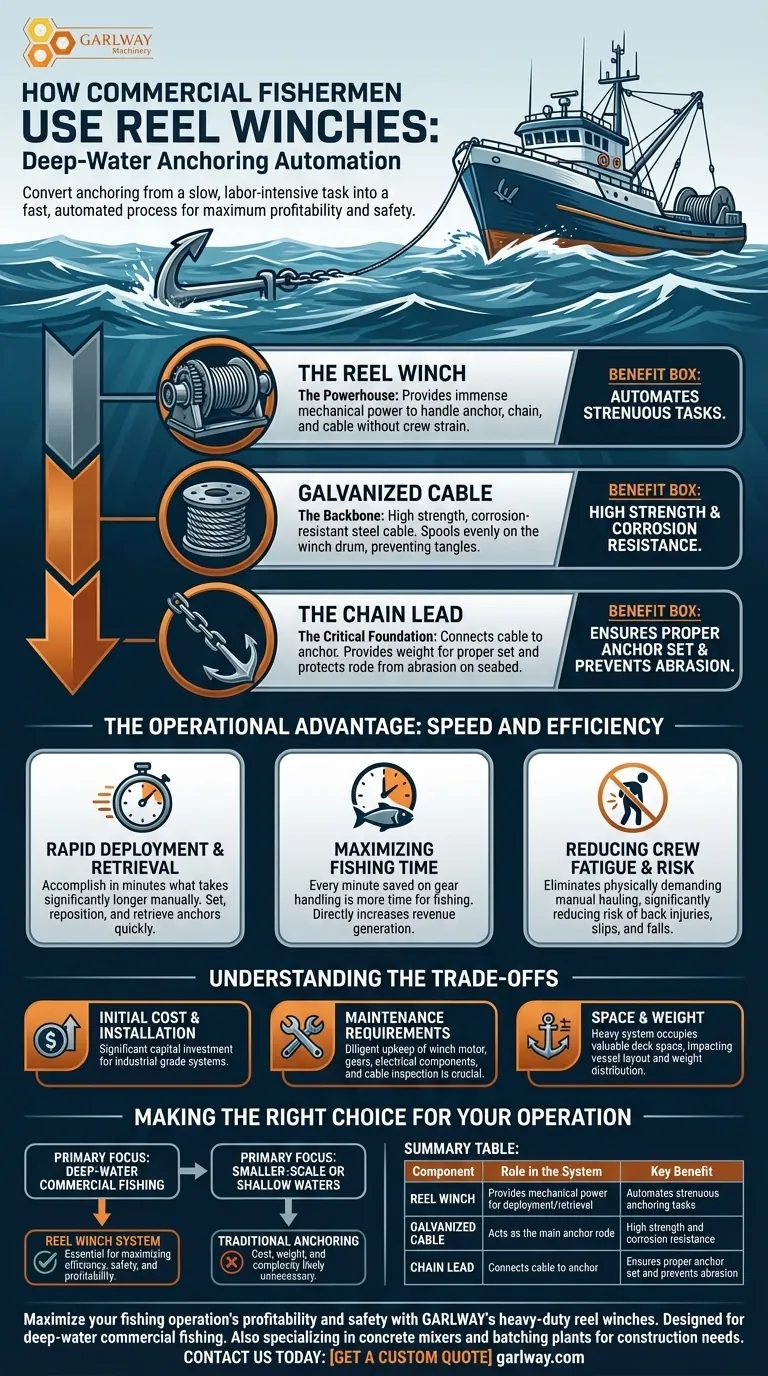
Visual Guide
Related Products
- Warn Winch Windlass Boat Trailer Winch
- Portable Small Trailer Winch
- Electric Hoist Winch Boat Anchor Windlass for Marine Applications
- Best 18000 Pound Drum Anchor Trailer Winch
- 12000 lb Electric Boat Trailer Winch with Windlass Anchor Warn
People Also Ask
- What are the main components of a boat trailer winch? A Guide to Safe & Efficient Boat Loading
- What factors should be considered when choosing a boat trailer winch? Ensure Safe and Effortless Boat Loading
- What is the purpose of boat trailer winches? Safely and Efficiently Load Your Boat
- What are the two main types of boat trailer winches? Manual vs. Electric Explained
- How often should a boat trailer winch be replaced? Your Guide to Safety and Longevity



