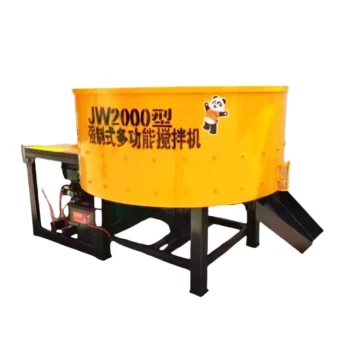
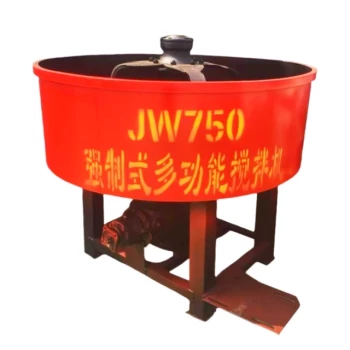
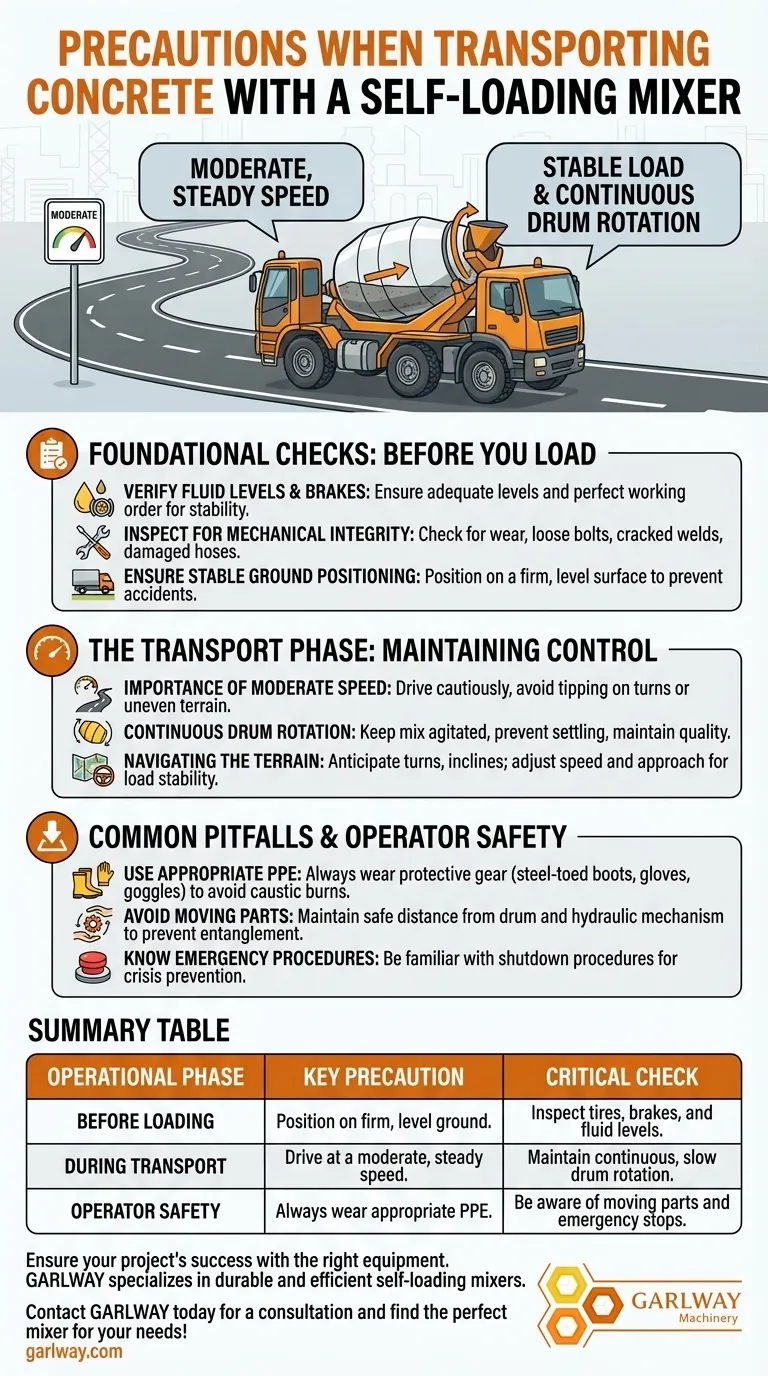
When transporting concrete with a self-loading mixer, the most critical precautions are to drive at a moderate, steady speed and ensure the load is stable. You must navigate the route carefully to prevent the wet concrete from spilling or destabilizing the vehicle, which has a high center of gravity. During transport, the mixing drum should maintain a continuous, slow rotation to prevent the concrete from segregating or beginning to set.
Safe transport is not an isolated step; it is the direct outcome of a disciplined process. The stability of your load on the road is determined by rigorous pre-operation checks, correct loading procedures, and constant operator vigilance.
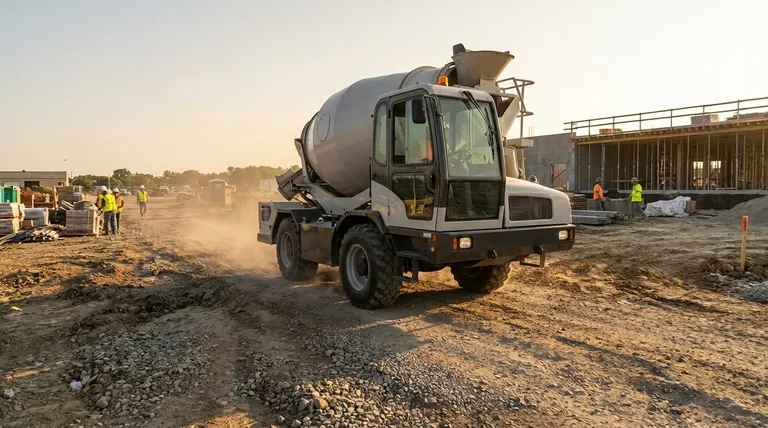
Foundational Checks: Before You Load
Proper preparation is the foundation of safe operation. Before any materials are loaded or the mixer is moved, a systematic inspection of the machine and the site is essential.
Verify Fluid Levels and Brakes
You must confirm that fuel and hydraulic fluid levels are adequate for the job. Critically, inspect the tires and braking system to ensure they are in perfect working order, as they are fundamental to the vehicle's stability and your ability to control it.
Inspect for Mechanical Integrity
Perform a visual inspection of the entire machine. Look for any signs of wear and tear, such as loose bolts, cracked welds, or damaged hydraulic hoses. Addressing these small issues promptly prevents catastrophic failures later.
Ensure Stable Ground Positioning
Always position the mixer on a firm, level surface before loading. An unstable or slanted base is a primary cause of accidents during the loading process and can compromise the vehicle's balance before transport even begins.
The Transport Phase: Maintaining Control on the Move
Once loaded, the mixer's handling characteristics change dramatically. The focus must shift entirely to smooth and controlled operation while in transit.
The Importance of Moderate Speed
The single most important factor during transport is speed. A high center of gravity makes the mixer susceptible to tipping. Drive cautiously and maintain a moderate speed, especially when turning or navigating uneven terrain.
Continuous Drum Rotation
The concrete mix must remain agitated during transit. The continuous, slow rotation of the drum prevents the aggregates from settling and ensures the concrete arrives ready to pour, maintaining its specified quality.
Navigating the Terrain
Be acutely aware of the route to the pour site. Anticipate sharp turns, steep inclines, and rough patches. Adjust your speed and approach proactively to keep the load stable and prevent surging within the drum.
Common Pitfalls and Operator Safety
Technical compliance is only one part of the equation. Operator awareness and adherence to personal safety protocols are non-negotiable.
Neglecting Personal Protective Equipment (PPE)
Never operate the machinery without appropriate PPE. This includes, at a minimum, steel-toed boots, protective gloves, and safety goggles. Wet concrete is caustic and can cause severe skin burns and eye damage.
Contact with Moving Parts
Maintain a safe distance from all moving components, particularly the rotating drum and the hydraulic loading mechanism. Entanglement is a serious risk, and vigilance is your primary defense.
Ignoring Emergency Procedures
Before you begin work, you must be completely familiar with the machine's emergency shutdown procedures. Knowing how to stop the equipment instantly in a crisis can prevent serious injury or mechanical damage.
How to Apply This to Your Operation
To apply these principles effectively, align your precautions with your current operational phase.
- If you are just starting the job: Your first priority is a thorough pre-operation inspection of the machine's mechanical condition and the site's stability.
- If you are actively loading materials: Focus on positioning the mixer on completely level ground and using the weighing system to prevent overloading.
- If you are transporting the concrete: Your entire focus must be on smooth, moderate driving to maintain the stability of the vehicle's high center of gravity.
A systematic approach to safety at every stage is the only way to guarantee a successful and incident-free outcome.
Summary Table:
| Operational Phase | Key Precaution | Critical Check |
|---|---|---|
| Before Loading | Position on firm, level ground. | Inspect tires, brakes, and fluid levels. |
| During Transport | Drive at a moderate, steady speed. | Maintain continuous, slow drum rotation. |
| Operator Safety | Always wear appropriate PPE. | Be aware of moving parts and emergency stops. |
Ensure your project's success with the right equipment. Proper transport is critical, but it starts with a reliable self-loading mixer. GARLWAY specializes in construction machinery, offering durable and efficient self-loading mixers, winches, and concrete batching plants designed for the demands of construction companies and contractors globally. Let us help you enhance safety and productivity on your job site.
Contact GARLWAY today for a consultation and find the perfect mixer for your needs!
Visual Guide
Related Products
- Skid Steer Self Loading Concrete Mixers for Construction
- Belle Mixer Drum Self Loading Mortar Mixers JS3000
- Portable Cement Mixer with Lift Concrete Machine
- Portable Concrete Mixer Machine Equipment for Mixing Concrete
- Portable Ready Mix Concrete Mixer Equipment
People Also Ask
- How does the control system improve production efficiency in a self loading concrete mixer? Automate Mixing for Speed & Quality
- What is the purpose of keeping the drum rotating during transportation in a self loading concrete mixer? Ensure Quality & Consistency
- How does the weighing process work in a self loading concrete mixer? Achieve Precise, On-Site Concrete Batching
- What components are involved in the loading process of a self loading concrete mixer? A Guide to the Key Systems
- How should materials be loaded into a self-loading concrete mixer? Master the Step-by-Step Process