
Preventing material buildup in a self-loading concrete mixer is achieved through a disciplined combination of correct water proportioning during loading, immediate post-use cleaning, and consistent mechanical maintenance. Adhering to this three-part strategy ensures the machine operates efficiently and avoids the cumulative damage caused by hardened concrete.
Material adhesion is not just a cleaning problem; it is an operational one. Proactive prevention through proper material loading and precise mix design is far more effective and economical than reactive, labor-intensive cleaning.
The Root Cause: Why Concrete Adheres
The Nature of Cement Paste
At its core, the mixture of cement and water creates a powerful adhesive paste. This paste is designed to bind aggregates together, but it will just as easily bind to the steel surfaces of your mixer's drum, blades, and hopper.
The Impact of an Improper Mix
When a concrete mix is too dry (insufficient water), the paste becomes exceptionally sticky. This causes it to cling to surfaces before it can be fully integrated with the aggregates, leading to immediate buildup.
A Proactive Approach: Best Practices During Operation
Step 1: Correct Material Proportioning
The first line of defense is a correct mix design. Use the mixer's built-in weighing system to ensure the precise ratio of aggregates, sand, and cement for every batch. An accurate and consistent mix is less prone to segregation and adhesion.
Step 2: Strategic Water Addition
Proper water management is critical. Adding the correct amount of water via the onboard pump ensures the cement paste achieves the right viscosity. This allows the aggregates to scour the inside of the drum during rotation, performing a continuous, gentle cleaning action.
Step 3: Continuous Agitation
The self-loading mixer is designed to mix while transporting. Keep the drum rotating continuously from the moment materials are loaded until the final discharge. This constant motion keeps all components in suspension and drastically reduces the chance for material to settle and adhere to the drum walls.
The Non-Negotiable: Post-Operation Cleaning Protocol
Immediate Rinsing is Key
As soon as the final batch is discharged, the cleaning process must begin. Any delay allows the residual concrete to start its initial set, making it exponentially harder to remove.
The Standard Cleaning Procedure
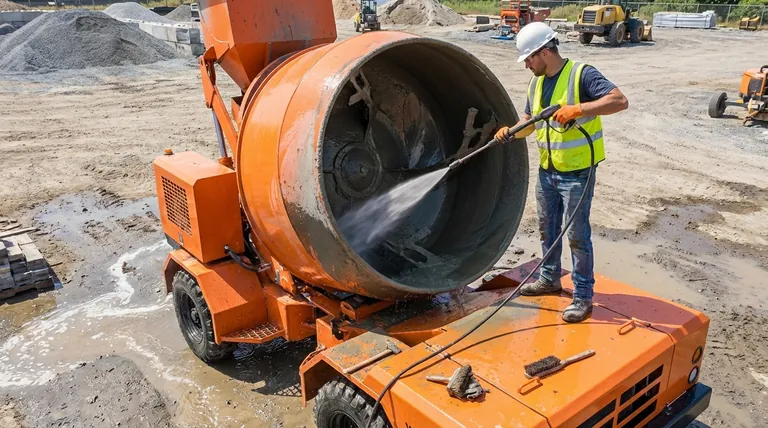
Use the water system to thoroughly rinse the mixing drum, hopper, and discharge chute. For any stubborn material that remains, a long-handled scraper or stiff brush is necessary to physically remove it before it hardens completely.
Understanding the Trade-offs
The High Cost of Neglect
Ignoring daily cleaning leads to severe consequences. Hardened concrete, known as "dead load," reduces the drum's volumetric capacity, meaning you mix smaller batches while burning the same amount of fuel. This buildup also causes imbalance, increasing wear on bearings and the drive system.
Time Invested vs. Asset Lifespan
While a thorough cleaning protocol takes time at the end of a shift, it is a direct investment in the machine's longevity. Skipping this step to save a few minutes will inevitably lead to days of downtime and costly repairs to either chip out hardened material or replace damaged components.
The Role of Regular Maintenance
Proper operation is only half the battle. A well-maintained machine functions predictably. Regular inspections, as recommended by the manufacturer, ensure the water pump and dosing system are accurate and that the mixing blades are not worn. Worn blades are inefficient and promote buildup.
How to Apply This to Your Project
A disciplined operational workflow is the most effective strategy for preventing material buildup.
- If your primary focus is maximum uptime: Make immediate post-use cleaning a non-negotiable part of your team's daily shutdown procedure.
- If your primary focus is consistent concrete quality: Regularly calibrate the weighing and water systems to guarantee every batch is mixed correctly, which naturally minimizes adhesion.
- If your primary focus is extending equipment lifespan: Implement a weekly inspection schedule for drum internals and blade wear in addition to rigorous daily cleaning.
Ultimately, treating your mixer with operational discipline is the best defense against the costly problem of material buildup.
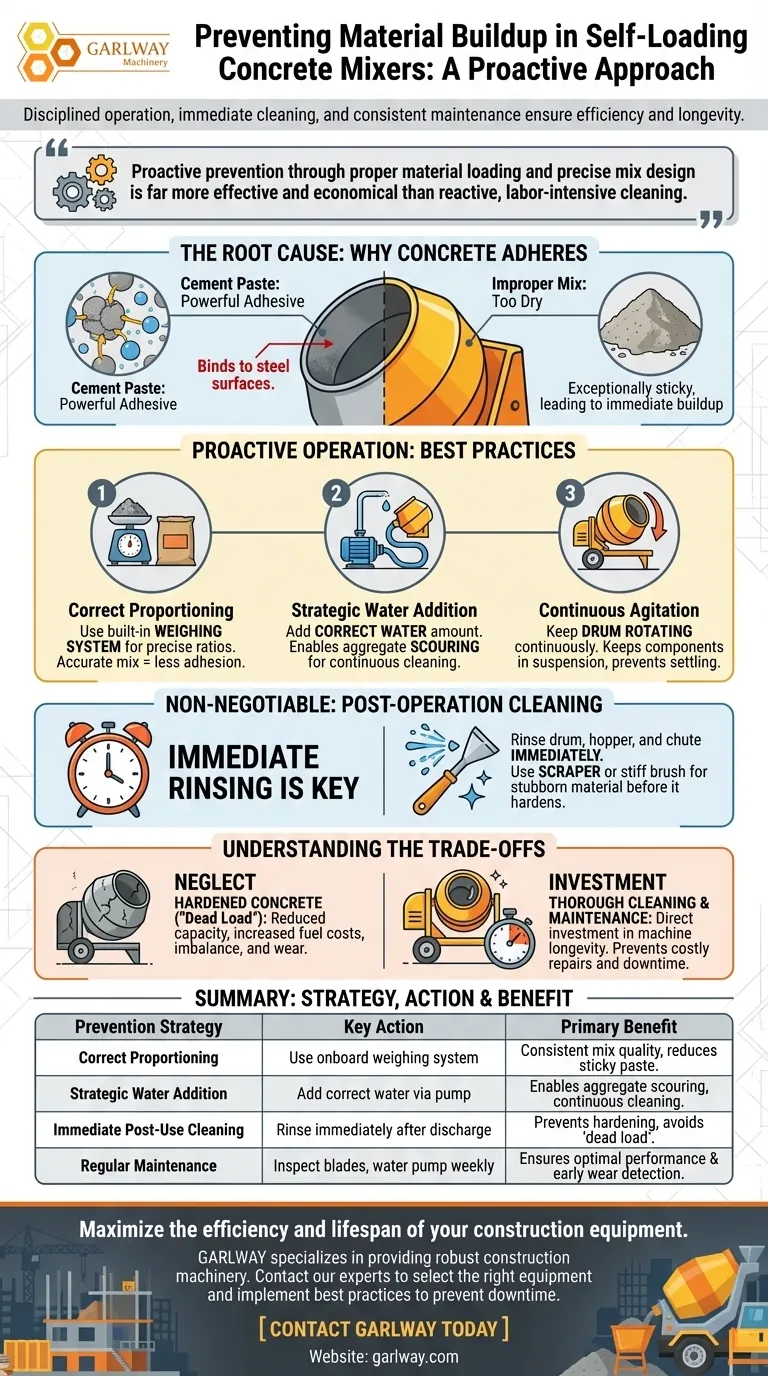
Summary Table:
| Prevention Strategy | Key Action | Primary Benefit |
|---|---|---|
| Correct Proportioning | Use onboard weighing system for precise material ratios | Consistent mix quality, reduces sticky paste |
| Strategic Water Addition | Add correct water amount via pump for proper viscosity | Enables aggregate scouring, continuous cleaning |
| Immediate Post-Use Cleaning | Rinse drum, hopper, and chute immediately after discharge | Prevents concrete from hardening, avoids 'dead load' |
| Regular Maintenance | Inspect blades, water pump, and dosing system weekly | Ensures optimal performance and early wear detection |
Maximize the efficiency and lifespan of your construction equipment.
Is material buildup reducing your self-loading mixer's capacity and increasing fuel costs? GARLWAY specializes in providing robust construction machinery, including reliable concrete mixers and batching plants, designed for demanding projects.
Our experts can help you select the right equipment and implement best practices to prevent downtime. Contact GARLWAY today to discuss your project needs and discover how our solutions can enhance your operational efficiency and profitability.
Visual Guide
Related Products
- Skid Steer Self Loading Concrete Mixers for Construction
- Belle Mixer Drum Self Loading Mortar Mixers JS3000
- Portable Cement Mixer with Lift Concrete Machine
- Portable Concrete Mixer Machine Equipment for Mixing Concrete
- Portable Ready Mix Concrete Mixer Equipment
People Also Ask
- How does the control system improve production efficiency in a self loading concrete mixer? Automate Mixing for Speed & Quality
- What is the purpose of keeping the drum rotating during transportation in a self loading concrete mixer? Ensure Quality & Consistency
- How does the weighing process work in a self loading concrete mixer? Achieve Precise, On-Site Concrete Batching
- What components are involved in the loading process of a self loading concrete mixer? A Guide to the Key Systems
- How should materials be loaded into a self-loading concrete mixer? Master the Step-by-Step Process






