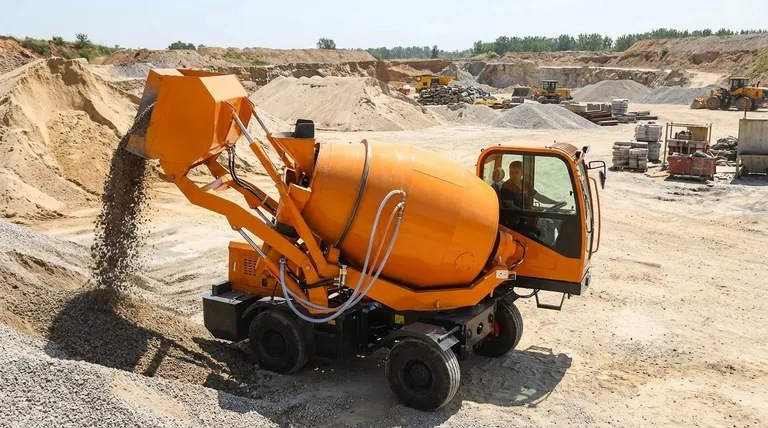
The mixing process in a self-loading concrete mixer is a systematic, automated sequence controlled entirely from the operator's cabin. It begins with the hydraulic loading arm scooping raw materials, which are then accurately weighed, fed into the mixing drum, combined with a precise amount of water, and blended by the rotating drum and its internal blades.
The core principle of the self-loading mixer is the integration of loading, weighing, mixing, and transport into a single, highly efficient process. This ensures consistent batch quality and dramatically reduces the labor and time required compared to traditional methods.
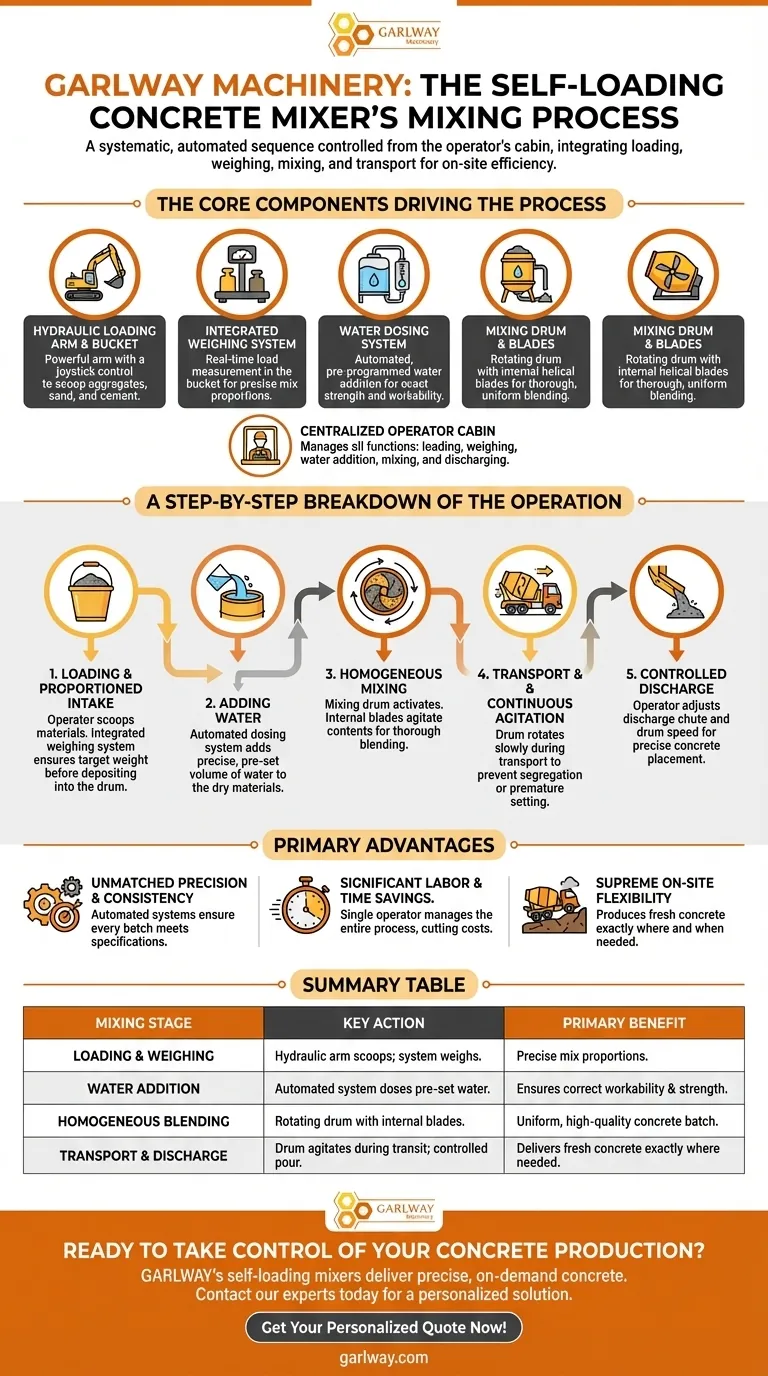
The Core Components Driving the Process
To understand the mixing operation, you must first understand the key systems that work in concert. Each component plays a critical role in delivering a precise and homogeneous concrete mixture.
The Hydraulic Loading Arm and Bucket
The process starts here. The operator uses a joystick to control a powerful hydraulic arm, which scoops aggregates, sand, and cement directly from piles on-site.
The Integrated Weighing System
As materials are lifted in the bucket, a built-in electronic weighing system measures the load in real-time. This allows the operator to achieve the exact proportions required for the concrete mix design, ensuring consistency from batch to batch.
The Water Dosing System
The mixer is equipped with a water tank, pump, and a precise flowmeter. The control system allows the operator to add a pre-programmed and exact amount of water into the drum, which is critical for achieving the desired concrete strength and workability.
The Mixing Drum and Blades
The drum itself is the heart of the operation. It rotates at a controlled speed, driven by its own motor. Inside, helical blades continuously lift and tumble the materials, guaranteeing a thorough and uniform blend.
The Centralized Operator Cabin
All functions—loading, weighing, water addition, mixing, and discharging—are managed from the operator's cabin. This central control point ensures efficiency, safety, and precision throughout the entire workflow.
A Step-by-Step Breakdown of the Operation
The entire process is designed for seamless on-site production, moving from raw materials to ready-to-pour concrete in a matter of minutes.
Step 1: Loading and Proportioned Intake
The operator positions the mixer and uses the self-loading bucket to scoop the first material (typically aggregates or sand). The weighing system provides feedback, and once the target weight is reached, the material is lifted and deposited into the mixing drum's opening. This is repeated for cement and any other dry components.
Step 2: Adding Water
With the dry materials inside, the operator activates the water pump. The automated dosing system adds the precise, pre-set volume of water required for the specific batch design.
Step 3: Homogeneous Mixing
The mixing drum is activated, rotating at a set speed. The internal blades agitate the contents, thoroughly blending the cement, aggregates, and water to create a homogeneous mixture. This mixing continues for a recommended period to ensure full hydration and consistency.
Step 4: Transport and Continuous Agitation
Once mixing is complete, the machine can transport the concrete to the exact point of use on the job site. During transport, the drum continues to rotate at a slow "agitating" speed to prevent the mixture from segregating or setting prematurely.
Step 5: Controlled Discharge
At the destination, the operator elevates the drum and can adjust the discharge chute to precisely place the concrete. The direction and speed of the drum's rotation can be changed to control the flow rate, from a slow trickle to a rapid pour.
Understanding the Primary Advantages
Opting for a self-loading mixer over traditional batching plants or manual mixing involves clear trade-offs, primarily centered on mobility and efficiency.
Unmatched Precision and Consistency
The automated weighing and water systems remove the guesswork common in manual mixing. This ensures that every batch meets the same technical specifications, which is vital for structural integrity.
Significant Labor and Time Savings
A single operator manages a process that would otherwise require multiple workers for loading, mixing, and transporting concrete. This consolidation of roles results in dramatic savings in both labor costs and overall project time.
Supreme On-Site Flexibility
The machine's mobility is its greatest asset. It can move across rough terrain on a job site, producing fresh concrete exactly where and when it is needed, eliminating the logistical challenges and potential delays of waiting for ready-mix truck deliveries.
How to Apply This to Your Project
The decision to use a self-loading mixer hinges on the specific demands of your job site and project goals.
- If your primary focus is speed and efficiency on a large, spread-out site: This machine is ideal, as it eliminates the logistical bottleneck of a central batching plant.
- If your primary focus is guaranteed quality and mix consistency: The automated weighing and water systems provide a level of precision that is difficult to achieve with manual methods.
- If your primary focus is working in remote or difficult-to-access locations: The all-in-one nature of the self-loading mixer makes it the superior choice where setting up a batching plant or getting ready-mix deliveries is impractical.
Ultimately, understanding this integrated process empowers you to leverage on-demand concrete production for greater project control and efficiency.
Summary Table:
| Mixing Stage | Key Action | Primary Benefit |
|---|---|---|
| Loading & Weighing | Hydraulic arm scoops materials; integrated system weighs them. | Precise mix proportions for consistent quality. |
| Water Addition | Automated system doses a pre-set volume of water. | Ensures correct workability and strength. |
| Homogeneous Blending | Rotating drum with internal blades mixes materials. | Uniform, high-quality concrete batch. |
| Transport & Discharge | Drum agitates during transit; controlled pour at destination. | Delivers fresh concrete exactly where needed. |
Ready to take control of your concrete production?
GARLWAY's self-loading concrete mixers integrate loading, weighing, mixing, and transport into one powerful machine, delivering precise, on-demand concrete directly on your job site. This means significant savings in time and labor costs, unparalleled flexibility for remote or challenging locations, and guaranteed batch consistency for your projects.
Contact our experts today to find the perfect solution for your construction needs and see how we can enhance your operational efficiency.
Get Your Personalized Quote Now!
Visual Guide
Related Products
- Skid Steer Self Loading Concrete Mixers for Construction
- Belle Mixer Drum Self Loading Mortar Mixers JS3000
- Portable Cement Mixer with Lift Concrete Machine
- Portable Concrete Mixer Machine Equipment for Mixing Concrete
- Portable Ready Mix Concrete Mixer Equipment
People Also Ask
- How does the control system improve production efficiency in a self loading concrete mixer? Automate Mixing for Speed & Quality
- What is the purpose of keeping the drum rotating during transportation in a self loading concrete mixer? Ensure Quality & Consistency
- How does the weighing process work in a self loading concrete mixer? Achieve Precise, On-Site Concrete Batching
- What components are involved in the loading process of a self loading concrete mixer? A Guide to the Key Systems
- How should materials be loaded into a self-loading concrete mixer? Master the Step-by-Step Process