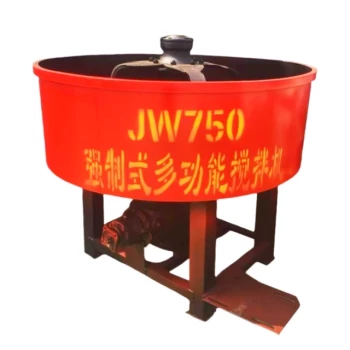
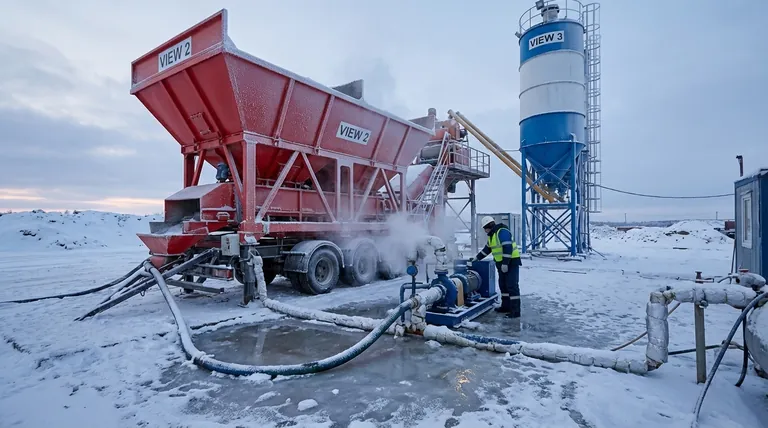
Before operating a concrete mixing station in winter, your primary precaution is to ensure the entire water supply system is functional and protected from freezing. You must inspect the water pump, check its motor rotation, and verify that no ice is obstructing the lines, as a compromised water system is the most common and damaging point of failure in cold weather.
The core challenge of winter operation is not just starting the equipment, but systematically preventing the freezing of water, aggregates, and machinery components. A disciplined approach to pre-operation checks, shutdown procedures, and safety protocols is essential to avoid damage and ensure production quality.
Pre-Operation System Checks
Proper preparation begins with a thorough inspection of the station's core systems before any materials are loaded. Cold temperatures place unique stress on mechanical and hydraulic components.
The Water Supply System is a Critical Failure Point
The most immediate threat in winter is frozen water. A compromised water system can halt production and cause significant damage to pipes and pumps.
Before starting, you must inspect the water pump to ensure it is functioning correctly and is not frozen.
Regularly check the rotation direction of the water pump motor. If it is incorrect, the motor wiring must be adjusted immediately to prevent damage and ensure proper water supply.
Verifying Measurement and Mixing Controls
Cold weather can affect the chemical reactions of concrete and the accuracy of sensors.
It is essential to control the measurement accuracy and mixing time to meet process requirements. This ensures the final concrete product meets quality standards despite the cold.
If you have replaced a sensor, the scales must be recalibrated to guarantee accuracy.
Inspecting for Leaks and Discharge Issues
Minor issues can quickly become major problems in freezing conditions.
Thoroughly inspect discharge outlets for any leaks or blockages. A small leak can create a dangerous ice patch or freeze a component solid, causing significant damage.
Personnel Safety and Procedural Discipline
Equipment readiness is only half the battle. Ensuring all personnel are prepared and follow strict procedures is critical for safe winter operation.
Adherence to Standard Operating Procedures
Every team member must be fully aware of their role and the established safety protocols.
All personnel must adhere to operational control procedures and safety precautions without deviation. Complacency is a significant risk in familiar but hazardous environments.
Understanding Equipment and Maintenance Protocols
Operators must have a deep understanding of the equipment's structure, functions, and limitations, especially under the added stress of cold weather.
If any aspect of the operation or a potential fault is unclear, consult the manufacturer's technical department before proceeding.
Avoiding Unsafe Startup Conditions
Starting equipment under load in cold weather can cause catastrophic failure.
Never attempt a load start for the mixer or the conveyor belt. Cold lubricants are more viscous, and components are more brittle, increasing the risk of mechanical damage.
Shutdown and Post-Operation Procedures
How you shut down the plant in winter is as important as how you start it up. Proper cleaning is not just about tidiness; it's about preventing freeze damage.
Discharging All Materials Before Shutdown
Leaving any material in the mixer is a serious operational error in freezing temperatures.
Before any shutdown, planned or unplanned, all concrete must be completely discharged from the mixer. If there's a power failure, the concrete inside the main unit must be carefully removed by hand.
Thorough Cleaning and Site Maintenance
Water left in the system is a guaranteed source of damage.
After work is complete, the forced concrete mixer must be washed with a small amount of water and stones. Crucially, all water must then be drained from the system.
The entire mixing site should be cleaned to remove any residual materials that could freeze and create hazards.
Making the Right Choice for Your Goal
Your operational focus will determine which precautions are most critical for your team.
- If your primary focus is equipment longevity: Ensure the mixer is completely emptied and washed after every use, and all water is drained to prevent freeze-thaw damage.
- If your primary focus is operational safety: Enforce strict adherence to no-load startups and ensure all personnel are trained on emergency shutdown and cleanout procedures.
- If your primary focus is concrete quality: Constantly verify the accuracy of your water and aggregate measurements, as cold can impact sensor readings and material consistency.
Ultimately, a disciplined and proactive approach is the key to safe and efficient concrete production throughout the winter months.
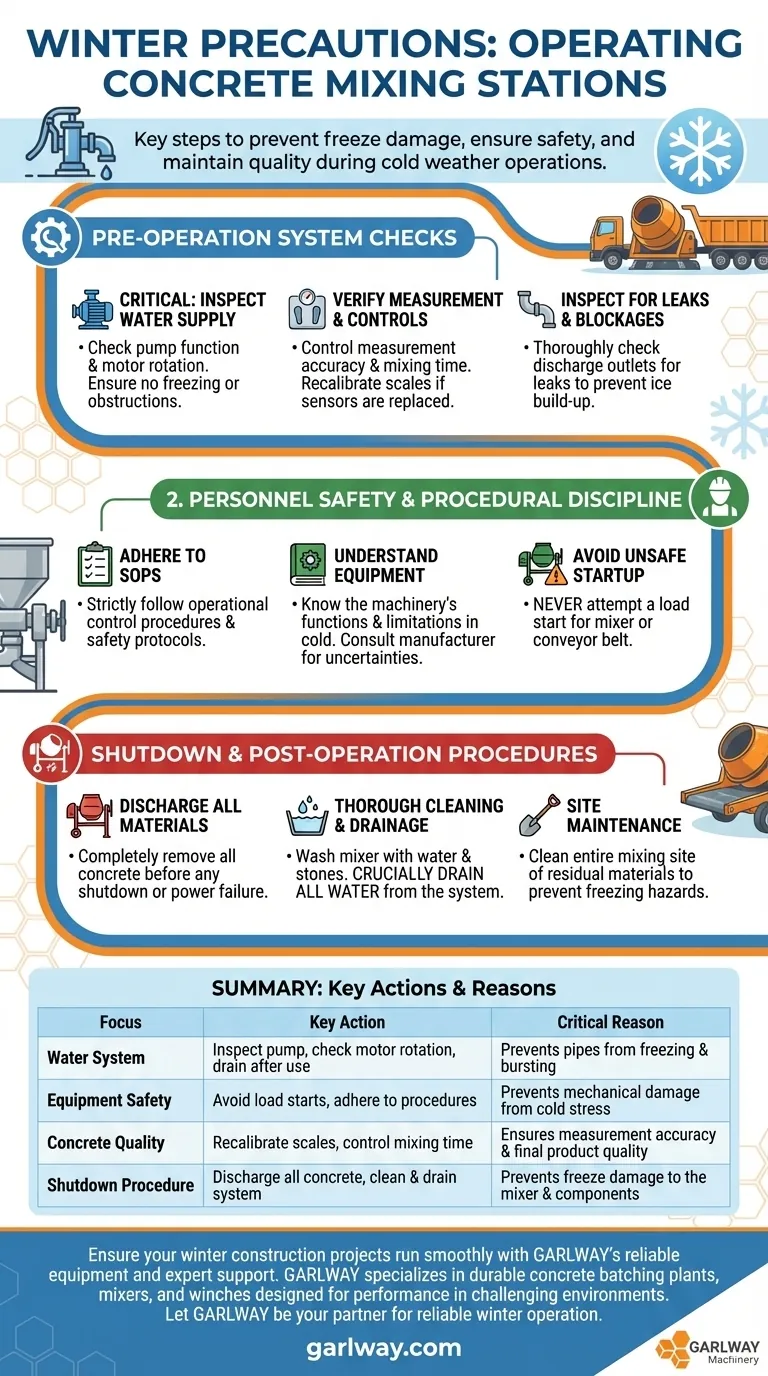
Summary Table:
| Precaution Focus | Key Action | Critical Reason |
|---|---|---|
| Water System | Inspect pump, check motor rotation, drain after use | Prevents pipes from freezing and bursting |
| Equipment Safety | Avoid load starts, adhere to procedures | Prevents mechanical damage from cold stress |
| Concrete Quality | Recalibrate scales, control mixing time | Ensures measurement accuracy and final product quality |
| Shutdown Procedure | Discharge all concrete, clean and drain system | Prevents freeze damage to the mixer and components |
Ensure your winter construction projects run smoothly with GARLWAY's reliable equipment and expert support.
Operating a concrete batching plant in freezing conditions demands robust machinery and precise knowledge. GARLWAY specializes in construction machinery, offering durable concrete batching plants, mixers, and winches designed for performance in challenging environments. Our equipment is built to withstand winter stress, and our technical team can provide the guidance you need to avoid costly downtime and damage.
Let GARLWAY be your partner for reliable winter operation. Contact our experts today to discuss your specific needs and ensure your production remains safe and efficient all season long.
Visual Guide
Related Products
- HZS35 Small Cement Concrete Mixing Batch Plant
- HZS120 Ready Mix Concrete Batching Plant Commercial Mud Cement Mixer
- HZS75 Concrete Batching Plant Cement Mixer Price Concrete Mixer Bunnings Mixing Plant
- HZS180 Ready Mix Concrete Plant for Foundations with Sand and Cement
- Commercial Electric Concrete Mixer Machine HZS 50 Small Batch Plant for Sale
People Also Ask
- Why buy concrete batch plant parts only from the manufacturer? Protect Your Investment and Maximize Uptime
- Why is proper maintenance important for a concrete batch mix plant? Maximize Uptime & Profitability
- What is the advantage of a mobile concrete batching plant? Achieve On-Site Production & Total Control
- What are the advantages and disadvantages of concrete batching plants? Maximize Quality & Efficiency
- What are the two methods of material charging in a concrete mixing station? Single vs. Multiple Charging Explained