To ensure effective operation, a vibrating screen in a concrete mixing plant requires careful inspection of three critical aspects: the quality of the screen mesh itself, the size of the screen holes, and the precision of its installation. These components work together to guarantee that the aggregates used in your concrete mix are correctly sized, which is fundamental to the final product's quality and strength.
The vibrating screen acts as the quality gatekeeper for your aggregates. Neglecting its condition directly compromises the integrity of your concrete mix design, leading to inconsistent product quality and potential operational failures.
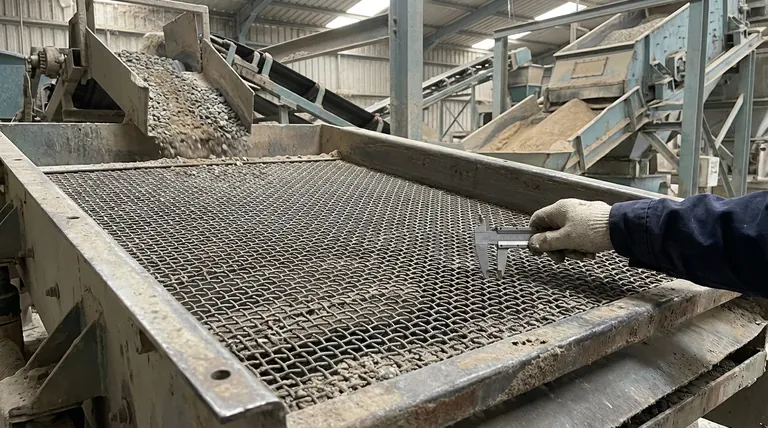
The Role of the Vibrating Screen in Concrete Production
A concrete mixing plant's performance is heavily dependent on the precise grading of its aggregates (sand, gravel, and stone). The vibrating screen is the mechanical system responsible for this separation.
Its primary function is to sort raw aggregate material into specific size categories required by a given concrete mix design. When this process is compromised, the entire foundation of the mix design becomes unreliable.
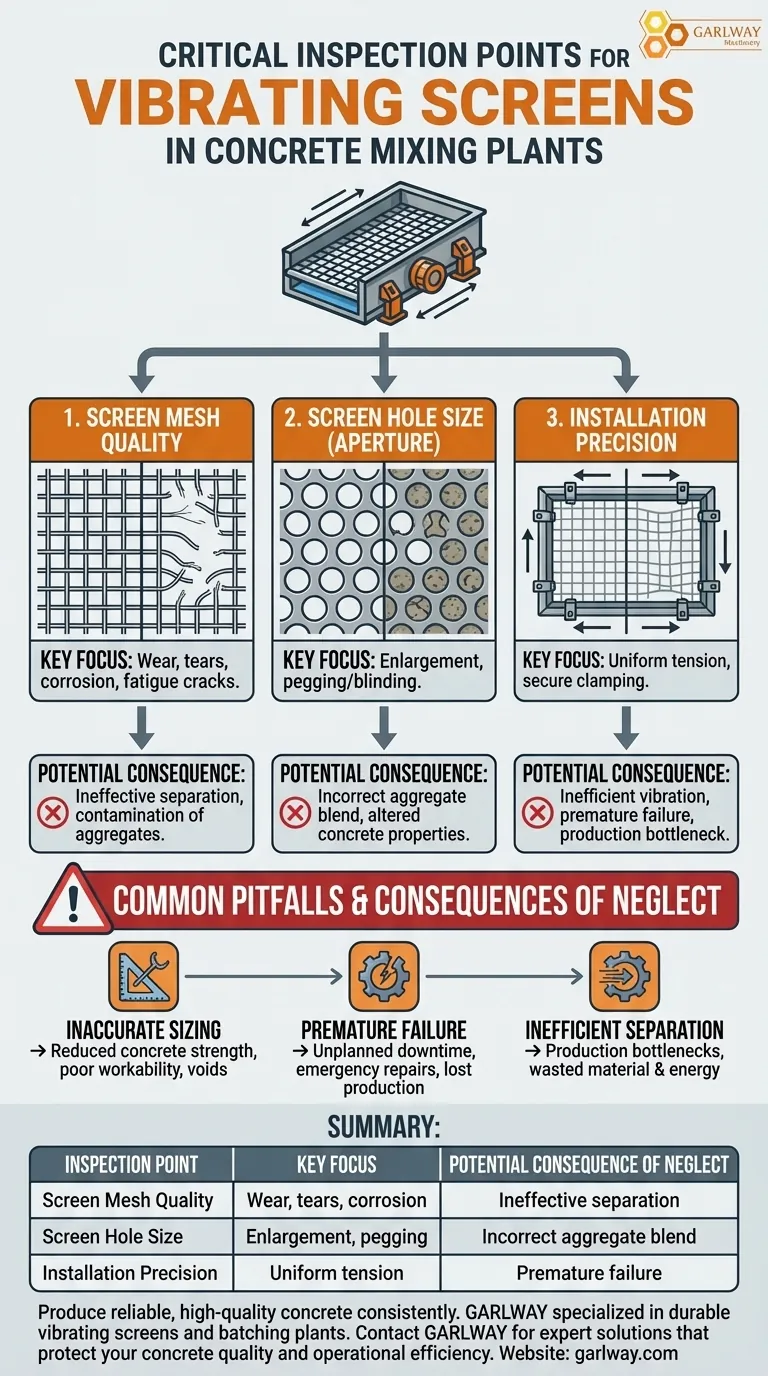
Inspection Point 1: Screen Mesh Quality
The screen mesh is the working surface of the system and is subject to constant abrasion and high-stress vibrations.
Look for signs of physical wear such as thinning wires, fraying, or visible tears. A compromised mesh cannot effectively separate materials and is a primary point of failure. Also, inspect for corrosion or fatigue cracks, especially around the edges where it is clamped.
Inspection Point 2: Screen Hole Size (Aperture)
The size of the holes, or aperture, dictates the maximum particle size that can pass through to the next stage.
Over time, the abrasive action of aggregates can enlarge the screen holes. This allows oversized particles to contaminate the finer aggregate, disrupting the mix's particle size distribution. Conversely, material can become lodged in the holes (a condition known as pegging or blinding), preventing correctly sized particles from passing through. Both issues lead to an incorrect aggregate blend.
Inspection Point 3: Installation Precision
How the screen mesh is installed is just as critical as its physical condition. An improperly installed screen will perform poorly and fail prematurely.
The mesh must have correct and uniform tension across its entire surface. A loose screen vibrates inefficiently, reduces separation accuracy, and will quickly suffer from fatigue damage. Ensure all clamping mechanisms are secure and that the screen is seated correctly within its frame without any gaps.
Common Pitfalls and Their Consequences
Ignoring routine screen inspections can lead to significant and costly problems that extend far beyond the screen itself.
The Impact of Inaccurate Sizing
If oversized or undersized aggregates enter the mix, it fundamentally alters the concrete's properties. This can lead to reduced compressive strength, poor workability, and an increased risk of voids or honeycombing in the final cured product.
The Cost of Premature Failure
A poorly installed or worn-out screen can fail catastrophically, causing unplanned plant downtime. The cost of emergency repairs and lost production time often far exceeds the cost of proactive maintenance and timely replacement.
The Danger of Inefficient Separation
When a screen is blinded or loose, its screening efficiency plummets. This means material passes over the screen without being properly separated, forcing a bottleneck in production and leading to wasted material and energy.
How to Apply This to Your Maintenance Plan
A systematic approach to screen inspection is essential for any high-performing concrete plant.
- If your primary focus is consistent concrete quality: Regularly audit the screen hole aperture and check for any signs of mesh wear that could allow oversized aggregate into your mix.
- If your primary focus is plant uptime and efficiency: Prioritize checking for proper screen tension and secure installation to prevent premature failures and ensure optimal separation performance.
- If your primary focus is cost control: Conduct frequent visual inspections for early signs of wear, as replacing a screen mesh proactively is far cheaper than dealing with a production shutdown or a rejected batch of concrete.
Ultimately, diligent and regular inspection of the vibrating screen is a non-negotiable part of producing reliable, high-quality concrete.
Summary Table:
| Inspection Point | Key Focus | Potential Consequence of Neglect |
|---|---|---|
| Screen Mesh Quality | Wear, tears, corrosion, fatigue cracks | Ineffective separation, contamination of aggregates |
| Screen Hole Size (Aperture) | Enlargement, pegging/blinding | Incorrect aggregate blend, altered concrete properties |
| Installation Precision | Uniform tension, secure clamping | Inefficient vibration, premature failure, production bottleneck |
Produce reliable, high-quality concrete consistently. The vibrating screen is critical to your plant's performance. GARLWAY specializes in construction machinery, offering durable vibrating screens, concrete mixers, and batching plants designed for construction companies and contractors globally. Our equipment ensures precise aggregate grading for superior mix integrity and maximum plant uptime. Contact GARLWAY today for expert solutions that protect your concrete quality and operational efficiency.
Visual Guide
Related Products
- Small Electric Winch 120V and 240V for Compact Applications
- Auto Concrete Cement Mixer Machine New
- HZS35 Small Cement Concrete Mixing Batch Plant
- Electric Hoist Winch Boat Anchor Windlass for Marine Applications
- HZS25 Best Cement Mixer for Quick Mix Concrete at Bunnings
People Also Ask
- What makes electric winches suitable for off-road use? Key Features for Reliable Vehicle Recovery
- What are the common applications of electric winches? Power Your Lifting & Pulling Tasks
- What are the common uses of an electric winch? A Guide to Safe and Efficient Heavy Lifting
- What are the uses of electric winches in mining and tunneling? Enhance Safety and Efficiency Underground
- How do electric winches contribute to energy savings? Maximize Efficiency and Lower Costs