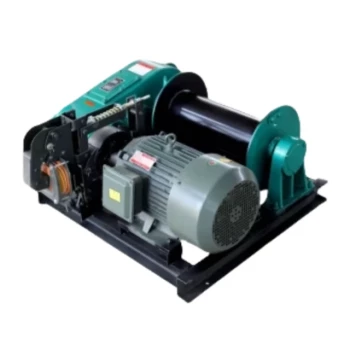
At its core, a manual winch is a device that uses mechanical advantage to pull or lift heavy loads with minimal human effort. Its key features are a hand-cranked gear system for multiplying force, a drum and cable for managing the load, and a braking mechanism to ensure safety and control.
A manual winch is not just a simple crank and rope. It is a carefully engineered system where each component—from the gear train to the brake—works in concert to safely and efficiently translate your physical effort into powerful pulling force.
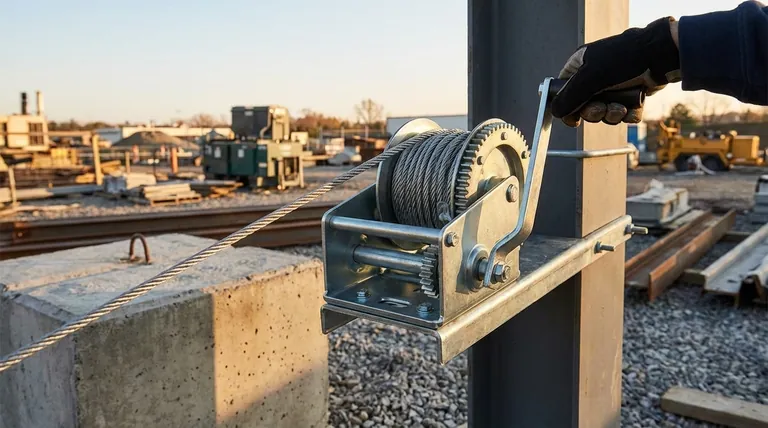
The Core Systems of a Manual Winch
To truly understand a manual winch, you must look beyond a simple list of parts and see how its core systems function together.
The Power Input: Handle and Gearing
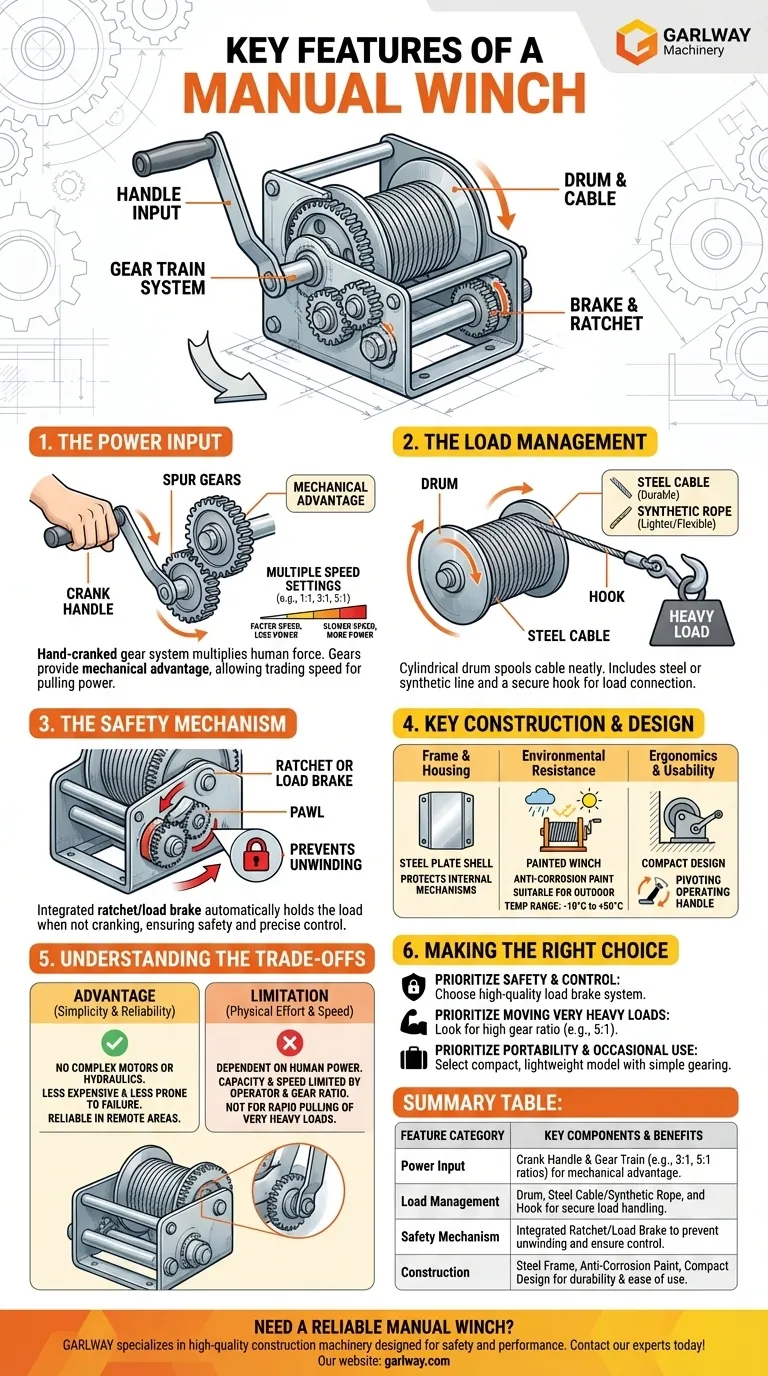
The process begins with the crank handle, which the operator turns. This is the point of human input.
This rotational force is transferred to a gear train, often a spur gear mechanism. This is the heart of the winch's power.
The gears provide mechanical advantage, multiplying the force you apply. Some models offer multiple speed settings (e.g., 1:1, 3:1, 5:1), allowing you to trade speed for more pulling power on heavier loads.
The Load Management: Drum and Cable
The geared-down force rotates a cylindrical drum. This component spools the cable or rope, ensuring it is managed neatly and without tangling.
The winch line itself is typically made of either durable steel cable or lighter, more flexible synthetic rope.
A hook or other attachment point is fixed to the end of the line to securely connect to the object being moved.
The Safety Mechanism: Brake and Ratchet
This is arguably the most critical system. A ratchet or load brake is integrated into the mechanism.
This system automatically engages to prevent the drum from unwinding under load. It holds the object securely in place if you stop cranking.
This feature ensures both safety for the operator and precise, controlled movement of the load, whether lifting or lowering.
Key Construction and Design Features
The physical build of a winch determines its durability, reliability, and ease of use in the field.
Frame and Housing
Most manual winches feature a sturdy steel plate shell or housing. This frame protects the internal gear mechanism from damage and provides a solid base for mounting.
Environmental Resistance
A standard coat of anti-corrosion paint protects the winch from rust and degradation, making it suitable for outdoor use.
These winches are typically designed to operate reliably in a wide temperature range, often between -10°C and +50°C.
Ergonomics and Usability
A compact design makes installation easier and allows the winch to fit in tight spaces. Many also feature a pivoting operating handle for a better working angle.
Understanding the Trade-offs
A manual winch is a tool of elegant simplicity, but that design choice comes with inherent advantages and limitations.
Advantage: Simplicity and Reliability
Because they are operated by hand, manual winches have no complex electric motors or hydraulic systems. This makes them less expensive and less prone to certain types of failure.
Their mechanical nature makes them highly reliable in remote situations where power may not be available.
Limitation: Physical Effort and Speed
The primary limitation is the reliance on human power. The pulling capacity and speed are directly constrained by the operator's physical ability and the winch's gear ratio.
For very heavy loads or situations requiring rapid pulling, a powered winch is often a more practical solution.
Making the Right Choice for Your Needs
Selecting the right manual winch requires matching its features to your specific goal.
- If your primary focus is safety and precise control: Prioritize a model with a high-quality, reliable load brake system.
- If your primary focus is moving very heavy loads: Look for a winch with a high gear ratio (e.g., 5:1) to maximize your mechanical advantage.
- If your primary focus is portability and occasional use: A compact, lightweight model with simple, direct gearing is often the most practical choice.
By understanding these core features and systems, you can confidently select the right tool for the job.
Summary Table:
| Feature Category | Key Components & Benefits |
|---|---|
| Power Input | Crank Handle & Gear Train (e.g., 3:1, 5:1 ratios) for mechanical advantage. |
| Load Management | Drum, Steel Cable/Synthetic Rope, and Hook for secure load handling. |
| Safety Mechanism | Integrated Ratchet/Load Brake to prevent unwinding and ensure control. |
| Construction | Steel Frame, Anti-Corrosion Paint, Compact Design for durability & ease of use. |
Need a reliable manual winch for your construction or contracting project? GARLWAY specializes in high-quality construction machinery, including robust manual winches designed for safety and performance. Our winches are built to handle demanding conditions, providing the precise control and durability your work requires. Contact our experts today to find the perfect winch solution for your specific needs!
Visual Guide
Related Products
- Portable Small Trailer Winch
- Electric and Hydraulic Winch for Heavy Duty Applications
- Quick Windlass Portable Winch for Truck and Boat Best Boat Winch
- Small Electric Winch 120V and 240V for Compact Applications
- Hydraulic Winding Engine Harbor Freight Winch
People Also Ask
- What features were incorporated into the upgraded portable winch system? Boost Your Recovery Power & Safety
- What are some uses mentioned for portable winches beyond vehicle recovery? Essential Versatility for Property & Work
- How could the twisting issue with a portable winch be mitigated? Achieve Safe, Centered Pulls with Proper Rigging
- What is the significance of trailer winches in the boating industry? Ensure Safe and Efficient Boat Recovery
- What should be considered when mounting a winch on a trailer? Ensure a Safe, Aligned Installation