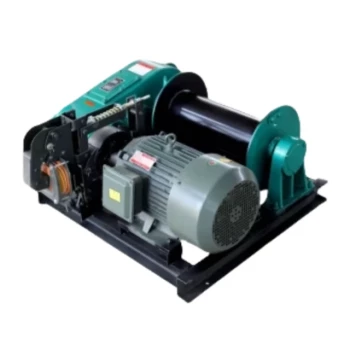
In simple terms, yes, but not in the way most people think. A hand winch is designed to powerfully pull a load in one direction. While it can release the load in the opposite direction, this is a process of controlled unwinding, not active "winching" in reverse.
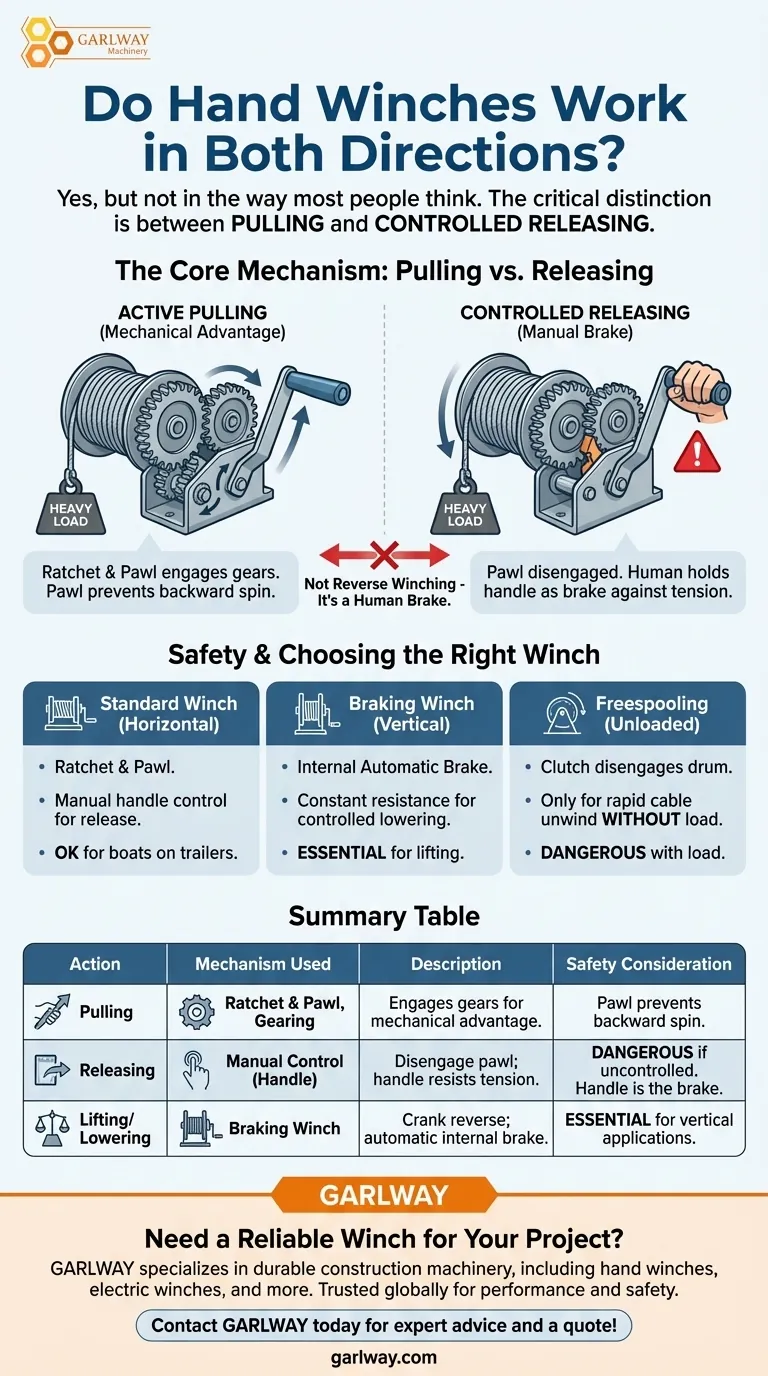
The critical distinction is between pulling and controlled releasing. A hand winch uses mechanical advantage to pull a load in, while releasing the load relies on a ratchet or brake mechanism to safely manage the tension as the cable unwinds.
The Core Mechanism: Pulling vs. Releasing
To understand a hand winch's directional capabilities, you must first understand its fundamental components. The entire design is centered around pulling a load safely against resistance.
The Primary Action: Pulling a Load In
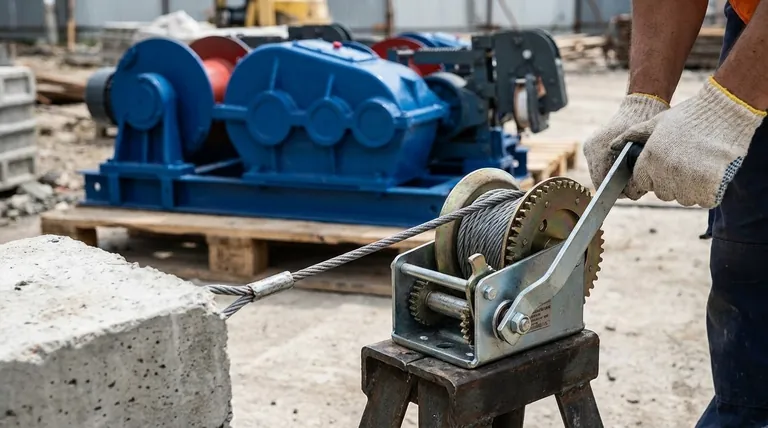
When you turn the crank handle, you engage a set of gears that turn a central drum. This gearing provides the mechanical advantage, allowing you to move a heavy load with relatively little effort.
A ratchet and pawl system is the key to this operation. The ratchet is a gear with angled teeth, and the pawl is a small lever that drops into place between those teeth. As you crank, the pawl clicks over the teeth, preventing the drum from spinning backward under the load's tension.
The Secondary Action: Releasing a Load
To release the cable, you must disengage this locking mechanism. On most standard hand winches, this involves flipping the pawl away from the ratchet gear.
Once the pawl is disengaged, the winch is technically in "freespool." The tension from the load itself will begin to pull the cable out and turn the drum. You must maintain a firm grip on the handle to control the speed of this release.
Why This Isn't "Reverse Winching"
You are not using the crank to power the cable out. You are simply acting as a human brake, resisting the force of the load as it unwinds the cable. The gearing that helps you pull the load in now works against you, requiring significant effort to control the descent.
Understanding the Safety-Critical Differences
The distinction between pulling and releasing isn't just semantic; it's central to operating a winch safely and choosing the right tool for the job.
The Danger of Uncontrolled Release
If you were to simply flip the pawl without holding the handle, the drum would spin freely and release the load uncontrollably. This is incredibly dangerous, especially when dealing with heavy or vertically suspended objects.
The Role of Braking Winches
For applications that require lifting and lowering (not just pulling), a braking winch is essential. These winches have an internal brake mechanism, often an automatic Weston-style brake.
The brake automatically engages the moment you stop cranking. To lower the load, you simply crank the handle in the reverse direction. The brake provides constant resistance, ensuring a smooth, controlled, and much safer descent.
Freespooling vs. Controlled Lowering
Some winches have a separate clutch for true "freespooling," which completely disengages the drum from the gears. This feature is only for rapidly pulling out an un-loaded cable. It should never be used to release a load.
Making the Right Choice for Your Goal
Selecting the correct type of winch depends entirely on how you intend to manage the load in both directions.
- If your primary focus is horizontal pulling (e.g., a boat onto a trailer): A standard ratchet-and-pawl winch is perfectly suitable. You can safely manage the load by manually controlling the handle during release.
- If your primary focus is lifting and lowering (e.g., a boat lift or davit): You must use a braking winch. The automatic brake is a non-negotiable safety feature for controlled vertical descent.
- If you need to quickly unwind cable without tension: A winch with a freespool clutch is useful, but only use this feature when the cable is not under load.
Understanding the difference between active pulling and controlled releasing is the key to using any hand winch safely and effectively.
Summary Table:
| Action | Mechanism Used | Description | Safety Consideration |
|---|---|---|---|
| Pulling a Load | Ratchet & Pawl, Gearing | Engages gears to pull cable in with mechanical advantage. | The pawl prevents the drum from spinning backward. |
| Releasing a Load | Manual Control (Handle) | Disengage pawl; control the handle to resist tension as the load unwinds. | Dangerous if uncontrolled. The handle acts as a brake. |
| Lifting/Lowering | Braking Winch | Crank handle in reverse to lower load; an internal brake provides constant resistance. | Essential for vertical applications (e.g., boat lifts). |
Need a Reliable Winch for Your Project?
Whether you're pulling heavy equipment horizontally or require safe lifting and lowering, choosing the right winch is critical for safety and efficiency.
GARLWAY specializes in durable construction machinery, including a range of hand winches, electric winches, concrete mixers, and batching plants. Our equipment is trusted by construction companies and contractors globally for its robust performance and safety features.
Let us help you select the perfect winch for your specific application.
Contact GARLWAY today for expert advice and a quote!
Visual Guide
Related Products
- Portable Small Trailer Winch
- Quick Windlass Portable Winch for Truck and Boat Best Boat Winch
- Electric and Hydraulic Winch for Heavy Duty Applications
- Warn Winch Windlass Boat Trailer Winch
- Electric Hoist Winch Boat Anchor Windlass for Marine Applications
People Also Ask
- What features were incorporated into the upgraded portable winch system? Boost Your Recovery Power & Safety
- What are some uses mentioned for portable winches beyond vehicle recovery? Essential Versatility for Property & Work
- How could the twisting issue with a portable winch be mitigated? Achieve Safe, Centered Pulls with Proper Rigging
- What is the significance of trailer winches in the boating industry? Ensure Safe and Efficient Boat Recovery
- What should be considered when mounting a winch on a trailer? Ensure a Safe, Aligned Installation