Immediately after use, a self-loading concrete mixer requires a systematic shutdown procedure to ensure its longevity and reliability. This process involves thoroughly cleaning the mixing drum and exterior, performing a detailed visual inspection for damage or wear, lubricating all moving parts, rechecking fluid levels, and confirming the battery and electrical connections are secure.
The core principle to understand is that post-operation maintenance is not just about cleaning. It is a proactive strategy to prevent concrete buildup, catch minor mechanical issues before they become major failures, and guarantee the machine is ready for immediate and safe use on the next project.
The Essential Post-Operation Checklist
A consistent routine is the key to effective maintenance. After the final discharge of concrete, follow these steps methodically.
Step 1: Immediate and Thorough Cleaning
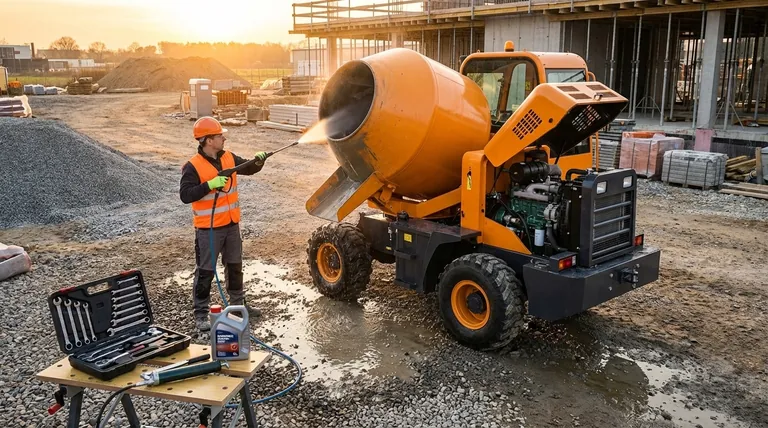
The single most critical post-operation task is cleaning. Any concrete left in the mixing drum or on the blades will begin to harden, reducing mixing efficiency and potentially causing significant damage over time.
Rinse the drum interior completely, ensuring all surfaces are free of concrete residue. Wash the exterior of the machine as well, paying special attention to the discharge chute and loading bucket.
Step 2: Comprehensive Visual Inspection
With the machine clean, conduct a walk-around inspection. This is your opportunity to spot small problems before they escalate into costly repairs.
Look for signs of wear and tear, such as frayed hydraulic hoses, loose bolts, or cracks in the frame. Check the wear-resistant teeth on the loading bucket and inspect the tires for proper inflation and damage.
Step 3: Lubrication of Key Components
Proper lubrication reduces friction and prevents premature wear on all moving parts. Refer to the manufacturer's guidelines to identify all grease points.
Apply grease to joints, bearings, and other specified components to ensure smooth operation during the next use.
Step 4: Fluid Level Verification
The operational cycle puts stress on the machine's systems. It's crucial to verify fluid levels after shutdown.
Check the engine oil, hydraulic fluid, and coolant levels. Top off any fluids that are low to prevent overheating or hydraulic system failure.
Step 5: Battery and Electrical System Check
A reliable start begins the night before. A quick check of the electrical system can prevent significant downtime.
Ensure battery terminals are clean and tight. Check for any visible damage to wiring harnesses or connections.
Common Pitfalls to Avoid
Neglecting post-operation procedures introduces significant risk and cost. The trade-off for saving a few minutes at the end of the day is often hours or days of unscheduled downtime.
The Consequence of Skipped Cleaning
Hardened concrete is extremely difficult to remove. It can throw the mixing drum off-balance, cause excessive wear on the motor and blades, and contaminate future batches, compromising concrete quality.
Overlooking "Minor" Leaks
A small hydraulic fluid drip or a minor oil leak is often a warning sign of a failing seal or hose. Under the high pressures of operation, these minor issues can lead to catastrophic component failure, creating both a safety hazard and an expensive repair.
Relying Only on Pre-Operation Checks
Post-operation checks are what make the next pre-operation check successful. Identifying a problem after use allows you to schedule a repair immediately, rather than discovering it when the machine is needed for a critical pour, causing delays for the entire project.
Making the Right Choice for Your Goal
Your end-of-day routine should align with your primary operational priorities.
- If your primary focus is equipment longevity: Make the comprehensive visual inspection your top priority to catch and address wear and tear early.
- If your primary focus is consistent concrete quality: Be relentless about cleaning the drum and mixing blades after every single batch is discharged.
- If your primary focus is operational safety: Always double-check hydraulic hoses, tire condition, and braking systems before shutting down for the day.
A disciplined shutdown procedure is the best investment you can make in your equipment's long-term health and reliability.
Summary Table:
| Step | Key Action | Primary Benefit |
|---|---|---|
| 1 | Thorough Cleaning of Drum & Exterior | Prevents concrete buildup, ensures mix quality |
| 2 | Visual Inspection for Wear/Damage | Catches minor issues before major failures |
| 3 | Lubrication of Moving Parts | Reduces friction and premature wear |
| 4 | Check Engine Oil, Hydraulic Fluid, Coolant | Prevents overheating and system failure |
| 5 | Secure Battery & Electrical Connections | Guarantees reliable startup for the next project |
Maximize the lifespan and performance of your construction equipment. Proper maintenance is key to avoiding costly downtime. GARLWAY specializes in durable construction machinery, including reliable self-loading concrete mixers, winches, and batching plants designed for contractors who value efficiency and longevity. Let our experts help you choose the right machine and establish a maintenance routine that protects your investment.
Contact GARLWAY today for a consultation and keep your projects running smoothly!
Visual Guide

Related Products
- Skid Steer Self Loading Concrete Mixers for Construction
- Belle Mixer Drum Self Loading Mortar Mixers JS3000
- Portable Cement Mixer with Lift Concrete Machine
- Portable Concrete Mixer Machine Equipment for Mixing Concrete
- JW1000 Mobile Cement Mixer Concrete Mixer Truck and Batching Plant
People Also Ask
- How does the control system improve production efficiency in a self loading concrete mixer? Automate Mixing for Speed & Quality
- What is the purpose of keeping the drum rotating during transportation in a self loading concrete mixer? Ensure Quality & Consistency
- How does the weighing process work in a self loading concrete mixer? Achieve Precise, On-Site Concrete Batching
- What components are involved in the loading process of a self loading concrete mixer? A Guide to the Key Systems
- How should materials be loaded into a self-loading concrete mixer? Master the Step-by-Step Process