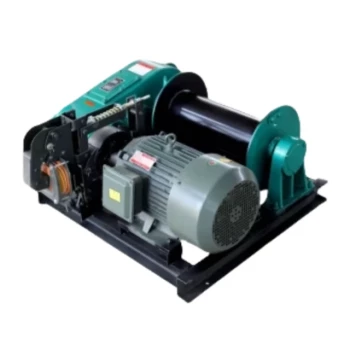
A winch's rope capacity is the maximum length of wire rope, cable, or synthetic line that can be safely and completely wound onto its drum. It is one of the three fundamental parameters that define a winch's capabilities.
While rope capacity simply states the maximum length of your line, it is a critical specification that works in tandem with pulling force and working speed. Understanding how these elements interact is essential for selecting the right winch for any task.
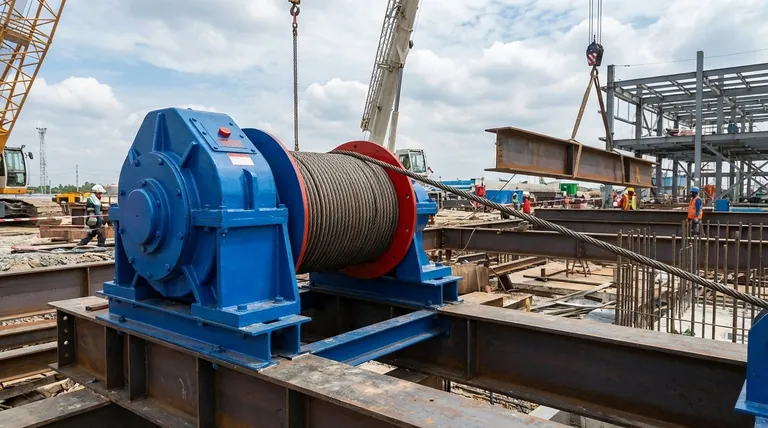
The Three Core Parameters of a Winch
To fully grasp the importance of rope capacity, you must see it as one part of a system. A winch's performance is defined by a triad of basic parameters.
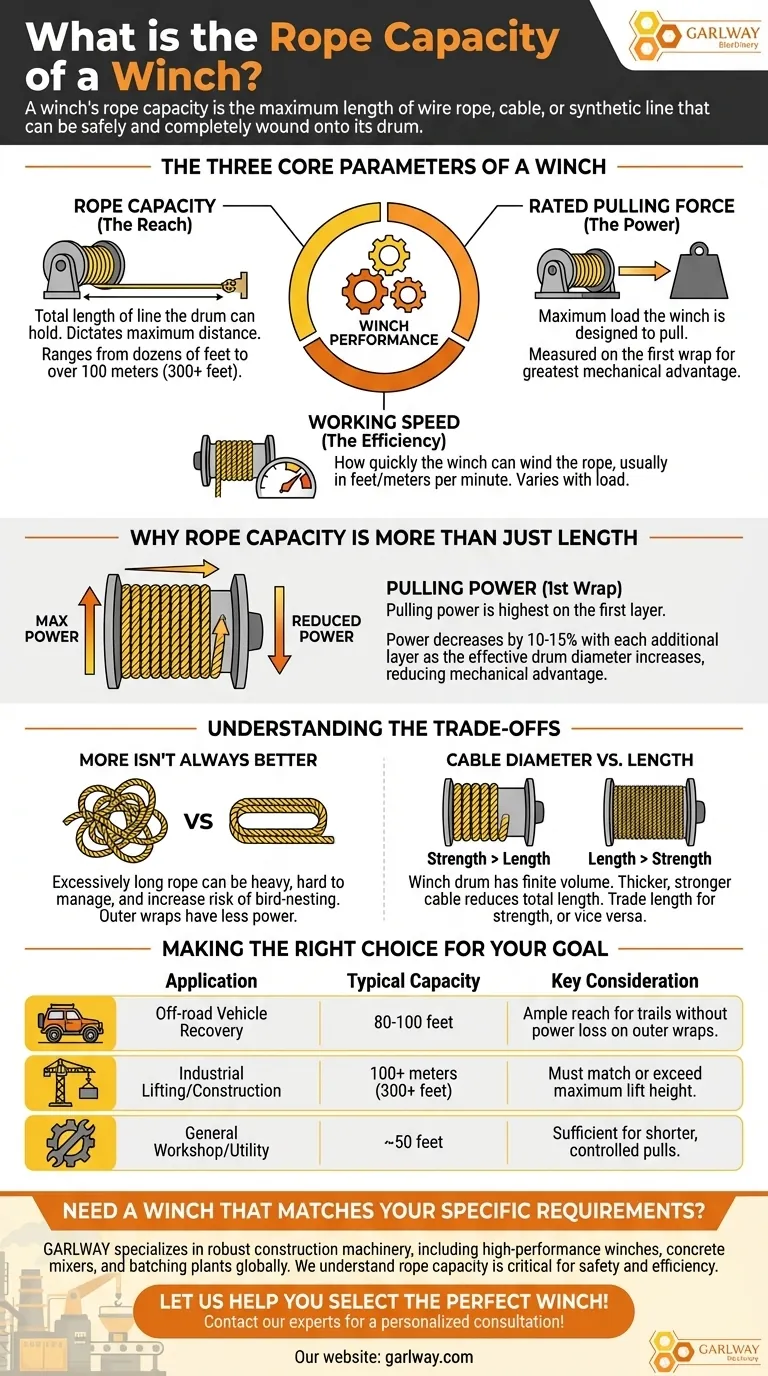
Rope Capacity (The Reach)
This is the total length of line the drum can hold. It dictates the maximum distance between your winch and a secure anchor point or the object you need to move.
Capacities can range from dozens of feet for utility winches to over 100 meters (300+ feet) for specialized industrial or lifting winches.
Rated Pulling Force (The Power)
Also called rated traction, this is the maximum load the winch is designed to pull. This force is typically measured on the first wrap of the rope around the drum, when the winch has its greatest mechanical advantage.
Working Speed (The Efficiency)
This parameter measures how quickly the winch can wind the rope onto the drum, usually expressed in feet or meters per minute. This speed often changes depending on the load being pulled.
Why Rope Capacity is More Than Just Length
The length of rope on your winch has direct implications for its performance, particularly its pulling power. This relationship is a critical factor in safe and effective operation.
The Impact on Pulling Power
A winch exerts its maximum pulling force when the line is almost fully extended, with only the first layer of rope wrapped around the drum.
As more rope is wound onto the drum, each successive layer increases the effective diameter of the drum. This reduces the winch's mechanical advantage, causing a decrease in its effective pulling power. A winch might lose 10-15% of its rated power with each additional layer of rope on the drum.
Matching Capacity to Application
The ideal rope capacity is entirely dependent on the task. For vehicle recovery, 80-100 feet is often sufficient to reach a safe anchor point. For industrial lifting applications, the capacity must match the maximum required lift height, which could be significantly longer.
Understanding the Trade-offs
Choosing a winch is about balancing its core specifications. Simply opting for the longest possible rope can introduce unintended consequences.
More Isn't Always Better
An excessively long rope can be heavy and difficult to manage. More importantly, if you rarely use the full length, most of your work will be done on the outer wraps where the winch has less power. It can also increase the risk of the line bird-nesting or wrapping unevenly on the drum.
Cable Diameter vs. Length
The winch drum has a finite volume. Opting for a thicker, stronger cable to handle heavier loads will naturally reduce the total length of rope that can fit on the drum. You must often trade length for strength, or vice versa.
Making the Right Choice for Your Goal
Select a winch where the rope capacity aligns directly with its intended use case.
- If your primary focus is off-road vehicle recovery: Choose a capacity in the 80-100 foot range, which provides ample reach for most trailside scenarios without compromising pulling power on the outer wraps.
- If your primary focus is industrial lifting or construction: Your required capacity is non-negotiable and must match or exceed the maximum lift height for the job.
- If your primary focus is general workshop or utility pulling: A moderate capacity of around 50 feet is often more than sufficient, as pulling distances are typically shorter and more controlled.
Ultimately, viewing rope capacity as part of an integrated system—not just a single number—ensures you have the right tool for the job.
Summary Table:
| Application | Typical Rope Capacity | Key Consideration |
|---|---|---|
| Off-road Vehicle Recovery | 80-100 feet | Ample reach for trails without power loss on outer wraps. |
| Industrial Lifting/Construction | 100+ meters (300+ feet) | Must match or exceed maximum lift height. |
| General Workshop/Utility | ~50 feet | Sufficient for shorter, controlled pulls. |
Need a Winch That Matches Your Specific Rope Capacity and Power Requirements?
GARLWAY specializes in providing robust construction machinery, including high-performance winches, concrete mixers, and batching plants for construction companies and contractors globally. We understand that the right rope capacity is critical for safety and efficiency.
Let us help you select the perfect winch for your project's demands.
Contact our experts today for a personalized consultation!
Visual Guide
Related Products
- Warn Winch Windlass Boat Trailer Winch
- Electric and Hydraulic Winch for Heavy Duty Applications
- Small Electric Winch 120V and 240V for Compact Applications
- 12000 lb Electric Boat Trailer Winch with Windlass Anchor Warn
- Quick Windlass Portable Winch for Truck and Boat Best Boat Winch
People Also Ask
- What are the main components of a boat trailer winch? A Guide to Safe & Efficient Boat Loading
- What factors should be considered when choosing a boat trailer winch? Ensure Safe and Effortless Boat Loading
- What is the purpose of boat trailer winches? Safely and Efficiently Load Your Boat
- What are the two main types of boat trailer winches? Manual vs. Electric Explained
- How often should a boat trailer winch be replaced? Your Guide to Safety and Longevity