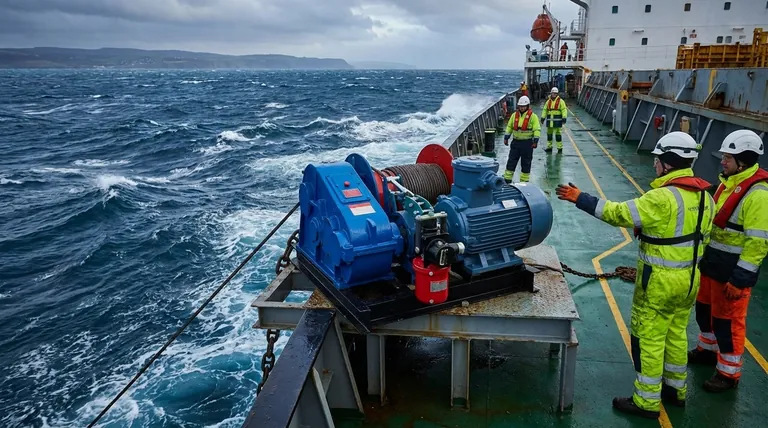
In maritime operations, safety is the paramount concern. Hydraulic winches contribute directly to this by providing exceptionally precise control over tension and speed, incorporating robust fail-safe mechanisms, and offering unmatched durability in harsh marine conditions. This combination minimizes the risk of catastrophic equipment failure, uncontrolled load movements, and subsequent accidents.
The core safety challenge at sea is managing immense forces in an unpredictable environment. Hydraulic winches solve this by converting fluid power into highly controllable and reliable mechanical work, fundamentally de-risking critical tasks like mooring, anchoring, and cargo handling.
The Core Safety Pillars of Hydraulic Winches
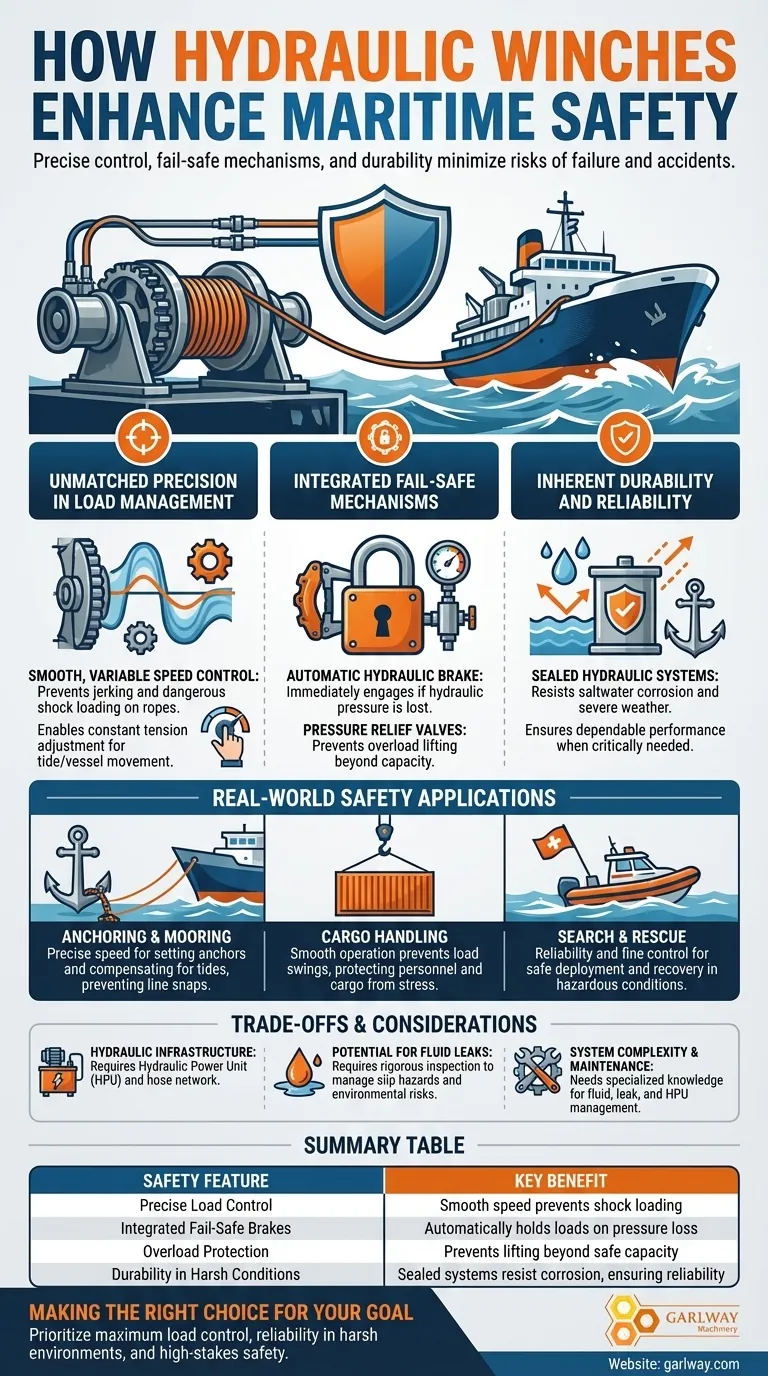
The safety advantages of hydraulic winches are not incidental; they are a direct result of their fundamental design principles. Three key pillars define their contribution to a safer operational environment.
Unmatched Precision in Load Management
A primary cause of accidents is the sudden, uncontrolled movement of heavy loads. Hydraulic systems excel at providing smooth, variable speed control.
This allows operators to start, stop, and reverse direction without the "jerking" motion common in other systems. This precision prevents dangerous shock loading on ropes and cables, which can lead to premature failure.
Integrated Fail-Safe Mechanisms
Hydraulic winches are engineered with inherent safety features. The most critical is the hydraulic brake, which often engages automatically if hydraulic pressure is lost.
This means that in the event of a power failure or hose rupture, the load is immediately and safely held in place, preventing it from dropping. Furthermore, pressure relief valves act as overload protection, preventing operators from lifting loads beyond the winch's designed capacity.
Inherent Durability and Reliability
The marine environment is relentlessly corrosive. Hydraulic systems are typically sealed, protecting internal components from saltwater, moisture, and extreme temperatures.
This robust construction ensures reliable performance when it is needed most. An electric winch might fail due to water ingress, but a well-maintained hydraulic system will operate dependably in the most severe weather, a critical factor for safety.
How These Features Translate to Real-World Safety
Theory is important, but the true value of these features is evident in their daily application across critical maritime tasks.
In Anchoring and Mooring
When anchoring, the ability to pay out the chain with precise speed control is vital to ensure the anchor sets correctly. During mooring, hydraulic winches allow for the constant adjustment of line tension to compensate for tide changes and vessel movement, preventing line snaps that endanger crew.
During Cargo Handling
Lifting and moving heavy, often valuable, cargo on a moving deck requires extreme control. The smooth operation of a hydraulic winch prevents dangerous load swings, protecting both personnel on deck and the cargo itself. The overload protection ensures the vessel's crane is not stressed beyond its limits.
For Search and Rescue Missions
In a rescue scenario, conditions are often hazardous and unpredictable. The reliability and fine control offered by hydraulic winches are essential for safely deploying and recovering rescue boats, personnel, or equipment in high-stakes environments where equipment failure is not an option.
Understanding the Trade-offs and Considerations
While exceptionally safe, hydraulic systems are not without their complexities. Acknowledging these is key to a holistic safety strategy.
The Need for Hydraulic Infrastructure
Hydraulic winches require a dedicated Hydraulic Power Unit (HPU) to generate pressure, along with a network of hoses and valves. This adds complexity and maintenance requirements compared to a self-contained electric winch.
Potential for Fluid Leaks
Though rugged, hydraulic hoses and fittings can fail, leading to fluid leaks. A hydraulic fluid leak not only poses an environmental risk but also creates a significant slip hazard on deck, which must be managed through rigorous inspection and maintenance protocols.
System Complexity and Maintenance
The power and control of a hydraulic system come from its interconnected components. Proper maintenance requires specialized knowledge to manage fluid levels, check for leaks, and service the HPU. Neglecting this maintenance can undermine the system's inherent safety advantages.
Making the Right Choice for Your Goal
Selecting the right equipment is a foundational step in ensuring operational safety. Your decision should be guided by the specific risks and demands of your application.
- If your primary focus is maximum load control and crew safety in critical operations: A hydraulic winch is the definitive choice due to its superior power modulation and integrated fail-safe braking.
- If your primary focus is reliability in harsh, corrosive environments: The sealed and robust nature of hydraulic systems provides unmatched operational dependability and long-term safety.
- If you are managing high-stakes tasks like rescue or heavy lifting: The overload protection and precise control of a hydraulic system are non-negotiable safety features.
Ultimately, choosing a hydraulic winch is an investment in controlling risk and ensuring your operations are underpinned by predictable, reliable power.
Summary Table:
| Safety Feature | Key Benefit |
|---|---|
| Precise Load Control | Smooth, variable speed prevents jerking and shock loading on cables. |
| Integrated Fail-Safe Brakes | Automatically hold loads if pressure is lost, preventing accidents. |
| Overload Protection | Pressure relief valves prevent lifting beyond safe capacity. |
| Durability in Harsh Conditions | Sealed systems resist corrosion, ensuring reliability in severe weather. |
Ready to enhance the safety and reliability of your maritime operations? At GARLWAY, we specialize in high-performance hydraulic winches engineered for construction companies and contractors globally. Our robust winches provide the precise control and fail-safe mechanisms you need to protect your crew and cargo in the most demanding environments. Contact GARLWAY today to discuss your specific requirements and invest in safety.
Visual Guide
Related Products
- Hydraulic Winding Engine Harbor Freight Winch
- Electric and Hydraulic Winch for Heavy Duty Applications
- Electric Hoist Winch Boat Anchor Windlass for Marine Applications
- Electric 120V Boat Winch by Badlands
- 12000 lb Electric Boat Trailer Winch with Windlass Anchor Warn
People Also Ask
- What role does hydraulic fluid play in hydraulic winches? It's the Lifeblood of Your Heavy-Duty Pulling Power
- What vehicles commonly use hydraulic winches? For Industrial Trucks Needing Unmatched Power
- What are the features of hydraulic winches? Unmatched Power and Continuous Duty for Heavy Loads
- What preventive measures can be taken to avoid oil leakage in hydraulic winches? Ensure Long-Term Reliability
- What does 'power out' mean in a hydraulic winch? Achieve Absolute Control When Lowering Heavy Loads