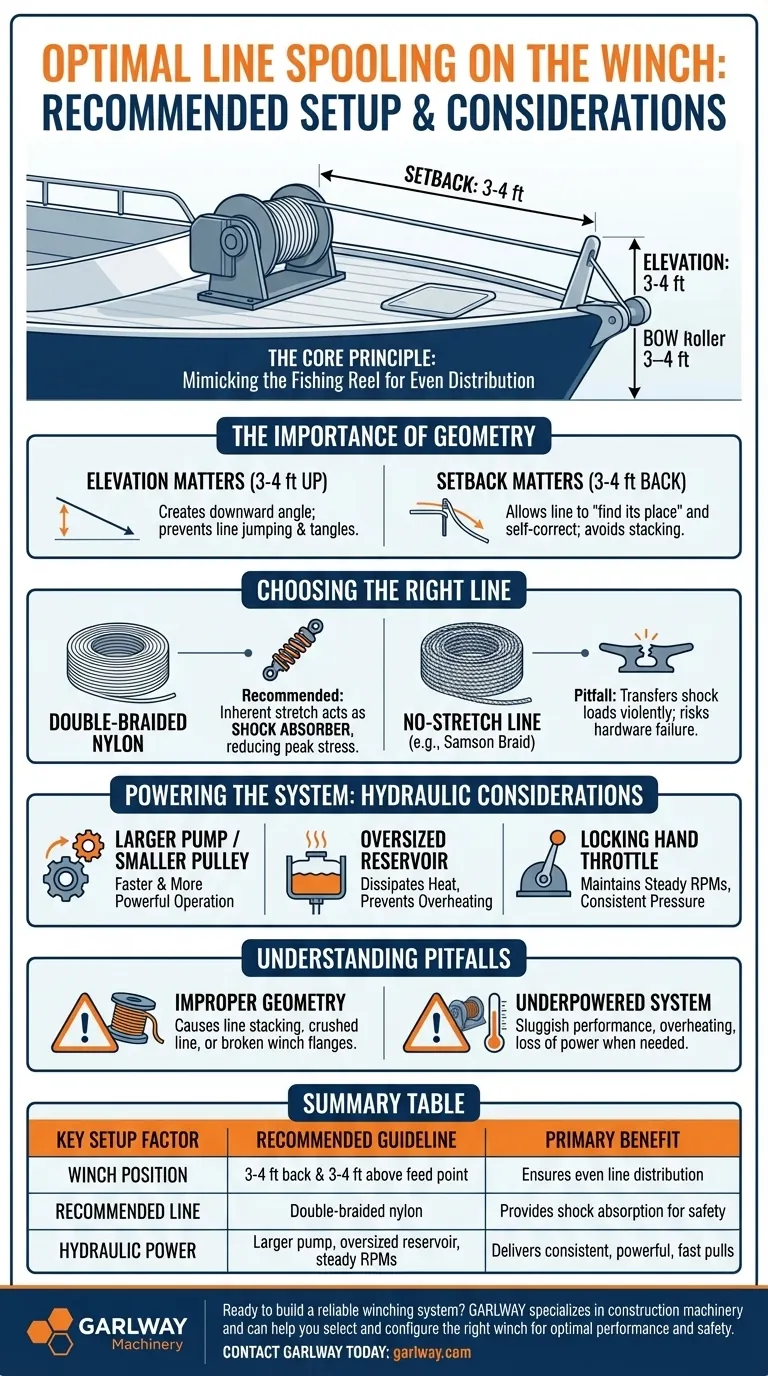
For optimal line spooling, your winch should be positioned 3-4 feet back from and 3-4 feet above the point where the line feeds out, such as a bow roller or fairlead. This geometry is the single most important factor in ensuring the line lays evenly across the drum without bunching or stacking, which prevents damage and ensures reliable operation.
The ideal winch setup is not just about the winch itself, but about creating the correct geometry and system synergy. Proper elevation and setback are critical for even line distribution, while the right line and hydraulic system ensure safety and power.

The Core Principle: Emulating the Fishing Reel
The recommended winch position mimics the design of a fishing rod and reel. The distance and angle created by the setup guide the line, allowing it to spool evenly across the full width of the drum.
Why Elevation Matters
Elevating the winch by 3-4 feet creates a downward angle on the line as it approaches the drum. This angle helps the line wrap tightly and prevents it from jumping over previous wraps, which can cause tangles and damage.
The Importance of Setback
Setting the winch back by 3-4 feet provides the necessary distance for the line to "find its place" on the drum. As the line comes in from different angles during a pull, this distance allows it to self-correct and lay evenly rather than piling up on one side.
Choosing the Right Line for the Job
The type of line you use is just as critical as the winch's physical placement. The material properties directly impact the performance and safety of your entire anchoring or pulling system.
The Case for Double-Braided Nylon
Double-braided nylon is highly recommended for most winching applications. Its primary advantage is its inherent stretch.
The Function of Stretch
This elasticity acts as a crucial shock absorber during hard pulls or when setting an anchor in rough conditions. It smooths out shock loads, significantly reducing peak stress on your boat's hardware, the anchor system, and the winch itself.
Powering the System: Hydraulic Considerations
For hydraulic winches, consistent and adequate power is essential for performance. An underpowered system will result in slow, weak pulls, especially under heavy load.
Optimizing the Hydraulic Pump
Using a larger pump provides more fluid volume, which translates directly to faster and more powerful winch operation. You can also install a smaller diameter pulley on the pump to increase its rotational speed (RPMs), further boosting performance.
Managing Heat and RPMs
A hydraulic system generates significant heat. An oversized reservoir is recommended to hold more hydraulic fluid, which helps dissipate heat and prevents the system from overheating during prolonged use.
To ensure the pump gets the power it needs, a locking or friction hand throttle can be used to maintain steady engine RPMs, guaranteeing consistent hydraulic pressure when you need it most.
Understanding the Trade-offs and Pitfalls
A proper setup requires a systems-based approach. Neglecting one component can undermine the entire operation, leading to poor performance or catastrophic failure.
The Danger of Improper Geometry
Failing to provide adequate setback and elevation is the most common mistake. This leads to line stacking on one side of the drum, which can crush the line under immense pressure or even bend and break the winch drum's flanges.
The Risk of a "No-Stretch" Line
Using a line with very little stretch, such as Samson braid, can be dangerous. While strong, it transfers shock loads directly and violently to your hardware. A sudden jolt can rip cleats out of the deck or cause other equipment failures.
The Consequence of an Underpowered System
An undersized hydraulic pump or reservoir will lead to frustration. The winch will perform sluggishly, and the fluid can overheat, causing pump damage and a loss of pulling power precisely when it's needed most.
How to Apply This to Your Project
Your final setup depends on balancing performance, safety, and longevity. Use these principles to guide your decisions.
- If your primary focus is reliability and even spooling: Prioritize achieving the 3-4 feet of elevation and 3-4 feet of setback for your winch placement above all else.
- If your primary focus is safety and system longevity: Choose double-braided nylon line to provide shock absorption and reduce stress on all mechanical components.
- If your primary focus is maximum pulling power and speed: Invest in upgrading your hydraulic system with a larger pump, an oversized reservoir, and a method for maintaining engine RPMs.
Ultimately, a truly effective winching system is one where every component works in harmony to manage force safely and efficiently.
Summary Table:
| Key Setup Factor | Recommended Guideline | Primary Benefit |
|---|---|---|
| Winch Position | 3-4 ft back & 3-4 ft above the feed point | Ensures even line distribution across the drum |
| Recommended Line | Double-braided nylon | Provides shock absorption for system safety |
| Hydraulic Power | Larger pump, oversized reservoir, steady RPMs | Delivers consistent, powerful, and fast pulls |
Ready to build a reliable and powerful winching system?
GARLWAY specializes in construction machinery, offering robust winches, concrete mixers, and batching plants for construction companies and contractors globally. Our experts can help you select the right winch and configure it for optimal performance and safety.
Contact GARLWAY today to discuss your project needs and ensure your equipment operates at its best.
Visual Guide
Related Products
- Warn Winch Windlass Boat Trailer Winch
- Electric and Hydraulic Winch for Heavy Duty Applications
- Small Electric Winch 120V and 240V for Compact Applications
- 12000 lb Electric Boat Trailer Winch with Windlass Anchor Warn
- Quick Windlass Portable Winch for Truck and Boat Best Boat Winch
People Also Ask
- What are the main components of a boat trailer winch? A Guide to Safe & Efficient Boat Loading
- What factors should be considered when choosing a boat trailer winch? Ensure Safe and Effortless Boat Loading
- What is the purpose of boat trailer winches? Safely and Efficiently Load Your Boat
- What are the two main types of boat trailer winches? Manual vs. Electric Explained
- How often should a boat trailer winch be replaced? Your Guide to Safety and Longevity