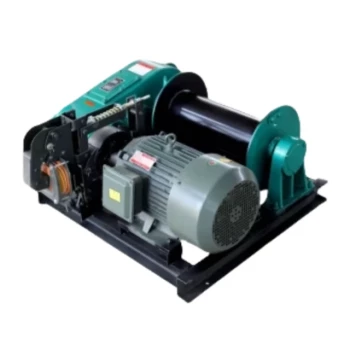
At its core, an electrical winch on a ship is a force multiplier, designed to manage immense loads with precision and control. Its most common uses are for critical maritime operations, including raising and lowering anchors, handling mooring lines for docking, lifting heavy cargo, and towing other vessels.
The electric winch is the indispensable muscle of modern maritime work. It translates electrical power into mechanical force, enabling crews to safely and efficiently handle the heavy, constant-motion tasks of anchoring, mooring, and cargo management that would otherwise be impossible.
Core Functions of Marine Electric Winches
The power and reliability of electric winches make them fundamental to several key operations on nearly every type of vessel. Each function leverages the winch's ability to pull or lift with controlled force.
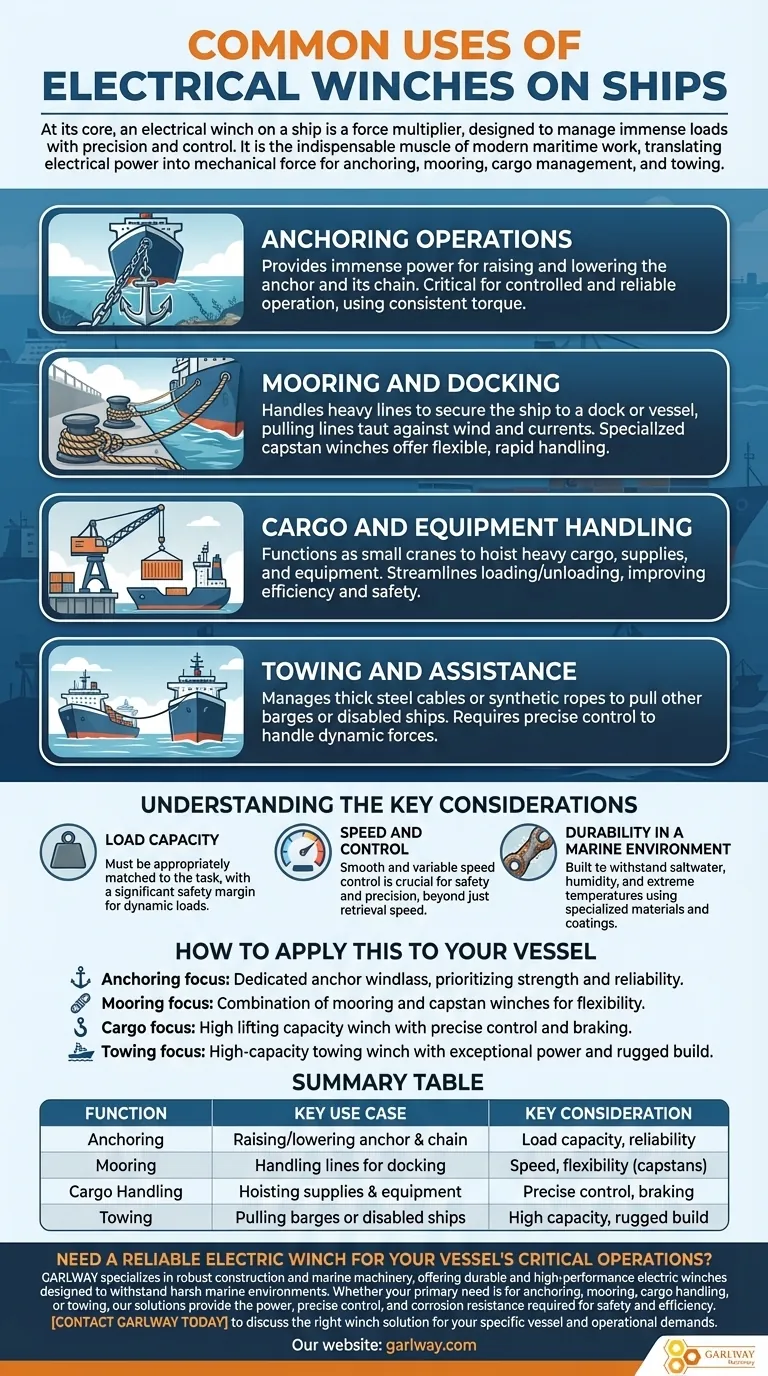
Anchoring Operations
The most fundamental use is for anchoring. An anchor winch, or windlass, provides the immense power required to raise a heavy anchor and its chain from the seabed.
This process must be controlled and reliable, as a failure can endanger the vessel. Electric motors provide the consistent torque needed for this demanding task.
Mooring and Docking
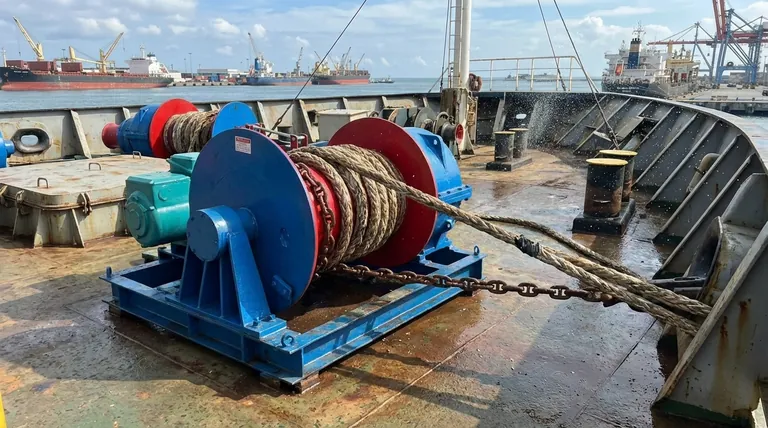
During mooring, winches are used to handle the heavy lines that secure the ship to a dock or another vessel. They pull the lines taut, ensuring the ship is held firmly in place against wind and currents.
Specialized capstan winches are often used for this purpose, allowing for flexible and rapid handling of ropes from multiple angles.
Cargo and Equipment Handling
On board, winches function as small cranes, hoisting heavy cargo, supplies, and equipment from the dock to the deck or between different levels of the ship.
Their power streamlines loading and unloading operations, improving efficiency and reducing the need for manual labor in potentially hazardous situations.
Towing and Assistance
Larger vessels use powerful electric winches for towing operations. These winches manage the thick steel cables or synthetic ropes used to pull other barges or disabled ships.
The precise control offered by an electric system is critical for managing the dynamic forces involved in towing at sea.
Understanding the Key Considerations
While the function seems simple—pulling and lifting—the marine environment imposes unique demands that dictate the choice and design of any winch system.
Load Capacity
The single most important factor is the winch's rated pulling or lifting capacity. This must be appropriately matched to the task, whether it's the weight of an anchor or the tonnage of a vessel being towed.
A significant safety margin is always calculated to account for dynamic loads caused by waves, wind, and current.
Speed and Control
The line speed of a winch determines how quickly it can retrieve a rope or chain. While faster is often better for efficiency, smooth and variable speed control is crucial for safety and precision.
Modern electric winches offer excellent control, allowing operators to make fine adjustments when positioning cargo or tensioning a mooring line.
Durability in a Marine Environment
Ships operate in one of the harshest environments on Earth. A marine winch must be built to withstand constant exposure to saltwater, humidity, and extreme temperatures.
This requires specialized materials, sealed motor housings, and corrosion-resistant coatings to ensure reliability and a long operational lifespan.
How to Apply This to Your Vessel
Your specific operational needs will determine the type and specification of the winch required.
- If your primary focus is anchoring: You need a dedicated anchor windlass with a capacity matched to your anchor and chain weight, prioritizing strength and reliability above all else.
- If your primary focus is frequent mooring: A combination of mooring winches and capstan winches will provide the flexibility and speed needed for efficient docking operations.
- If your primary focus is cargo handling: A winch with a high lifting capacity, precise speed control, and a robust braking system is essential for safe and efficient material movement.
- If your primary focus is towing: Your vessel requires a high-capacity towing winch with exceptional power and a rugged build to manage extreme and unpredictable loads.
Ultimately, selecting the right electric winch is about matching its power and design to the specific forces it will manage on your vessel.
Summary Table:
| Function | Key Use Case | Key Consideration |
|---|---|---|
| Anchoring | Raising/lowering anchor & chain | Load capacity, reliability |
| Mooring | Handling lines for docking | Speed, flexibility (capstans) |
| Cargo Handling | Hoisting supplies & equipment | Precise control, braking |
| Towing | Pulling barges or disabled ships | High capacity, rugged build |
Need a reliable electric winch for your vessel's critical operations?
GARLWAY specializes in robust construction and marine machinery, offering durable and high-performance electric winches designed to withstand harsh marine environments. Whether your primary need is for anchoring, mooring, cargo handling, or towing, our solutions provide the power, precise control, and corrosion resistance required for safety and efficiency.
Contact GARLWAY today to discuss the right winch solution for your specific vessel and operational demands.
Visual Guide
Related Products
- Electric Hoist Winch Boat Anchor Windlass for Marine Applications
- Heavy Duty Electric Boat Winch Windlass Anchor
- Electric 120V Boat Winch by Badlands
- 12000 lb Heavy Duty Electric Boat Winch
- 12000 lb Electric Boat Trailer Winch with Windlass Anchor Warn
People Also Ask
- How does an electric anchor winch work? Power, Safety, and Reliable Operation Explained
- What are the advantages of installing an electric anchor winch on a boat? Boost Safety & Ease for Boaters
- What are the operational differences between electric hoists and winches? A Guide to Safe Lifting vs. Pulling
- What are the main benefits of a boat anchor winch? Boost Safety & Efficiency for Your Vessel
- How does a boat anchor winch work? A Guide to Reliable Anchor Handling