
The most common issues with an oil mist device in a concrete mixing station are an incorrectly adjusted needle valve, a blocked oil path, or air leaks in the pipeline. These faults prevent the device from performing its core function: atomizing liquid oil into a fine mist for lubricating the pneumatic system.
The failure of an oil mist device is almost always a failure of atomization. Whether due to incorrect settings, blockages, or air leaks, the result is the same—pneumatic components are starved of the lubrication they need, leading to accelerated wear and system failure.
Understanding the Core Function
The Purpose of an Oil Mist Device
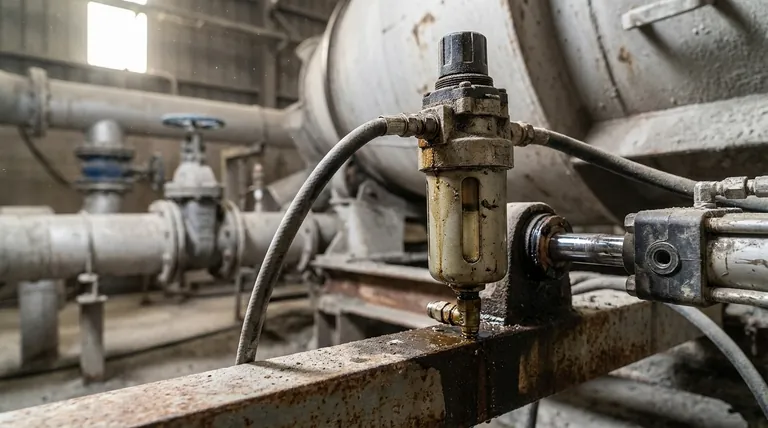
An oil mist device, or lubricator, is a critical component in the pneumatic system of a concrete mixing station. Its sole purpose is to inject a fine mist of lubricating oil into the compressed air line.
This oil-laden air then travels to power various components, such as pneumatic cylinders and valves, ensuring they operate smoothly and do not wear out prematurely.
The Mechanism of Atomization
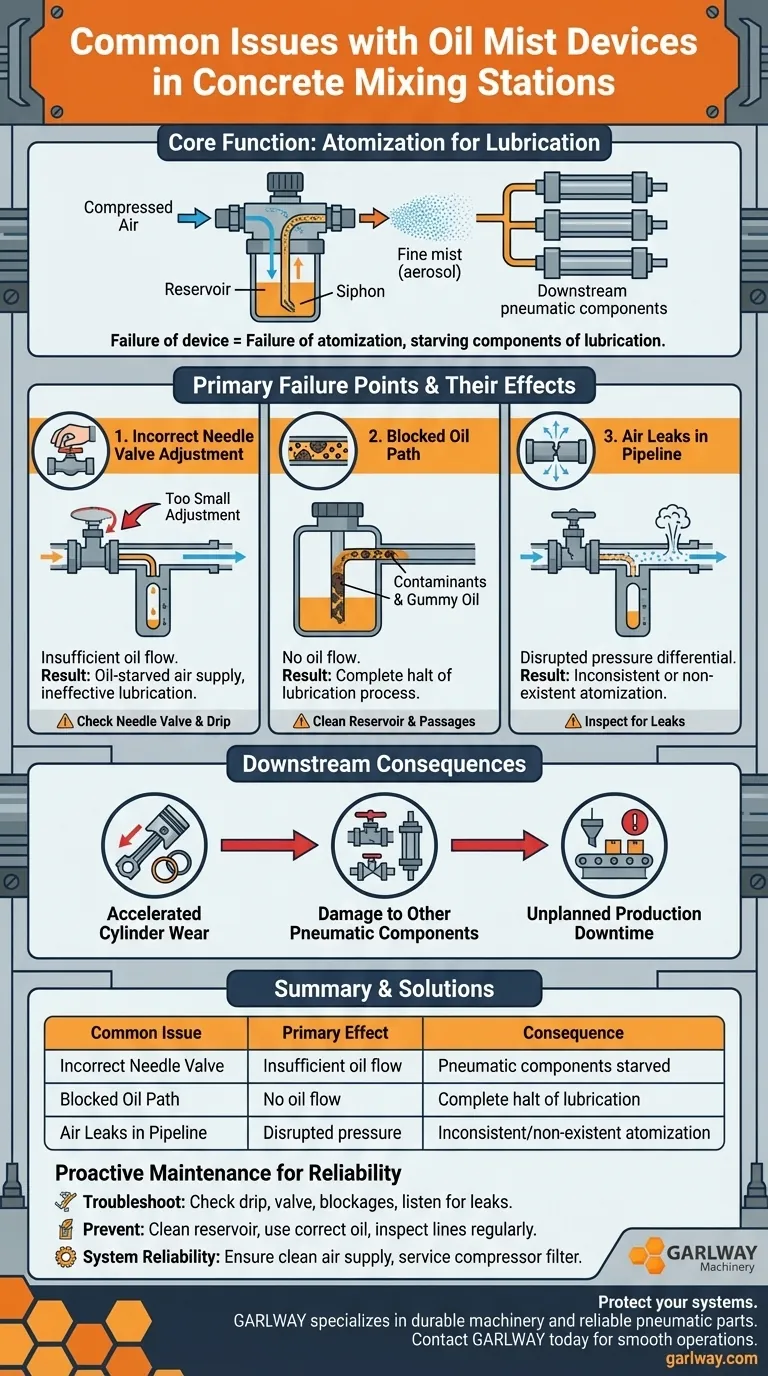
The device works on a simple principle. As compressed air flows through it, a pressure differential is created which siphons oil from a reservoir. The airflow then breaks this liquid oil into a fine mist, or aerosol, which is carried downstream.
Common Failure Points in Detail
The three primary failure points directly disrupt the atomization process.
Issue 1: Incorrect Needle Valve Adjustment
The needle valve controls the drip rate of oil entering the airstream. If the adjustment is too small, not enough oil is drawn into the system.
This results in an oil-starved air supply, rendering the lubrication ineffective. There will be no visible oil drip in the sight glass.
Issue 2: Blockage of the Oil Path
Contaminants from the air supply or old, gummy oil can create a blockage in the internal oil passages.
This physically prevents oil from being siphoned from the reservoir into the airflow, completely halting the lubrication process.
Issue 3: Air Leaks in the Pipeline
The device relies on a stable pressure differential to function. An air leak anywhere in the pipeline upstream or downstream can disrupt this.
A leak reduces the pressure needed to draw and atomize the oil, leading to inconsistent or nonexistent lubrication.
The Downstream Consequences of Failure
Ignoring a faulty oil mist device has significant consequences for the entire mixing station.
Accelerated Cylinder Wear
The most immediate impact is on pneumatic cylinders. The references explicitly note that insufficient lubrication is a primary cause of cylinder faults.
Without oil, sealing rings wear out, piston rods can get scratched, and internal components suffer from excessive friction, leading to seizure or failure.
Damage to Other Pneumatic Components
Cylinders are not the only victims. All pneumatic valves and actuators connected to the line will suffer from increased friction and wear. This leads to sluggish performance, operational failures, and costly replacements.
Unplanned Production Downtime
A simple, inexpensive oil mist device can bring an entire production line to a halt. The failure of a critical pneumatic cylinder due to poor lubrication means lost time, lost revenue, and emergency maintenance costs.
How to Apply This to Your System
A proactive approach is the only way to ensure the reliability of your pneumatic systems.
- If your primary focus is immediate troubleshooting: Start by checking for an oil drip in the sight glass. If there is none, check the needle valve setting first, then inspect for blockages and listen for audible air leaks.
- If your primary focus is preventative maintenance: Regularly clean the oil reservoir and internal passages, use the correct type of oil, and periodically inspect all pneumatic lines and connections for leaks.
- If your primary focus is overall system reliability: Ensure the air supplied to the system is clean by regularly servicing the air compressor's filter, as a blocked filter can introduce the very contaminants that clog the oil mister.
Properly maintaining your oil mist system is a small investment that protects the operational health of your entire station.
Summary Table:
| Common Issue | Primary Effect | Consequence |
|---|---|---|
| Incorrect Needle Valve | Insufficient oil flow | Pneumatic components starved of lubrication |
| Blocked Oil Path | No oil flow | Complete halt of lubrication process |
| Air Leaks in Pipeline | Disrupted pressure differential | Inconsistent or non-existent atomization |
Protect your concrete mixing station's pneumatic systems and avoid costly downtime. GARLWAY specializes in durable construction machinery and components, including reliable pneumatic system parts. Our expertise ensures your equipment runs smoothly, maximizing productivity for construction companies and contractors globally. Contact GARLWAY today to discuss your needs and keep your operations running reliably.
Visual Guide
Related Products
- Portable Concrete Mixer Machine Equipment for Mixing Concrete
- Hydraulic Concrete Mixer Machine Cement Mixing Equipment for Mixture Concrete
- Shaft Mixer Machine for Cement and Regular Concrete Mixing
- Portable Ready Mix Concrete Mixer Equipment
- Commercial Construction Mixer Machine for Soil Cement Mixing Concrete
People Also Ask
- Why is it necessary to use a portable concrete mixer? Gain Total Control & Efficiency
- How much concrete can you pour with a portable mixer? Find the Perfect Fit for Your Project
- What types of projects are portable concrete mixers suitable for? Ideal for DIY & Small-Scale Construction
- How much does a portable concrete mixer hold? A Guide to Choosing the Right Capacity
- What types of portable concrete mixers exist? Find the Perfect Mixer for Your Project





