
The primary function of a trailer winch is to pull a heavy or bulky object, most commonly a boat, onto a trailer. It is a mechanical loading device that uses a cable or strap to make an otherwise difficult or impossible task manageable and safe.
A trailer winch is a tool exclusively for loading and unloading. It is critically important to understand that it is not designed to secure the cargo to the trailer for transportation; that is the job of dedicated tie-down straps.
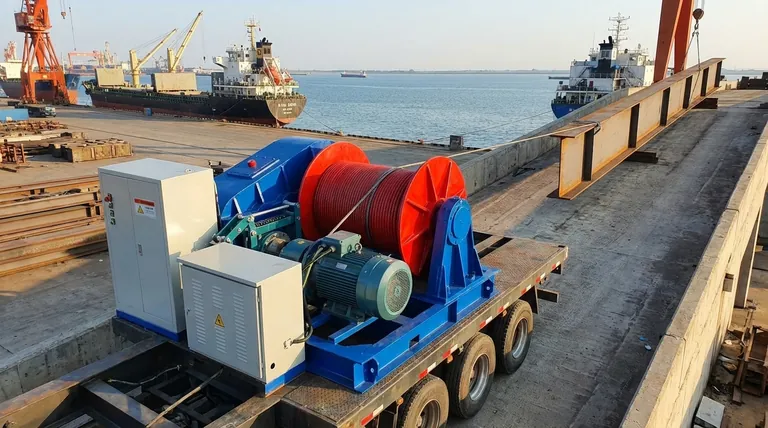
How a Trailer Winch Solves the Loading Problem
A trailer winch acts as a force multiplier, allowing a single person to exert the significant pulling force required to move thousands of pounds of weight up an incline and into position on a trailer.
The Core Mechanism
At its heart, a winch is a simple machine. It consists of a drum (or axle) around which a wire rope or synthetic strap is wound. By turning a crank (manual winch) or activating a motor (electric winch), the drum rotates, pulling in the strap and dragging the attached object onto the trailer.
Manual vs. Electric Winches
There are two primary types of trailer winches, each suited for different needs.
-
Manual Winches: These are operated by a hand crank. They often include a gearbox to provide mechanical advantage and a ratchet lock that prevents the strap from slipping and the load from rolling backward. They are simple, reliable, and do not require a power source.
-
Electric Winches: These use a 12-volt electric motor powered by the towing vehicle's battery. They make the loading process faster and nearly effortless, which is a significant advantage when dealing with very large boats or vehicles.
The Critical Distinction: Loading vs. Securing
Confusing the role of a winch with that of a tie-down strap is one of the most common and dangerous mistakes in trailering.
The Winch is for Pulling
The winch strap and its internal brake or ratchet are designed to handle the dynamic, high-tension load of pulling an object onto the trailer. This is a short-duration, high-stress event.
Tie-Downs are for Holding
Once the boat or vehicle is loaded, it must be secured with separate, dedicated tie-down straps. These straps are designed to absorb the constant shocks, bounces, and strains of road travel, keeping the load firmly in place. A winch strap is not built for this and can easily fail, leading to catastrophic results.
Key Safety and Operational Guidelines
Proper operation is essential for safety and for protecting your equipment.
Respect the Weight Rating
Never exceed the winch's rated capacity. As a rule of thumb for safety, the total weight of your boat and its contents should not exceed 75% of the winch's pulling capacity.
Powering an Electric Winch
When using an electric winch, always keep the towing vehicle's engine running. This prevents the winch from draining the vehicle's battery.
Stable Footing is Non-Negotiable
When using a manual winch, especially on a wet or slippery boat ramp, ensure you have firm, stable footing before you begin cranking. A slip could cause serious injury.
Making the Right Choice for Your Goal
Selecting the right winch and using it correctly depends entirely on your specific situation.
- If your primary focus is simplicity and reliability for a smaller boat: A manual winch is an excellent, cost-effective choice that gets the job done without complexity.
- If your primary focus is convenience or loading a very heavy boat: An electric winch is a worthwhile investment that saves significant physical effort and time.
- If your primary focus is safety (which it should always be): Always use dedicated tie-down straps to secure your load for transport, regardless of which type of winch you use for loading.
Your trailer winch is an indispensable tool for loading, but its job ends the moment your cargo is in place.
Summary Table:
| Aspect | Key Information |
|---|---|
| Primary Function | Pulling heavy objects (e.g., boats) onto a trailer for loading/unloading. |
| Key Distinction | A winch is for loading only; use separate tie-down straps to secure cargo for transport. |
| Types | Manual Winch: Hand-cranked, reliable, no power needed. Electric Winch: Motorized, easier for heavy loads, requires vehicle power. |
| Critical Safety Rule | Never exceed 75% of the winch's rated capacity for safe operation. |
Ready to Find the Perfect Trailer Winch for Your Project?
GARLWAY specializes in high-performance construction and loading machinery, offering durable trailer winches designed for reliability and safety. Whether you're a construction company managing equipment or a contractor loading boats and heavy materials, we have the right solution.
Let us help you:
- Select the ideal winch (manual or electric) based on your load capacity and operational needs.
- Ensure job site safety with equipment built to rigorous standards.
- Enhance efficiency with tools that make heavy lifting manageable.
Contact GARLWAY today for expert advice and to explore our full range of winches, concrete mixers, and batching plants tailored for professionals like you!
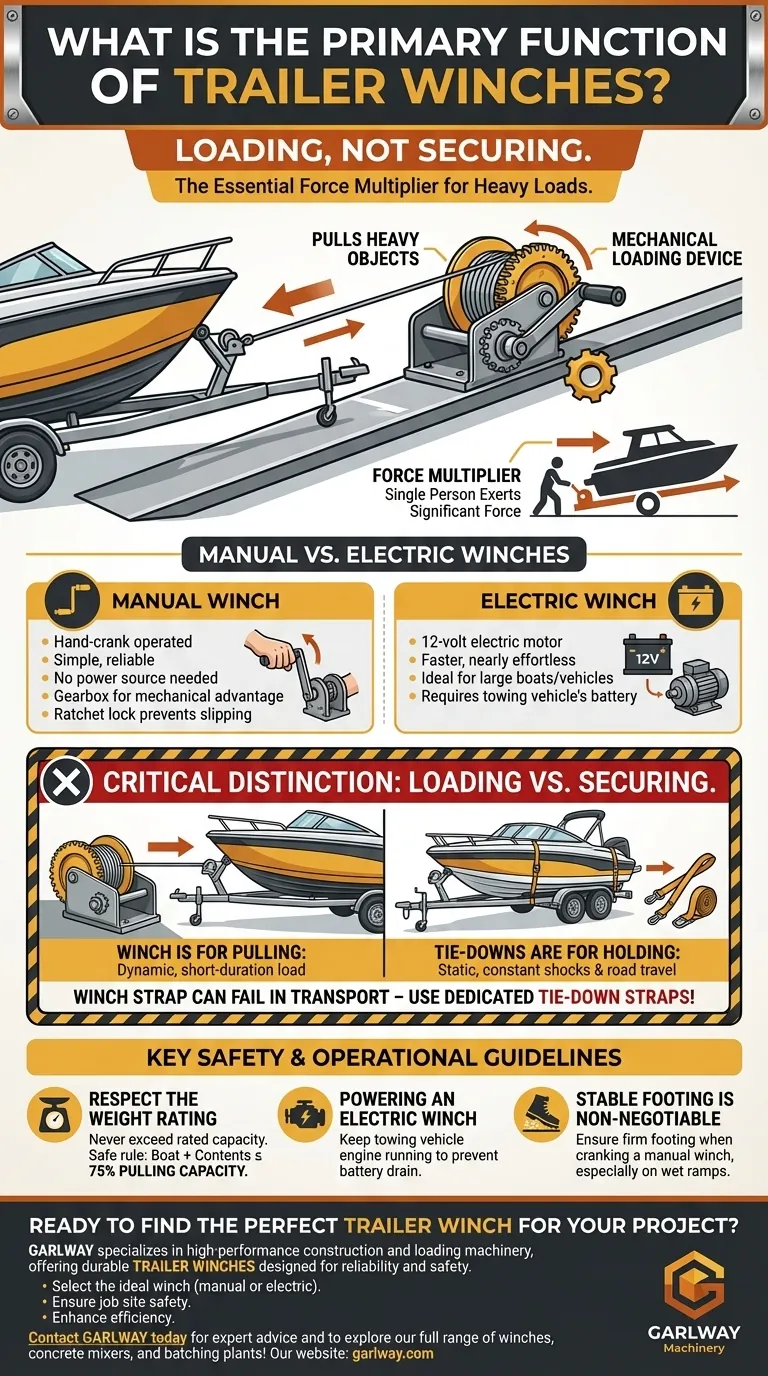
Visual Guide
Related Products
- 12000 lb Electric Boat Trailer Winch with Windlass Anchor Warn
- Portable Small Trailer Winch
- Best 18000 Pound Drum Anchor Trailer Winch
- Warn Winch Windlass Boat Trailer Winch
- Quick Windlass Portable Winch for Truck and Boat Best Boat Winch
People Also Ask
- How does an electric boat trailer winch differ from a manual one? Effort vs. Control Explained
- What size winch do I need for my boat? Get the Right Capacity for Safe Hauling
- How should a boat trailer winch be properly used? A Step-by-Step Guide for Safe Loading
- What maintenance steps are specific to boat trailer winches? Ensure Safety & Reliability at the Ramp
- How strong of a winch do I need for my boat? Get the Right Pulling Power for Trailering & Anchoring





