
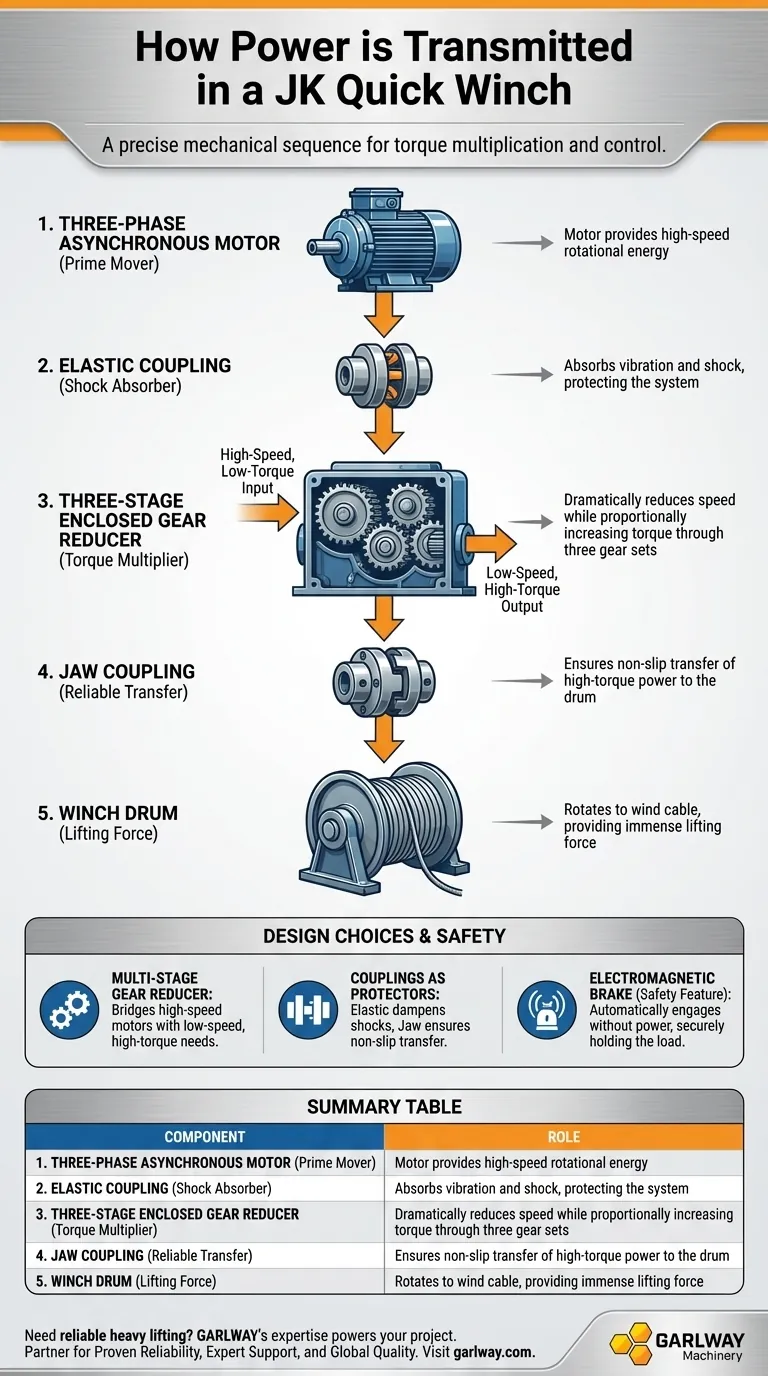
In a JK quick winch, power is transmitted through a precise mechanical sequence designed for torque multiplication and control. The process begins with a three-phase asynchronous motor, which passes its rotational energy through an elastic coupling, into a three-stage enclosed gear reducer, and finally through a jaw coupling to rotate the winch drum.
The JK winch's power transmission system is not merely a connection of parts; it is an engineered solution to a fundamental challenge: converting the high-speed, low-torque output of an electric motor into the low-speed, high-torque force necessary to safely lift heavy loads.
The Complete Power Transmission Pathway
To understand how the winch functions, it's essential to follow the flow of power from the source to the final output. Each component serves a distinct and critical purpose in controlling and transforming the energy.
The Prime Mover: Three-Phase Asynchronous Motor
The entire process starts with a three-phase asynchronous motor. This type of motor is chosen for its reliability, power efficiency, and straightforward operation in industrial environments. It provides the initial high-speed rotational energy that drives the system.
Step 1: The Elastic Coupling
Immediately after the motor, an elastic coupling connects the motor's output shaft to the gearbox. Its primary role is to absorb vibration and shock loads. This small but vital component protects both the motor and the gear reducer from the sudden jolts that can occur during lifting operations, significantly increasing the system's durability.
Step 2: The Three-Stage Enclosed Gear Reducer
This is the heart of the winch. The three-stage enclosed gear reducer is responsible for the critical task of torque multiplication. By passing the high-speed rotation through three successive sets of gears, it dramatically reduces the speed while proportionally increasing the torque. The "enclosed" design ensures all gears are lubricated and protected from debris, contributing to the winch's compact and low-maintenance profile.
Step 3: The Jaw Coupling
After the gear reducer has generated the necessary torque, a jaw coupling provides the final connection to the winch drum. This is a simple, robust coupling designed for positive engagement, ensuring that all the high-torque power from the gearbox is reliably transferred to the drum without any slippage.
The Final Output: Driving the Drum
The end result of this pathway is the slow, controlled, and powerful rotation of the winch drum. This rotation winds the cable, providing the immense lifting force the winch is designed for.
Understanding the Design Choices
The sequence of components in the JK winch is deliberate, with each part addressing a specific engineering requirement.
Why a Multi-Stage Gear Reducer?
Electric motors operate most efficiently at high speeds, but winching requires immense force (torque) at very low speeds. The three-stage gear reducer is the mechanical bridge between these two opposing needs. Using multiple stages allows for a very high gear reduction ratio within a compact physical space.
The Importance of Couplings
The couplings are not just connectors; they are system protectors. The elastic coupling dampens shocks, while the jaw coupling ensures a non-slip transfer of power. Together, they maintain the integrity of the drivetrain under heavy load.
Control and Safety: The Electromagnetic Brake
While not part of the power transmission path itself, the electromagnetic braking system works in concert with it. This brake automatically engages when the motor is not receiving power, securely holding the load in place. This fail-safe mechanism is a critical safety feature that prevents accidental load drops.
Common Pitfalls and Considerations
While this design is effective, it's important to understand its operational characteristics and potential limitations.
Inherent Inefficiency
Every time power is transferred through a set of gears, a small amount of energy is lost to friction and heat. With a three-stage reducer, these minor losses add up. This is a fundamental trade-off for achieving the massive torque multiplication required for lifting.
Maintenance of Enclosed Systems
The "enclosed" gearbox is a major advantage for reliability, as it keeps lubricants in and contaminants out. However, it still requires periodic checks and oil changes according to the manufacturer's schedule to prevent premature wear.
No Direct Load Feedback
The series of couplings and gears completely isolates the operator from the load. This is a safety feature, but it means there is no physical "feel" for the load's behavior. Operation relies entirely on the proper functioning of the motor and brake system.
Making the Right Choice for Your Application
Understanding the power transmission path helps you align the JK winch's capabilities with your specific project goals.
- If your primary focus is safety and reliability: The combination of an enclosed gearbox, protective couplings, and a fail-safe electromagnetic brake creates a robust and dependable system.
- If your primary focus is lifting power: The three-stage gear reducer is the key component, delivering the high-torque performance necessary for heavy-duty applications.
- If your primary focus is versatility and ease of use: The compact, integrated design resulting from this power train makes the winch lightweight and simple to transfer and operate.
By appreciating how each component contributes to the final output, you can confidently deploy the JK quick winch in its intended role.
Summary Table:
| Component | Role in Power Transmission |
|---|---|
| Three-Phase Motor | Provides initial high-speed rotational energy. |
| Elastic Coupling | Absorbs shock and vibration to protect the system. |
| Three-Stage Gear Reducer | Multiplies torque by reducing speed through gears. |
| Jaw Coupling | Transfers high torque to the drum without slippage. |
| Winch Drum | Converts rotational force into linear cable pull for lifting. |
Need a reliable winch for your heavy lifting? Let GARLWAY's expertise power your project.
Understanding the precise engineering behind power transmission is key to selecting the right equipment. At GARLWAY, we specialize in manufacturing robust construction machinery, including winches, concrete mixers, and batching plants. Our solutions are designed for construction companies and contractors who demand safety, durability, and high performance.
Partner with us to get:
- Proven Reliability: Equipment engineered with the same precision as the JK winch's power train.
- Expert Support: Guidance to choose the perfect machinery for your specific lifting and construction needs.
- Global Quality: Durable products built to perform in demanding environments worldwide.
Contact GARLWAY today for a consultation and let us help you lift your productivity to new heights!
Visual Guide
Related Products
- Quick Windlass Portable Winch for Truck and Boat Best Boat Winch
- Portable Small Trailer Winch
- Small Electric Winch 120V and 240V for Compact Applications
- Electric and Hydraulic Winch for Heavy Duty Applications
- Heavy Duty Electric Boat Winch Windlass Anchor
People Also Ask
- What features were incorporated into the upgraded portable winch system? Boost Your Recovery Power & Safety
- What are some uses mentioned for portable winches beyond vehicle recovery? Essential Versatility for Property & Work
- How could the twisting issue with a portable winch be mitigated? Achieve Safe, Centered Pulls with Proper Rigging
- What are the primary uses of a portable winch for a truck? Boost Your Truck's Capability and Self-Reliance
- What is the single rope traction force of the quick winch without a pulley block? 0.5 to 40 Tons Explained



