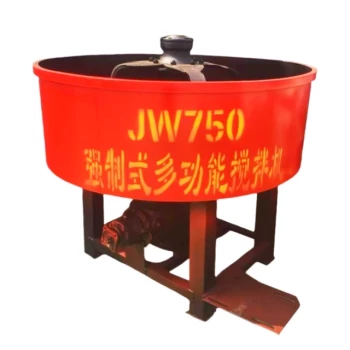
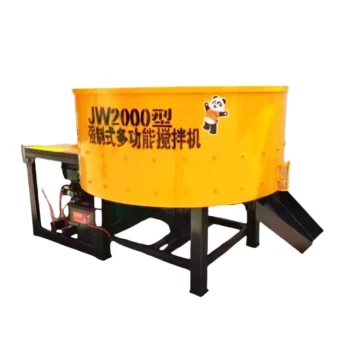
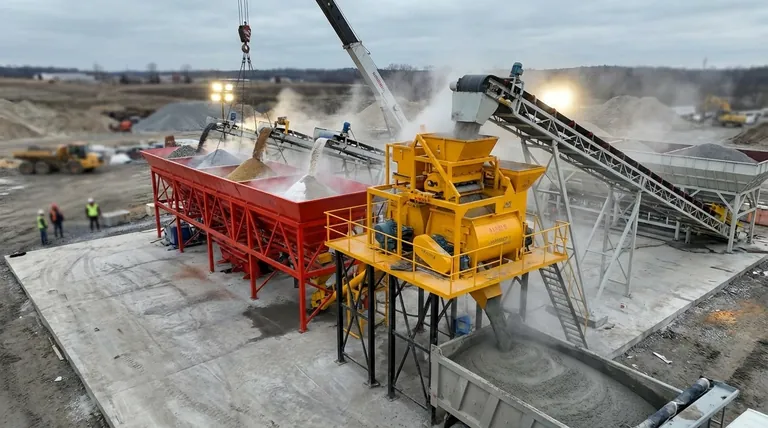
At its core, the primary function of an industrial mixer is to transform multiple, separate ingredients into a single, uniform substance. It achieves this by performing actions like blending, emulsifying, or homogenizing materials through controlled mechanical force to create a consistent, finished product.
The true function of an industrial mixer goes beyond simple stirring. Its purpose is to impart specific physical properties to a product—like texture, stability, and consistency—by applying the correct type and amount of energy to the ingredients.
Beyond Simple Stirring: The Core Mixing Actions
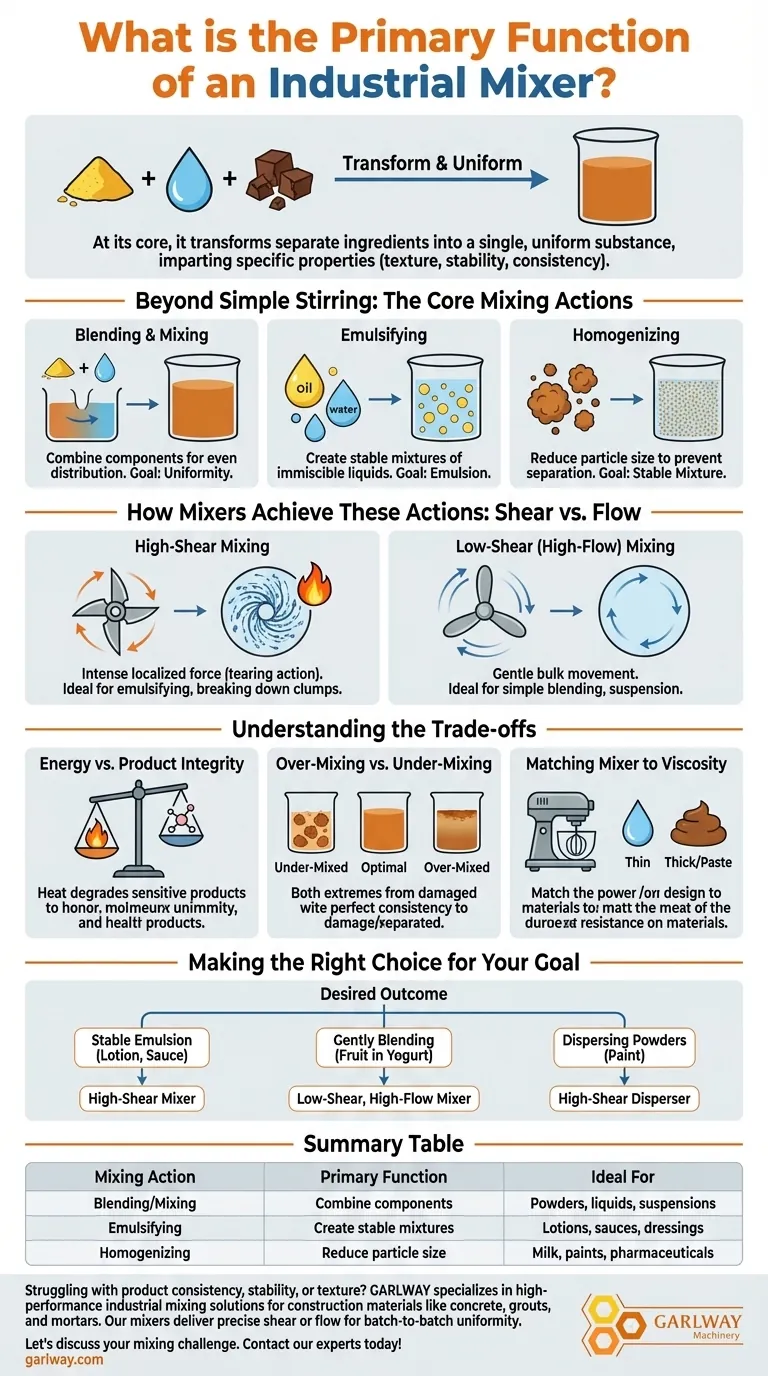
An industrial mixer isn't a one-size-fits-all tool. Its function is defined by the specific action required to achieve the desired product characteristics.
Blending and Mixing
This is the most fundamental function. It involves combining different components until they are evenly distributed throughout the batch. This can mean mixing powders, combining liquids, or suspending solids within a liquid.
The goal is simple uniformity, ensuring every sample taken from the batch is identical.
Emulsifying
This is a more complex process of combining two liquids that naturally resist mixing, such as oil and water.
An industrial mixer creates an emulsion by using intense force to break one liquid down into microscopic droplets and disperse them evenly throughout the other liquid. This is critical for products like lotions, sauces, and salad dressings.
Homogenizing
Homogenization is an intensive form of mixing designed to drastically reduce the particle size of ingredients within a fluid.
The objective is to create an extremely stable mixture that will not separate over time. Milk is a classic example, where homogenizers break down fat globules to prevent a cream layer from forming.
How Mixers Achieve These Actions: Shear vs. Flow
The "magic" of an industrial mixer lies in how it applies energy to the materials. This is primarily understood through the concepts of shear and flow.
High-Shear Mixing
Shear refers to the mechanical force that causes layers of a substance to slide relative to each other. High-shear mixers use rapidly moving components to create intense, localized energy.
This tearing action is necessary for difficult tasks like emulsifying or breaking down solid clumps into fine particles.
Low-Shear (High-Flow) Mixing
Flow, on the other hand, refers to the bulk movement of the material within the tank. Low-shear mixers are designed to gently circulate the entire batch.
This approach is ideal for simple blending or for keeping solids suspended without altering the ingredients' particle size or structure. It's about maintaining uniformity, not transformation.
Understanding the Trade-offs
Selecting the right mixing process involves balancing competing factors. Making the wrong choice can lead to failed batches and inefficient production.
Energy vs. Product Integrity
High-shear mixing is extremely effective but requires significant energy and generates considerable heat. This heat can degrade sensitive products, altering their flavor, color, or efficacy.
Over-Mixing vs. Under-Mixing
Under-mixing results in an inconsistent product that fails quality standards. However, over-mixing can be just as damaging, potentially destroying the desired texture of a product or shearing delicate polymers.
Matching Mixer to Viscosity
A mixer designed for thin liquids like water will be completely ineffective in a thick, viscous paste. The mixer's power, speed, and impeller design must be matched to the material's resistance to flow.
Making the Right Choice for Your Goal
The optimal mixing strategy depends entirely on the desired outcome for your final product.
- If your primary focus is creating a stable emulsion (like a lotion or sauce): A high-shear mixer is necessary to generate the intense force required to break down droplets and prevent separation.
- If your primary focus is gently blending ingredients without changing them (like fruit into yogurt): A low-shear, high-flow mixer will ensure uniformity without damaging the delicate components.
- If your primary focus is dispersing fine powders into a liquid (like pigments in paint): A high-shear disperser is needed to break apart clumps and ensure a smooth, consistent final product.
Ultimately, choosing the right industrial mixer is about precisely controlling the physical properties of your final product.
Summary Table:
| Mixing Action | Primary Function | Ideal For |
|---|---|---|
| Blending/Mixing | Combine components for even distribution | Powders, liquids, solids in suspension |
| Emulsifying | Create stable mixtures of immiscible liquids | Lotions, sauces, dressings |
| Homogenizing | Reduce particle size to prevent separation | Milk, paints, pharmaceuticals |
Struggling with product consistency, stability, or texture? GARLWAY specializes in high-performance industrial mixing solutions for construction materials like concrete, grouts, and mortars. Our mixers are engineered to deliver the precise shear or flow your formulation requires, ensuring batch-to-batch uniformity and superior product quality. Let's discuss your mixing challenge and find the perfect solution. Contact our experts today!
Visual Guide
Related Products
- JZC1000 Industrial Concrete Mixer Machine Cement Mixer Price
- Commercial Construction Mixer Machine for Soil Cement Mixing Concrete
- JDY350 Electric Hydraulic Mortar Mud Concrete Mixer
- Mini Cement Mortar Mixer Truck for Construction
- JDC350 Small Cement Concrete Mortar Mixer
People Also Ask
- How are industrial mixers used in the construction industry? The Foundation of Strong, Durable Structures
- What are the three main categories of industrial concrete mixers? Choose the Right Mixer for Your Plant
- What types of materials can be processed in these mixers? Match Your Material to the Perfect Mixer
- Why are industrial mixers important in mining and mineral processing? Maximize Recovery & Ensure Safety
- How are industrial mixers used in the pulp and paper industry? Ensure Consistent, High-Quality Pulp