Immediately after filling a concrete mixer, the two most critical actions are cleaning the exterior loading components to prevent concrete buildup and performing a pre-trip systems check. These steps ensure the truck operates safely and prevent the corrosive and destructive hardening of residual concrete on the machinery.
The moments after loading a mixer are not just about preparing for transport; they are the first and most critical line of defense against hardened concrete. Proactive cleaning and immediate system checks are not just routine maintenance; they are fundamental acts of asset preservation.
The First 5 Minutes: Immediate Post-Fill Protocol
The chemical reaction that hardens concrete begins the moment water is added. Any spillage or residue starts this process immediately, making swift action essential to prevent it from bonding permanently to your equipment.
Why Immediate Cleaning is Non-Negotiable
Hardened concrete on a truck is like a destructive growth. It adds significant weight, throws the drum out of balance, and can seize moving parts, leading to catastrophic and costly mechanical failures.
What begins as a small spill on the hopper or chute quickly becomes a hardened mass that requires jackhammers to remove, often damaging the steel components in the process.
Cleaning the Hopper and Fins
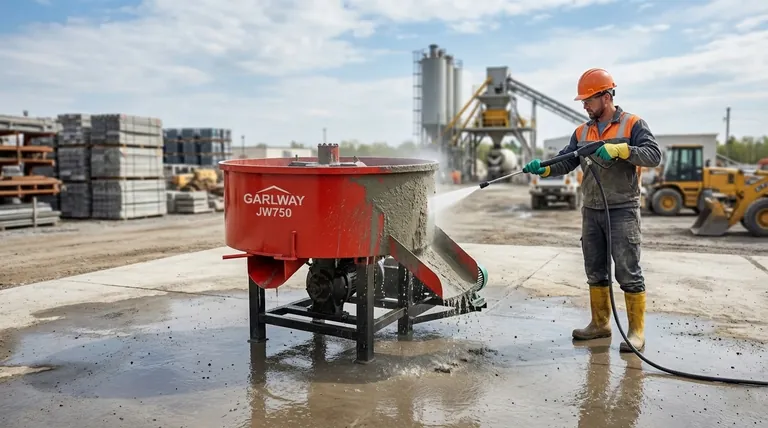
The loading hopper and the internal mixing fins are the primary contact points during filling. Use a high-pressure water hose to thoroughly wash down any spatter or overflow from these areas.
This prevents buildup that can restrict future loadings and ensures the mixing fins remain effective at agitating the concrete during transit.
Securing and Rinsing the Chutes
After cleaning the hopper, ensure the discharge chutes are properly stowed and secured. A final rinse of the main chute prevents drips during transit and removes any material that could harden and obstruct the first pour at the job site.
Pre-Departure Systems Check
Once the exterior is clean, a quick but vital systems check ensures the load can be transported and delivered successfully. This is a crucial step for both safety and operational integrity.
Verifying Hydraulic Oil Levels
The drum rotation and chute articulation are powered by the hydraulic system. Before every trip, a visual check of the hydraulic oil level is essential.
Low fluid levels can lead to sluggish drum rotation or a complete failure to discharge, turning a full load of concrete into thousands of pounds of dead weight.
Confirming Drum Rotation Speed
During transit, the drum must rotate slowly and consistently, typically around 2 rotations per minute (rpm). This gentle agitation prevents the concrete aggregates from settling and the mix from prematurely solidifying.
Confirming that the drum is rotating correctly before leaving the plant is a simple check that prevents major problems at the destination.
Common Pitfalls to Avoid
The effectiveness of any maintenance protocol lies in its consistency. Seemingly minor oversights are the most common cause of long-term damage to a mixer truck.
The "I'll Wash It Later" Mindset
Delay is the single biggest enemy. Concrete can begin to set in as little as 30-60 minutes depending on the mix and ambient temperature. A task that takes two minutes with fresh concrete can become a two-hour job with hardened material.
Relying on a Quick Splash
A light splash of water is not sufficient. A forceful, directed stream is required to dislodge the sand and cement paste from steel surfaces. Inadequate rinsing leaves a fine film that builds up over time.
Ignoring Minor Drips and Spills
Small drips on the chassis, axles, or tires may seem harmless, but they accumulate. This adds weight, hides potential mechanical issues like leaks or cracks, and accelerates corrosion of the underlying components.
Making the Right Choice for Your Goal
Your post-fill protocol should be standardized but can be mentally framed around your most critical objective.
- If your primary focus is maximizing equipment lifespan: Treat every cleaning as a deep clean, ensuring no residue is left on the hopper, fins, or chutes after each and every load.
- If your primary focus is operational safety and reliability: Make the pre-departure hydraulic check and drum rotation confirmation a non-negotiable, documented step in your daily checklist.
A consistent post-fill routine is the most effective investment you can make in the performance and longevity of your equipment.
Summary Table:
| Step | Key Action | Purpose |
|---|---|---|
| Immediate Cleaning | Wash hopper, fins, and chutes with high-pressure water. | Prevent concrete buildup and corrosion. |
| Pre-Departure Check | Verify hydraulic oil levels and drum rotation (~2 rpm). | Ensure safe transport and successful discharge. |
| Avoid Pitfalls | Never delay cleaning; use forceful water streams. | Avoid costly, time-consuming removal of hardened concrete. |
Maximize the lifespan and reliability of your concrete mixer trucks with GARLWAY's expertise.
As a specialist in construction machinery, GARLWAY provides durable winches, concrete mixers, and batching plants designed for the rigorous demands of construction companies and contractors worldwide. Our equipment is built to withstand daily use, but proper maintenance is key to longevity.
Let our team help you establish a robust maintenance protocol or supply you with reliable machinery that makes post-operation care straightforward. Contact GARLWAY today to discuss your needs and ensure your equipment operates safely and efficiently for years to come.
Visual Guide

Related Products
- Ready Mixer Machine for Construction Ready Mix Machinery
- JW1000 Mobile Cement Mixer Concrete Mixer Truck and Batching Plant
- Mini Cement Mortar Mixer Truck for Construction
- Harbor Freight JS1500 On Site Concrete Mixing Volumetric Cement Mixer
- HZS90 Large Multiquip Concrete Mixers for Construction
People Also Ask
- What are the purposes of low-speed agitation in truck mixers? Preserve Concrete Quality During Transit
- How is ready-mixed concrete transported from a commercial concrete batching plant? Ensuring Quality & Timely Delivery
- What are the main ingredients mixed in a concrete mixer truck? Master the Formula for Strong Concrete
- In what ways does a mobile concrete mixer improve quality control and consistency? Achieve Superior On-Site Concrete Quality
- What types of construction projects typically use concrete mixer trucks? From Highways to Home Foundations