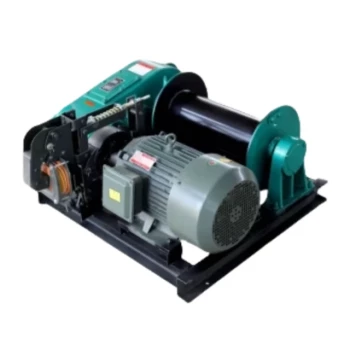
At its core, the primary function of an electric winch is to pull, lift, or position heavy loads using an electric motor. It is a compact power device that converts electrical energy into mechanical force, winding a steel cable or synthetic rope onto a drum to move objects that would otherwise be too heavy or cumbersome to handle.
The true function of an electric winch is to act as a powerful force multiplier. It enables a single person or vehicle to overcome immense resistance, whether that's recovering a stuck truck, hoisting industrial materials, or positioning critical subsea equipment.
The Core Mechanics: How It Generates Force
An electric winch appears simple, but its power comes from a precise combination of components working together to multiply torque.
The Electric Motor
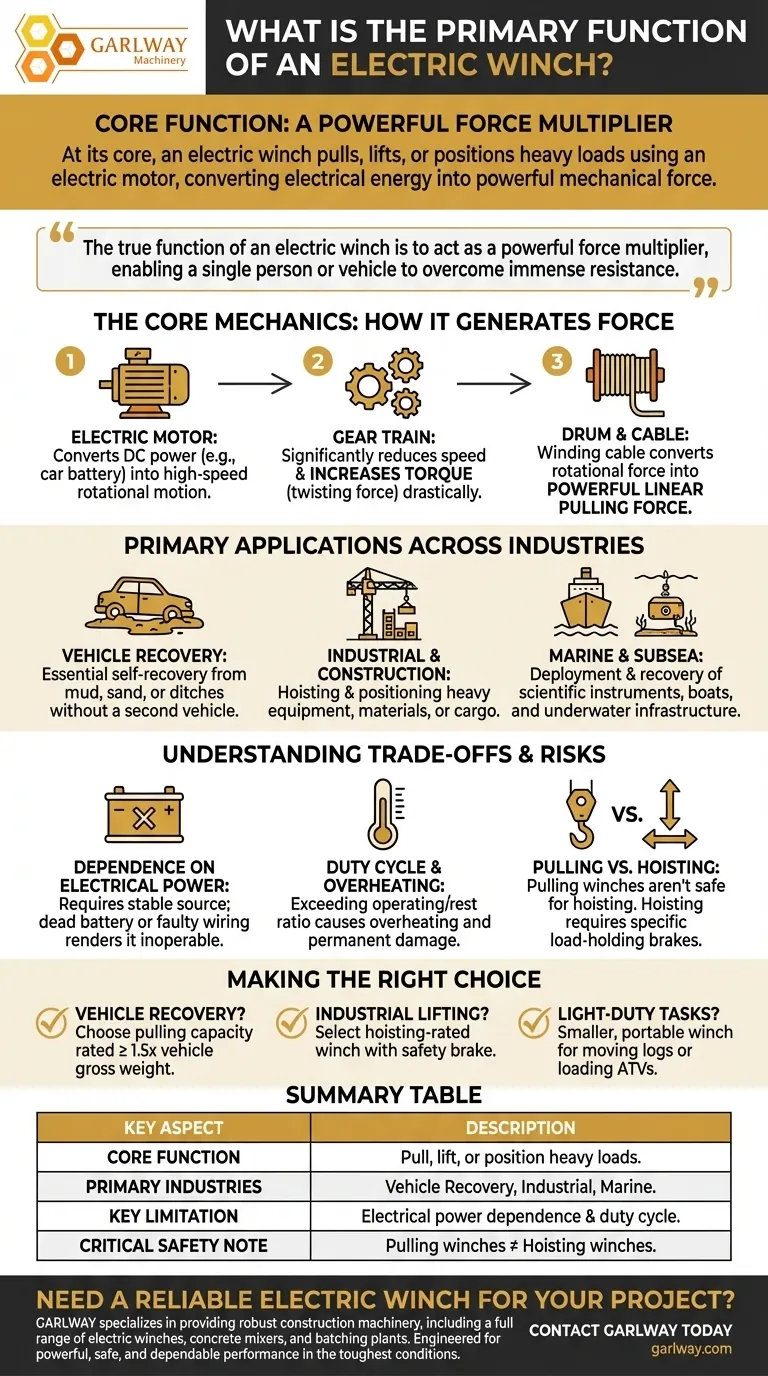
The process begins with the electric motor. It draws power from a direct current (DC) source, like a car battery, and converts that electrical energy into high-speed rotational motion.
The Gear Train
This high-speed, low-power rotation is then fed into a gear train. The arrangement of gears drastically reduces the rotational speed while significantly increasing the torque, or twisting force. This trade-off is the key to creating immense pulling power.
The Drum and Cable
The low-speed, high-torque force from the gear train turns the winch drum. As the drum rotates, it neatly winds the cable or rope, converting the rotational force into powerful, linear pulling force.
Primary Applications Across Industries
The versatility and compact power of electric winches make them essential tools in a wide range of fields. Their function remains the same—pulling and lifting—but the context changes.
Vehicle Recovery and Off-Roading
For off-road enthusiasts, an electric winch is often seen as an essential insurance policy. Its primary function is self-recovery, allowing a driver to pull their vehicle out of mud, sand, or a ditch without needing a second vehicle.
Industrial and Construction
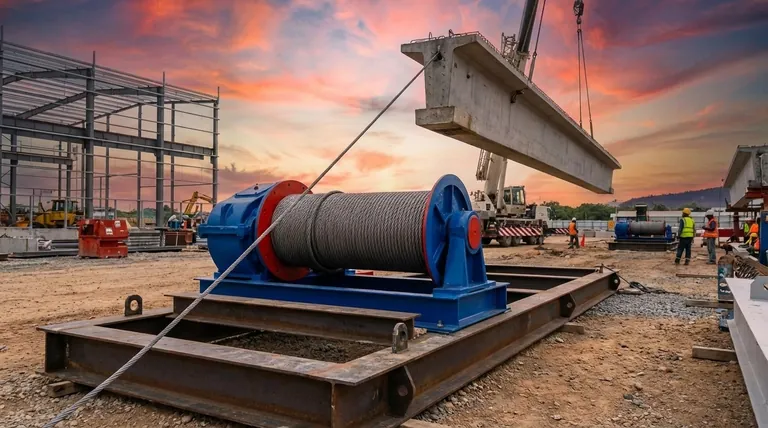
In industrial settings, electric winches are used for hoisting and positioning. They can lift heavy equipment, pull materials into place on an assembly line, or assist in loading and unloading heavy cargo onto trailers.
Marine and Subsea Operations
Electric winches are critical for deployment and recovery in marine environments. They are used to lower scientific instruments to the seabed, pull boats onto trailers, and position underwater infrastructure with precision.
Understanding the Trade-offs and Risks
While incredibly powerful, electric winches have operational limitations that are critical to understand for safe and effective use.
Dependence on Electrical Power
The most significant limitation is its reliance on a stable electrical source. A dead battery or faulty wiring renders the winch completely inoperable, which can be a critical failure point in a recovery situation.
Duty Cycle and Overheating
Electric motors generate significant heat under load. Every winch has a duty cycle, which is the recommended ratio of operating time to rest time. Exceeding this can cause the motor to overheat and suffer permanent damage.
Pulling vs. Hoisting Ratings
A winch designed for pulling a vehicle horizontally is not necessarily safe for lifting a load vertically. Hoisting winches require specific braking mechanisms to prevent catastrophic failure if power is lost. Using the wrong type of winch for the job is a major safety risk.
Making the Right Choice for Your Goal
Selecting the right winch depends entirely on its intended function.
- If your primary focus is vehicle recovery: Choose a winch with a pulling capacity rated at least 1.5 times your vehicle's gross weight to handle the additional forces of resistance.
- If your primary focus is industrial lifting: You must select a winch specifically rated for hoisting, which includes a load-holding brake for safety.
- If your primary focus is intermittent, light-duty tasks: A smaller, portable electric winch may provide the best balance of utility, cost, and convenience for tasks like moving logs or loading an ATV.
Ultimately, understanding these core functions and limitations ensures you use an electric winch not just as a tool, but as a reliable and safe solution to a specific physical challenge.
Summary Table:
| Key Aspect | Description |
|---|---|
| Core Function | Pull, lift, or position heavy loads using an electric motor and cable. |
| Primary Industries | Vehicle Recovery, Industrial/Construction, Marine Operations. |
| Key Limitation | Dependent on a stable electrical power source; has a duty cycle to prevent overheating. |
| Critical Safety Note | Winches for pulling are not automatically safe for vertical hoisting; a specific hoisting-rated winch with a brake is required. |
Need a reliable electric winch for your project?
GARLWAY specializes in providing robust construction machinery, including a full range of electric winches, concrete mixers, and batching plants for construction companies and contractors worldwide. Our winches are engineered for powerful, safe, and dependable performance in the toughest conditions.
Contact GARLWAY today to discuss your specific needs and discover how our solutions can enhance your operational efficiency and safety.
Visual Guide
Related Products
- Electric 120V Boat Winch by Badlands
- Small Electric Winch 120V and 240V for Compact Applications
- Electric and Hydraulic Winch for Heavy Duty Applications
- 12000 lb Electric Boat Trailer Winch with Windlass Anchor Warn
- Electric Hoist Winch Boat Anchor Windlass for Marine Applications
People Also Ask
- How do electric boat winches work? Unlock Effortless Launching & Retrieval
- How much current does an electric boat winch draw? Plan Your Electrical System for Peak Performance
- Can I run a winch straight from a battery? Essential Power Setup for Safe Operation
- What are the types of electric winches available? Choose the Right Winch for Your Job
- What are the uses of electric winches in mining and tunneling? Enhance Safety and Efficiency Underground