
Choosing between a horizontal and vertical windlass is a critical decision dictated by your vessel's physical constraints, not by a simple preference. The correct choice depends almost entirely on the depth of your chain locker, the available space on your deck, and the accessibility for installation and maintenance below deck.
The core difference is geometry. Horizontal windlasses are self-contained deck units ideal for boats with shallow chain lockers. Vertical windlasses save deck space but require significant depth below deck for the motor and a deep, clear drop for the chain to self-stow without jamming.
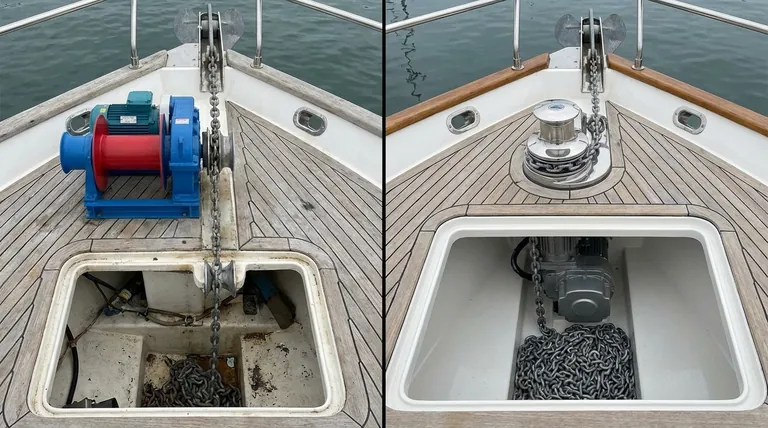
The Fundamental Difference: Shaft Orientation
The terms "horizontal" and "vertical" refer directly to the orientation of the main shaft that drives the chainwheel (also known as the gypsy). This single design difference has cascading effects on installation and performance.
The "Ferris Wheel" (Horizontal)
In a horizontal windlass, the shaft is parallel to the deck. The entire unit—motor, gearbox, and gypsy—is typically housed in a single case mounted on deck.
The anchor chain approaches from the bow roller, makes a 90-degree wrap around the gypsy, and then drops into the anchor locker.
The "Merry-Go-Round" (Vertical)
In a vertical windlass, the shaft is perpendicular to the deck. Only the gypsy and sometimes a capstan are visible on deck, presenting a very low profile.
The motor and gearbox are located directly below the deck. The chain wraps around the gypsy for a full 180 degrees before dropping straight down into the locker, which provides excellent grip.
Analyzing Your Installation Space
Your boat's anatomy is the primary factor in this decision. You must assess three critical areas before making a choice.
Chain Locker Depth is Crucial
The most important consideration is the amount of "fall" you have—the vertical distance between the bottom of the windlass and the top of the anchor rode when it's fully stowed.
Vertical windlasses require a deep, unobstructed fall. The chain needs gravity to pull it off the gypsy and pile correctly in the locker. Insufficient fall will cause the chain to bunch up and jam the windlass.
Horizontal windlasses are far more forgiving of shallow chain lockers because the chain is actively fed downward after it leaves the gypsy.
On-Deck Footprint
A horizontal windlass is a single, relatively bulky unit mounted entirely on the deck. This can occupy significant space on the foredeck.
A vertical windlass has a much smaller on-deck footprint, leaving the deck clearer and less cluttered. This is often an aesthetic and practical advantage on smaller boats or those with limited bow space.
Below-Deck Clearance
The space-saving benefit of a vertical windlass on deck comes at a cost below. The motor and gearbox require substantial vertical and horizontal clearance inside the bow, which can interfere with v-berth headroom, bunks, or storage.
A horizontal windlass requires only small holes for mounting bolts and wiring, leaving the space below deck largely unaffected.
Understanding the Trade-offs
Neither design is inherently superior; each presents a different set of compromises related to installation, maintenance, and performance.
Installation and Sealing
A horizontal windlass is simpler to install. It's a self-contained unit that bolts to the deck with minimal deck penetration, making it easier to seal against water intrusion.
A vertical windlass requires a large, precise hole through the deck for the main shaft and mounting studs. This creates a more complex sealing challenge and a greater potential point for leaks if not installed perfectly.
Maintenance Access
Servicing a horizontal windlass is straightforward. The entire mechanism is on deck, making it easy to access for routine maintenance and troubleshooting.
The motor and gearbox of a vertical windlass are tucked away in the forepeak, which is often a cramped, difficult-to-access space. This can make service and repairs significantly more challenging.
Rode Handling and Alignment
Due to its 180-degree chain wrap, a vertical windlass has superior grip and can accept the anchor rode from a wider range of angles. This makes it more tolerant of poor alignment with the bow roller.
A horizontal windlass, with only a 90-degree wrap, requires more precise alignment between the bow roller and the gypsy to prevent the chain from jumping off under load.
Making the Right Choice for Your Boat
Your vessel's specific layout, not a general rule of thumb, should dictate your choice. Evaluate your boat against these scenarios to find your clear answer.
- If you have a shallow chain locker or limited below-deck access: A horizontal windlass is almost certainly your best and only practical option.
- If you have a deep chain locker and prioritize a clear, uncluttered deck: A vertical windlass is the ideal solution, provided you have adequate space for the motor below.
- If ease of maintenance and simpler installation is your top concern: The self-contained, on-deck design of a horizontal windlass offers a distinct advantage.
Ultimately, matching the windlass geometry to your boat's specific layout is the key to a reliable and trouble-free anchoring system.
Summary Table:
| Factor | Horizontal Windlass | Vertical Windlass |
|---|---|---|
| Chain Locker Depth | Forgiving of shallow lockers | Requires deep, unobstructed fall |
| On-Deck Footprint | Larger, bulkier unit | Smaller, cleaner profile |
| Below-Deck Space | Minimal space required | Needs significant clearance for motor |
| Installation Complexity | Simpler, fewer deck penetrations | More complex sealing required |
| Maintenance Access | Easy, all components on deck | Motor/gearbox in cramped forepeak |
Need a reliable windlass for your vessel? The right choice depends on your boat's specific layout. GARLWAY specializes in marine equipment, offering robust solutions for commercial and recreational vessels globally. Our experts can help you select the perfect windlass for your needs. Contact GARLWAY today for a consultation and ensure your anchoring system is built for reliability.
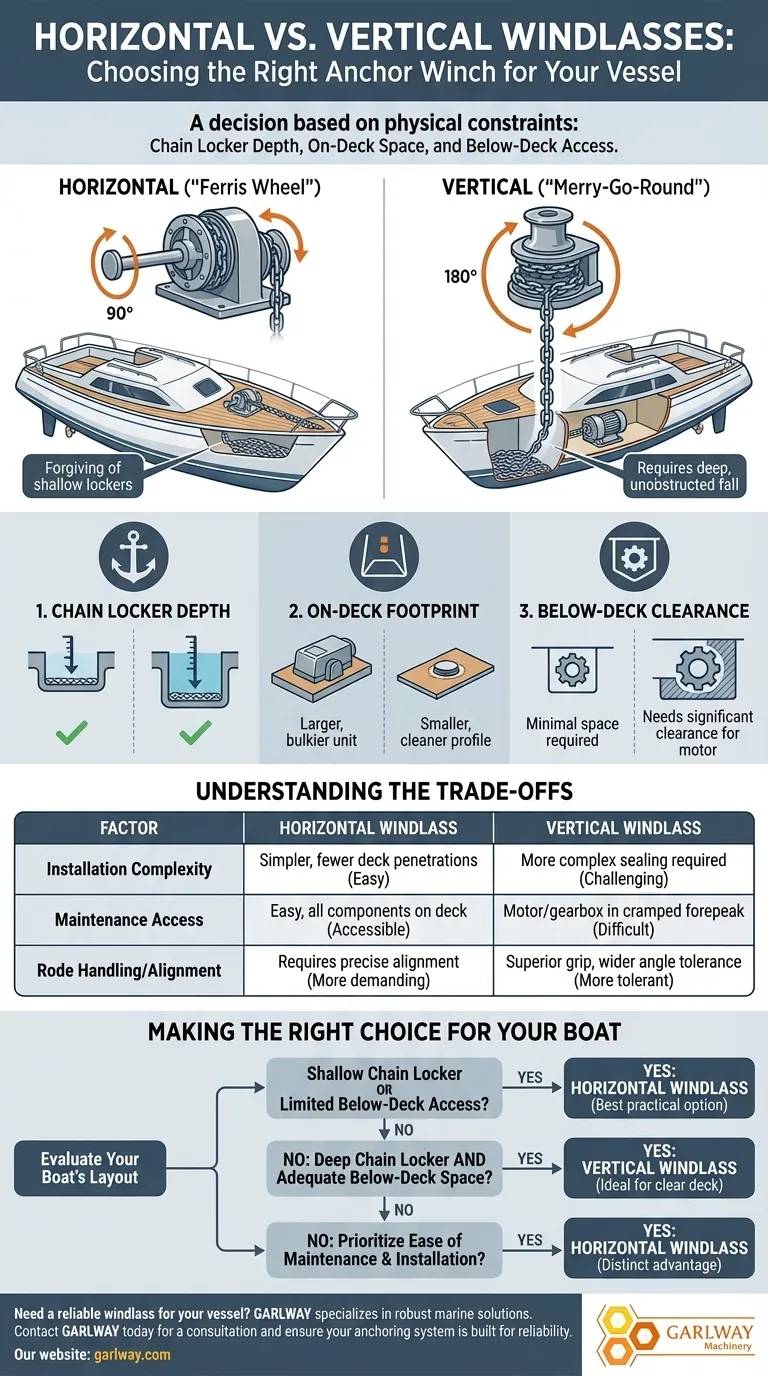
Visual Guide
Related Products
- Quick Windlass Portable Winch for Truck and Boat Best Boat Winch
- Warn Winch Windlass Boat Trailer Winch
- Electric Hoist Winch Boat Anchor Windlass for Marine Applications
- Heavy Duty Electric Boat Winch Windlass Anchor
- 12000 lb Electric Boat Trailer Winch with Windlass Anchor Warn
People Also Ask
- What features were incorporated into the upgraded portable winch system? Boost Your Recovery Power & Safety
- What are some uses mentioned for portable winches beyond vehicle recovery? Essential Versatility for Property & Work
- How could the twisting issue with a portable winch be mitigated? Achieve Safe, Centered Pulls with Proper Rigging
- What are the primary uses of a portable winch for a truck? Boost Your Truck's Capability and Self-Reliance
- What is the single rope traction force of the quick winch without a pulley block? 0.5 to 40 Tons Explained


