
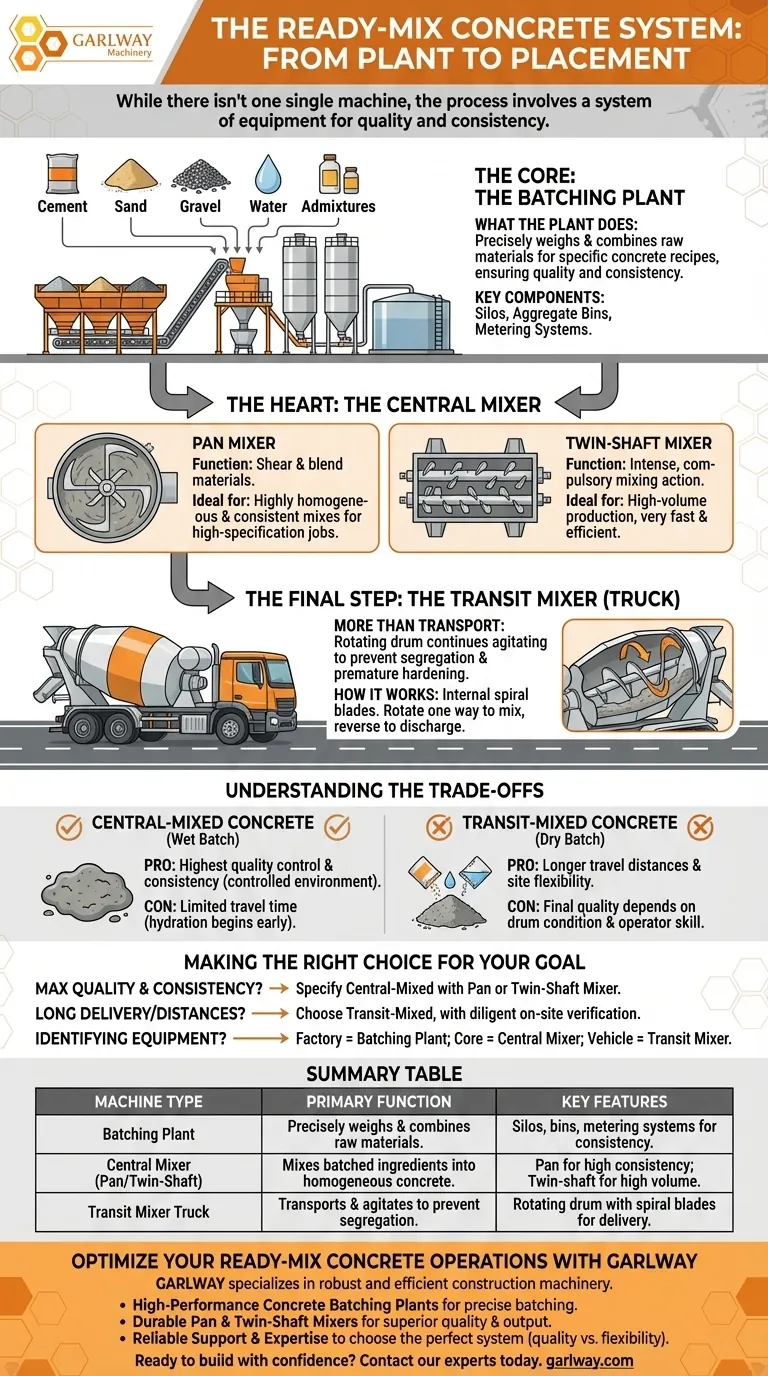
While there isn't one single machine, the process involves a system of equipment. The concrete is created at a concrete batching plant, which typically uses a large stationary mixer, such as a pan mixer or a twin-shaft mixer, before being loaded into a transit mixer truck for delivery.
The key is to understand that "ready-mix" describes a process, not a single piece of equipment. It involves a central plant for precise mixing and a specialized truck for transport and final agitation.
The Core of Ready-Mix: The Batching Plant
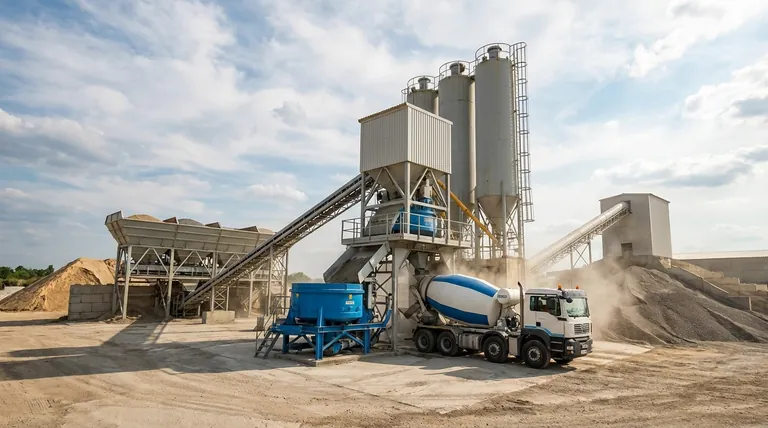
A ready-mix concrete facility is centered around a batching plant. This is the industrial factory where all the raw ingredients are accurately measured and combined.
What the Plant Does
The plant's primary function is to batch—or precisely weigh—the cement, sand, gravel, water, and any chemical admixtures required for a specific concrete recipe. This precision is critical for ensuring quality and consistency.
Key Components
A typical plant includes large silos for storing cement, aggregate bins for sand and stone, and sophisticated systems for metering water and admixtures. These components feed the central mixer.
The Heart of the Plant: The Central Mixer
Once batched, the ingredients are fed into a large, powerful stationary mixer. The type of mixer used has a significant impact on the concrete's final quality.
The Pan Mixer
As noted, the pan mixer (or circular mixer) is a common choice. It consists of a stationary circular pan where mixing blades rotate to shear and blend the materials. Its design is excellent for producing highly homogeneous and consistent concrete mixes, making it ideal for high-specification jobs.
The Twin-Shaft Mixer
Another prevalent type is the twin-shaft mixer. This powerful machine uses two horizontal shafts with attached paddles that rotate in opposite directions. This creates an intense, compulsory mixing action that is very fast and efficient, making it suitable for high-volume production.
The Final Step: The Transit Mixer (The Truck)
The machine most people associate with ready-mix is the transit mixer truck. This vehicle is much more than a simple transport container.
More Than Just Transport
The truck's rotating drum is designed to continue agitating the concrete during transit. This prevents the heavy aggregates from settling out (segregation) and stops the concrete from beginning to harden prematurely.
How It Works
Inside the drum are spiral blades. When the drum rotates in one direction, it pushes the concrete deeper into the mixer. When the rotation is reversed, the blades push the concrete out through the chute for placement.
Understanding the Trade-offs
The point at which the concrete is mixed defines the type of ready-mix operation and involves important trade-offs.
Central-Mixed Concrete (Wet Batch)
In this method, the concrete is mixed completely at the plant in its final state and then loaded into the transit mixer.
- Pro: This offers the highest level of quality control and consistency because mixing happens in a controlled, stationary environment.
- Con: The travel time is limited, as the concrete's hydration process has already begun.
Transit-Mixed Concrete (Dry Batch)
Here, all the dry ingredients are batched at the plant and loaded into the truck. The water is then added to the truck's drum either at the plant, during transit, or upon arrival at the job site.
- Pro: This allows for much longer travel distances and provides more flexibility on-site.
- Con: The final mixing quality is more dependent on the condition of the truck's drum and the skill of the operator.
Making the Right Choice for Your Goal
- If your primary focus is maximum quality and consistency: You should specify a centrally-mixed (wet batch) concrete, ideally produced with a high-efficiency pan or twin-shaft mixer.
- If your primary focus is navigating long delivery times or distances: Transit-mixed (dry batch) concrete is the practical solution, but it requires diligent on-site verification.
- If you are simply identifying the equipment: The factory is the batching plant, its core is the central mixer, and the delivery vehicle is the transit mixer.
Understanding this entire system, from plant to placement, is the key to managing ready-mix concrete effectively.
Summary Table:
| Machine Type | Primary Function | Key Features |
|---|---|---|
| Batching Plant | Precisely weighs & combines raw materials (cement, sand, gravel, water). | Includes silos, aggregate bins, and metering systems for consistency. |
| Central Mixer (Pan/Twin-Shaft) | Mixes batched ingredients into homogeneous concrete. | Pan mixer for high consistency; Twin-shaft for high-volume, fast mixing. |
| Transit Mixer Truck | Transports and agitates concrete to prevent segregation and hardening. | Rotating drum with spiral blades for delivery and placement. |
Optimize Your Ready-Mix Concrete Operations with GARLWAY
Understanding the right equipment is the first step to a successful project. GARLWAY specializes in providing robust and efficient construction machinery for the global construction industry, including contractors and ready-mix producers.
We offer:
- High-Performance Concrete Batching Plants for precise, consistent batching.
- Durable Pan Mixers and Twin-Shaft Mixers designed for superior mixing quality and high-volume output.
- Reliable Support and Expertise to help you choose the perfect system for your specific needs, whether prioritizing quality (central-mixed) or delivery flexibility (transit-mixed).
Ready to build with confidence? Contact our experts today to discuss how our machinery can enhance your concrete production efficiency and reliability.
Visual Guide
Related Products
- HZS120 Ready Mix Concrete Batching Plant Commercial Mud Cement Mixer
- HZS180 Ready Mix Concrete Plant for Foundations with Sand and Cement
- HZS35 Small Cement Concrete Mixing Batch Plant
- HZS75 Concrete Batching Plant Cement Mixer Price Concrete Mixer Bunnings Mixing Plant
- Commercial Electric Concrete Mixer Machine HZS 50 Small Batch Plant for Sale
People Also Ask
- What is a ready mix concrete batching plant? The Engine of Modern Construction
- What is the core component of a concrete batching plant? The Mixer Unit Defines Your Concrete Quality
- What are the types of concrete mixers used in batching plants? Choose the Right Mixer for Your Project
- What are the advantages and disadvantages of concrete batching plants? Maximize Quality & Efficiency
- Why is the control of lighting important in the electrical system of a concrete mixing plant?





