
Ultimately, automating a batching plant replaces manual variability with machine-driven precision. This shift directly leads to higher quality, increased production speed, and a significant reduction in costly errors and material waste.
The primary benefit of automation is not just efficiency; it is the ability to guarantee a consistent, high-quality product for every single batch, turning your plant into a more reliable and profitable operation.
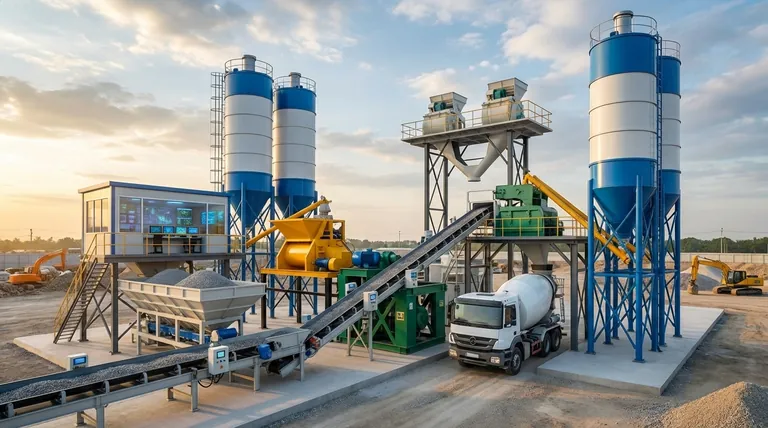
The Core Pillars of Automation: Consistency and Precision
A manual batching plant is subject to the skill and attention of its operator. Automation removes this unpredictability, embedding quality control directly into the production process itself.
Eliminating Human Error in Measurement
In a manual system, the precise weighing of aggregates, cement, water, and admixtures depends entirely on the operator. Even small deviations can compromise the strength and durability of the final concrete mix.
Automation uses load cells and computerized controls to weigh each component with extreme accuracy, batch after batch, eliminating the most common source of quality issues.
Guaranteeing Recipe Integrity
Complex projects often require specific, pre-programmed mix designs. Automation ensures these recipes are followed exactly, every single time.
The system manages the entire sequence of operations—from opening the correct aggregate gates to controlling mixing time—without deviation, ensuring the final product meets all technical specifications.
Achieving Verifiable Quality Control
Automated systems create a detailed digital record for every batch produced. This includes the exact weights of all materials, mixing times, and other critical data.
This data logging provides irrefutable proof of quality for clients and engineers, and it is invaluable for troubleshooting any potential issues down the line.
Driving Productivity and Throughput
Beyond quality, automation fundamentally changes the economic equation of a batching plant by optimizing its operational tempo and resource allocation.
Optimizing the Batching Cycle
An automated system executes the batching sequence faster and more efficiently than a human operator can.
By overlapping tasks like weighing one material while another is being discharged, the system minimizes dead time and shortens the overall cycle, increasing the plant's hourly output.
Reducing Reliance on Manual Labor
Automation allows a single, skilled supervisor to oversee the entire plant's operation from a central control room.
This reduces the need for multiple laborers dedicated to manual tasks like pulling levers and monitoring gauges, leading to significant long-term cost savings and allocating human capital to more valuable work.
Understanding the Trade-offs
While the benefits are clear, adopting automation is a strategic decision that requires careful consideration of its associated challenges.
Initial Investment Cost
The primary barrier to automation is the upfront capital expenditure for control systems, sensors, and software. This cost must be weighed against the long-term savings in labor, reduced material waste, and increased output.
Maintenance and Technical Expertise
Automated systems are more complex than manual ones. They require personnel with the technical skills to maintain, troubleshoot, and repair electronic components and software, which can be a shift from traditional mechanical maintenance.
System Dependencies
An automated plant is dependent on a stable power supply and the health of its control system. A power failure or computer malfunction can halt production entirely until the issue is resolved, making system redundancy and backup plans critical.
Making the Right Choice for Your Operation
The decision to automate should be aligned with your specific business objectives.
- If your primary focus is quality consistency: Automation is the most reliable way to eliminate human error and guarantee every batch meets precise specifications.
- If your primary focus is increasing plant output: The optimized batching cycles and reduced downtime offered by automation will deliver the highest possible throughput.
- If your primary focus is long-term cost reduction: Automation delivers savings through lower labor requirements, minimized material waste, and enhanced operational efficiency.
By moving control from human hands to a reliable system, you invest in the predictability and profitability of your entire operation.
Summary Table:
| Benefit | Key Impact |
|---|---|
| Consistent Quality | Eliminates human error in measurement and guarantees recipe integrity. |
| Increased Productivity | Optimizes batching cycles for higher throughput and reduced downtime. |
| Cost Reduction | Lowers long-term labor costs and minimizes material waste. |
| Verifiable Quality Control | Provides detailed digital records for every batch produced. |
Ready to transform your batching plant with GARLWAY automation?
GARLWAY specializes in construction machinery, offering advanced automated batching plants, concrete mixers, and winches for construction companies and contractors globally. Our automated solutions are designed to deliver the precise quality control and increased profitability detailed in this article.
Contact our experts today to discuss how we can tailor an automated system to meet your specific production and budget goals.
Visual Guide
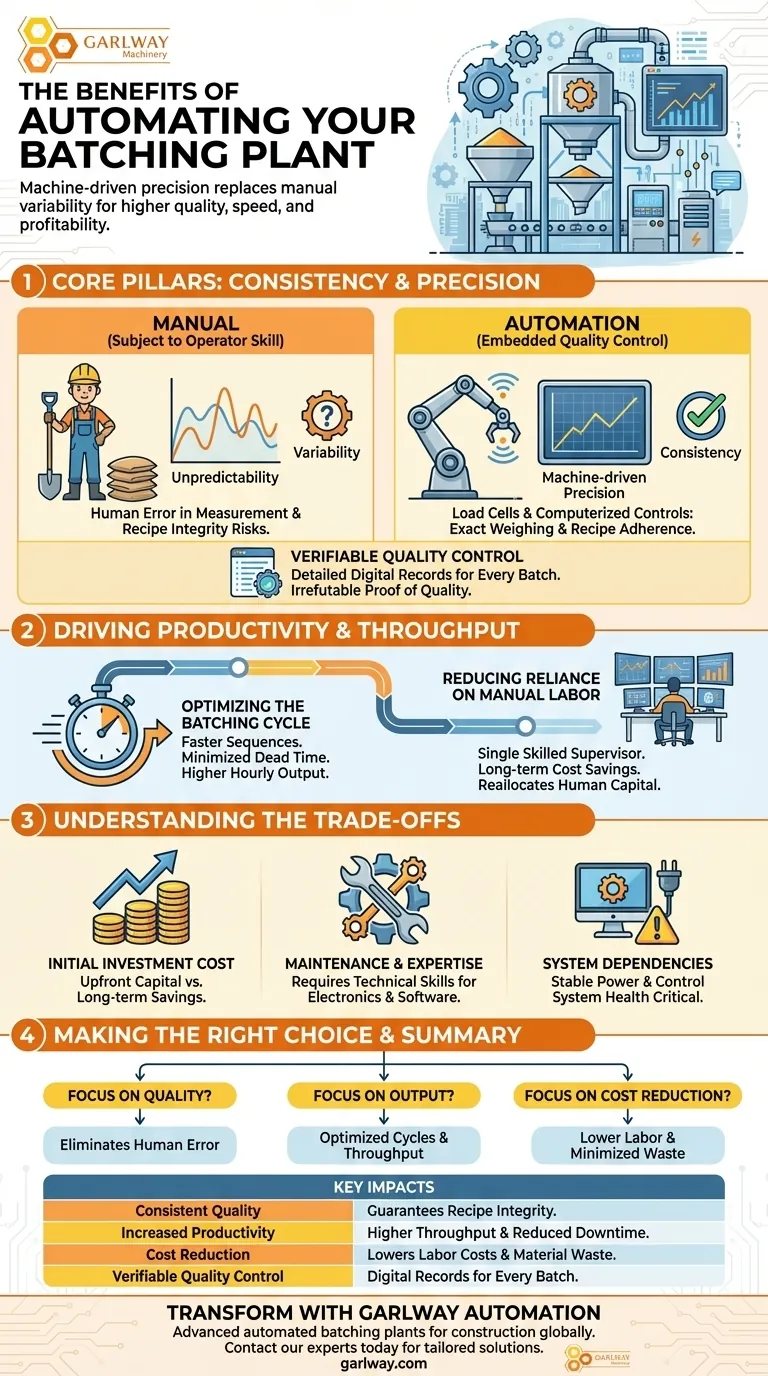
Related Products
- HZS120 Ready Mix Concrete Batching Plant Commercial Mud Cement Mixer
- HZS35 Small Cement Concrete Mixing Batch Plant
- HZS75 Concrete Batching Plant Cement Mixer Price Concrete Mixer Bunnings Mixing Plant
- Commercial Electric Concrete Mixer Machine HZS 50 Small Batch Plant for Sale
- HZS180 Ready Mix Concrete Plant for Foundations with Sand and Cement
People Also Ask
- What is a ready mix concrete batching plant? The Engine of Modern Construction
- What is the name of the machine used in ready mix? Unpacking the Complete Concrete System
- What is the core component of a concrete batching plant? The Mixer Unit Defines Your Concrete Quality
- What are the types of concrete mixers used in batching plants? Choose the Right Mixer for Your Project
- What are the advantages and disadvantages of concrete batching plants? Maximize Quality & Efficiency





