
The modern volumetric concrete mixer was invented in the mid-1960s as a direct response to the logistical challenges of traditional ready-mix concrete. This innovation transformed a construction site from a passive receiving point into an active production facility, allowing for unparalleled control over concrete freshness, quantity, and design.
While the basic principle of mixing materials by volume is an ancient technique, the mobile volumetric mixer of the 1960s was a modern invention designed to eliminate the waste and inflexibility inherent in traditional concrete delivery.
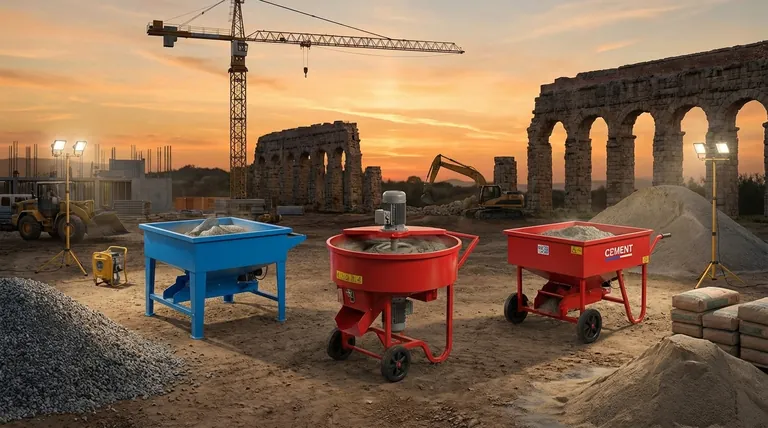
From Ancient Principles to Modern Machinery
The concept of mixing concrete ingredients by volume is not new. It's a foundational principle of civil engineering that has been proven over centuries. The innovation lies in the machinery that automated and mobilized this process.
The Historical Precedent
The practice of measuring and combining construction materials by volume dates back to the Roman Empire. Builders used this fundamental method to create durable structures as armies expanded across continents.
This same technique was later employed on a massive scale during the construction of the Panama Canal, a project that required over 4.5 million cubic tons of precisely mixed concrete.
The 1960s: A Solution for On-Site Demands
The first mobile volumetric concrete mixers were developed in the mid-1960s. They were created to solve a persistent problem: the inconvenience and inefficiency of waiting for traditional ready-mix drum trucks.
These new machines allowed contractors to produce fresh concrete on-site, exactly when and where it was needed, marking a significant shift in operational control.
Industry Maturation and Standardization
As the technology gained traction, various companies began producing their own versions of the mixer. This led to the formation of the Volumetric Mixer Manufacturers Bureau (VMMB) in 1999.
The creation of this trade association signaled that the industry had matured, establishing standards and a unified voice for this specialized equipment sector.
The Core Problem Volumetric Mixers Solve
The longevity and adoption of volumetric mixers stem from their ability to solve specific, costly problems that traditional drum mixers cannot easily address. At its core, a volumetric mixer is a mobile batch plant.
Precision and Waste Reduction
Unlike a drum mixer that arrives with a pre-determined quantity, a volumetric mixer carries unmixed sand, stone, cement, and water in separate compartments.
It mixes the exact amount of concrete needed on the spot. This eliminates the costly waste associated with over-ordering from a ready-mix plant.
Freshness on Demand
Concrete begins its hydration process the moment water is added. A volumetric mixer produces concrete seconds before it is poured, ensuring maximum strength and workability.
This is particularly critical for applications involving fast-setting cements for urgent repairs on infrastructure like highways and bridge decks.
Unmatched On-Site Flexibility
Because the components are separate, operators can make immediate adjustments to the mix design on-site.
Modern mixers have evolved to incorporate features like coloring agents, multiple admixes, and fiber systems. They can even be configured to produce specialized materials like gunite or shotcrete, adapting to diverse project requirements in real-time.
Key Differentiators and Considerations
While volumetric technology offers clear advantages, it's important to understand its place within the broader concrete industry.
Volumetric vs. Drum Mixers
Traditional drum mixers, in use since the early 1900s, have long dominated the American cement industry, particularly for large-scale, continuous pours where a single mix design is sufficient.
Volumetric mixers excel in different scenarios: remote jobsites, utility work, mining operations, and any project that requires multiple, smaller, or highly customized batches of concrete.
A Niche of High Value
The applications for volumetric mixers highlight their value. They are indispensable for projects where precision is non-negotiable and waste is unacceptable.
This includes infrastructure projects, precast elements, soil stabilization, and military operations where logistical simplicity and efficiency are paramount.
Making the Right Choice for Your Project
The history of the volumetric mixer reveals its purpose as a specialized tool designed for control and efficiency. Your project's specific goals will determine if it's the right solution.
- If your primary focus is large, continuous pours with a standardized mix: Traditional ready-mix drum trucks often remain the most cost-effective method.
- If your primary focus is reducing waste, working in remote locations, or requiring varied mix designs: A volumetric mixer provides superior control and flexibility.
- If your primary focus is urgent repairs or specialty concrete: The on-demand mixing capability of a volumetric mixer is essential for handling time-sensitive materials.
Understanding this history reveals a clear trend: volumetric technology excels where precision, flexibility, and on-site control are critical to project success.
Summary Table:
| Era | Key Development | Primary Impact |
|---|---|---|
| Ancient Times | Mixing materials by volume (e.g., Roman Empire) | Established the foundational principle for durable construction. |
| Mid-1960s | Invention of the mobile volumetric mixer | Solved logistical challenges of ready-mix, enabling on-demand production. |
| 1999 | Formation of the Volumetric Mixer Manufacturers Bureau (VMMB) | Standardized the industry, signaling its maturity. |
| Modern Day | Integration of advanced features (admixes, fibers) | Provides unmatched flexibility for specialized applications like shotcrete. |
Ready to Gain Unmatched Control Over Your Concrete Projects?
Since the 1960s, volumetric mixers have empowered contractors to eliminate waste and produce fresh concrete on-demand. GARLWAY continues this legacy of innovation by providing robust construction machinery, including volumetric concrete mixers, winches, and batching plants, designed for construction companies and contractors who value precision, flexibility, and efficiency.
Let us help you solve your specific concrete challenges. Contact GARLWAY today to discuss how our equipment can bring the benefits of on-site production to your next project.
Visual Guide

Related Products
- Belle Cement Mixer JS2000 Volumetric Concrete Mixer for Harbor Freight
- JS1000 Volumetric Concrete Mortar Mixer for Sale Skid Steer Cement Mixer
- Harbor Freight JS1500 On Site Concrete Mixing Volumetric Cement Mixer
- Portable Concrete Mixer Machine Equipment for Mixing Concrete
- HZS25 Best Cement Mixer for Quick Mix Concrete at Bunnings
People Also Ask
- What is a volumetric concrete mixer? A Mobile Concrete Batch Plant for On-Demand Mixing
- What is the predicted future for volumetric concrete mixers? Growth Driven by On-Demand Efficiency
- How does a volumetric concrete mixer contribute to sustainability? Reduce Waste, Water, and Emissions On-Site
- How does volumetric concrete compare to ready-mix concrete? Choose the Right Method for Your Project
- What types of concrete can be produced with volumetric mixers? Achieve On-Demand Mixing for Any Project




