
At first glance, they appear similar, but the critical difference is purpose-built design. A windlass is a specialized machine designed specifically for handling the heavy, vertical load of an anchor and its chain. In contrast, a winch is a more general-purpose device used for pulling loads, typically horizontally, using rope, cable, or wire.
The core distinction lies in how each device engages its line. A windlass uses a notched wheel called a gypsy to grip the links of an anchor chain, while a winch uses a smooth or textured drum to wrap and pull a rope or cable.
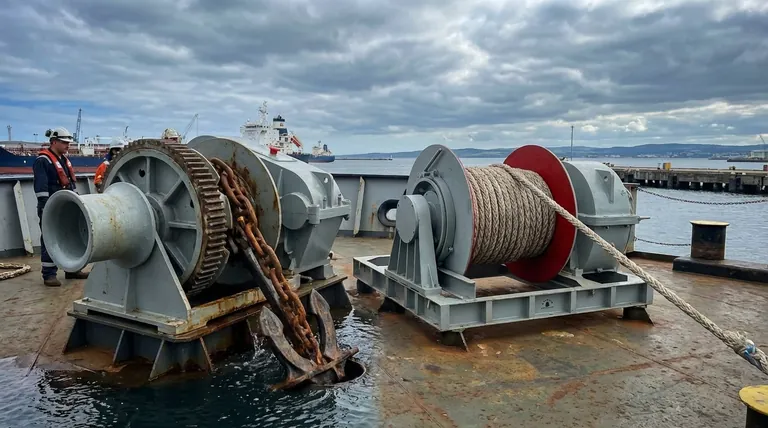
The Windlass: The Anchor Specialist
A windlass is engineered for one of the most critical tasks on any vessel: safely and reliably managing the anchor. Its entire design is optimized for this purpose.
Core Function: Vertical Lifting
The primary job of a windlass is to lift the immense dead weight of an anchor and chain vertically from the seabed. This requires a mechanism that can handle high torque and prevent slippage under heavy load.
The Key Component: The Gypsy
The heart of the windlass is the gypsy. This is a special wheel with precisely shaped notches that perfectly match the links of the anchor chain. This positive engagement provides a secure, non-slip grip essential for hoisting and lowering the anchor.
Common Windlass Configurations
On larger vessels, you may encounter different setups. A single windlass might control both port and starboard anchors from a single unit, offering simplicity. A split windlass uses separate, independent systems for each anchor, providing greater control and redundancy.
The Winch: The General-Purpose Puller
While a windlass is a specialist, a winch is a versatile workhorse found all over a vessel, used for a wide variety of pulling and tensioning tasks.
Core Function: Horizontal Pulling
Winches are primarily designed for pulling loads horizontally or at an angle. Their application isn't lifting dead weight from below, but rather managing lines under tension.
The Key Component: The Drum
Instead of a gypsy, a winch uses a drum around which the rope or cable is wrapped. The friction from multiple wraps allows the winch to exert significant pulling force. Drums can be smooth or textured to increase grip on the line.
Versatility in Application
The winch's general design makes it suitable for many jobs, including tightening mooring lines, hoisting a dinghy onto the deck, or trimming sails on a sailboat.
Understanding the Critical Trade-offs
Using the wrong piece of equipment for the job is not just inefficient; it's dangerous. The design differences are directly tied to safety and performance.
Load Type: Chain vs. Rope
You cannot safely use a winch drum for an anchor chain. The smooth surface provides no positive lock, and the chain would slip dangerously under load. Likewise, running a soft rope over a windlass gypsy will quickly chafe and destroy the line.
Direction of Force
A windlass is built to handle the direct vertical strain of an anchor. A winch is designed for the shearing, horizontal forces of mooring or towing. Using one for the other's task can put improper stress on the machinery, its motor, and its mounting to the deck.
The Risk of Failure
An anchor chain slipping on a winch drum could result in a lost anchor or, far worse, an uncontrolled release that injures personnel. A mooring line failing under strain from a gypsy can snap back with lethal force.
Making the Right Choice for Your Task
Selecting and using the correct deck machinery is fundamental to safe and effective vessel operations. Your decision should always be based on the specific task at hand.
- If your primary focus is deploying and retrieving an anchor: You absolutely require a windlass with a gypsy that is correctly sized for your vessel's anchor chain.
- If your primary focus is managing mooring lines or other general pulling tasks: A winch is the appropriate and safe tool, designed to handle rope or cable under tension.
- If you need a combination solution: Many modern windlasses include a "warping drum" alongside the gypsy, offering the functionality of a light-duty winch for handling rope.
Understanding this fundamental distinction is the first step toward safe and efficient vessel operation.
Summary Table:
| Feature | Windlass | Winch |
|---|---|---|
| Primary Function | Vertical lifting of anchor & chain | Horizontal pulling of ropes/cables |
| Key Component | Gypsy (notched wheel for chain) | Drum (for wrapping rope/cable) |
| Primary Load Type | Anchor Chain | Rope, Cable, or Wire |
| Typical Use Case | Anchoring | Mooring, Towing, Hoisting |
Ensure Safe and Efficient Operations with the Right Machinery
Choosing the correct deck equipment is critical for safety and performance. At GARLWAY, we specialize in providing robust and reliable construction and marine machinery, including winches designed for demanding pulling tasks.
Our expertise helps construction companies and contractors globally tackle their toughest challenges with confidence.
Ready to find the perfect winch for your project? Contact our experts today to discuss your specific needs and discover how GARLWAY's solutions can enhance your operational efficiency and safety.
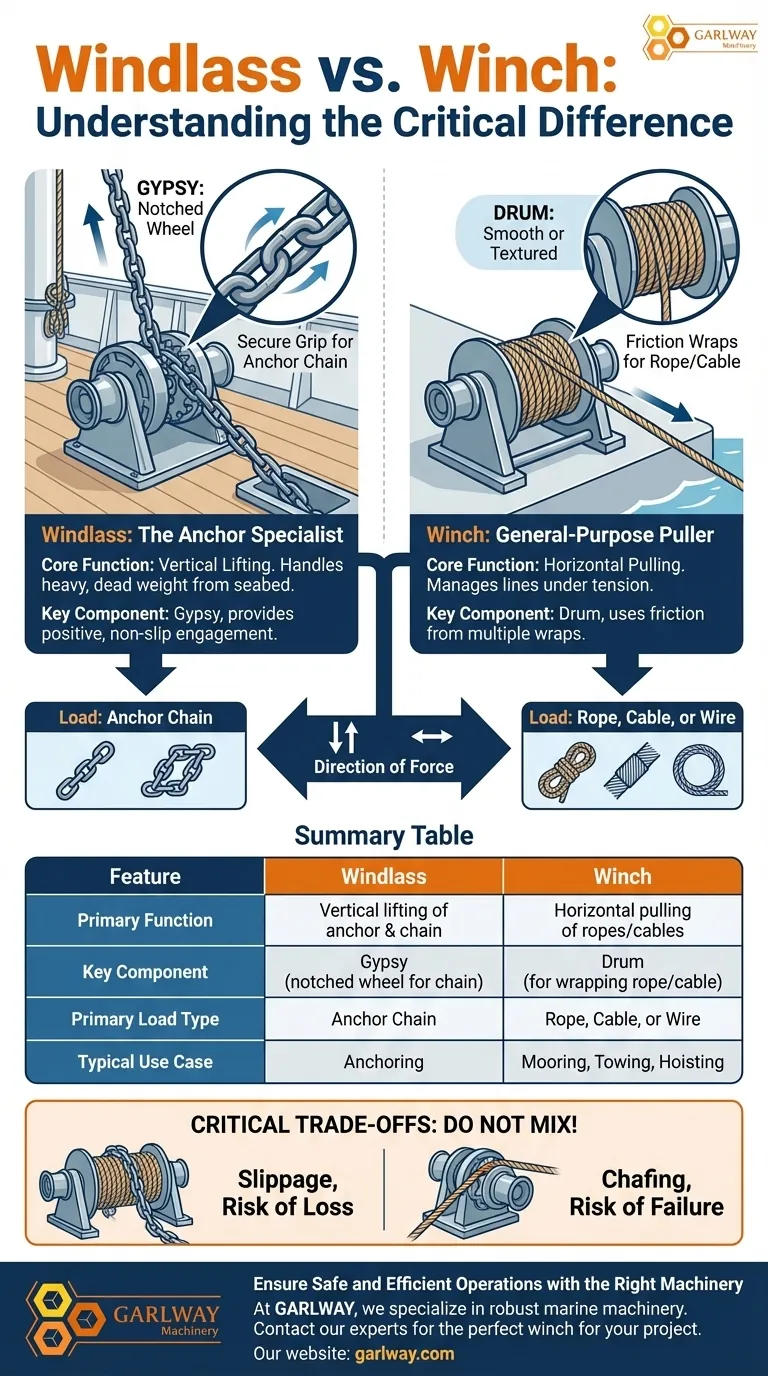
Visual Guide
Related Products
- Warn Winch Windlass Boat Trailer Winch
- Electric and Hydraulic Winch for Heavy Duty Applications
- Small Electric Winch 120V and 240V for Compact Applications
- Quick Windlass Portable Winch for Truck and Boat Best Boat Winch
- Hydraulic Winding Engine Harbor Freight Winch
People Also Ask
- What are the main components of a boat trailer winch? A Guide to Safe & Efficient Boat Loading
- What factors should be considered when choosing a boat trailer winch? Ensure Safe and Effortless Boat Loading
- What is the purpose of boat trailer winches? Safely and Efficiently Load Your Boat
- What are the two main types of boat trailer winches? Manual vs. Electric Explained
- How often should a boat trailer winch be replaced? Your Guide to Safety and Longevity





