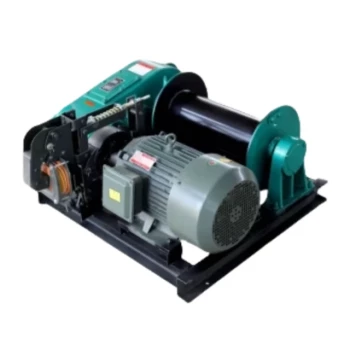
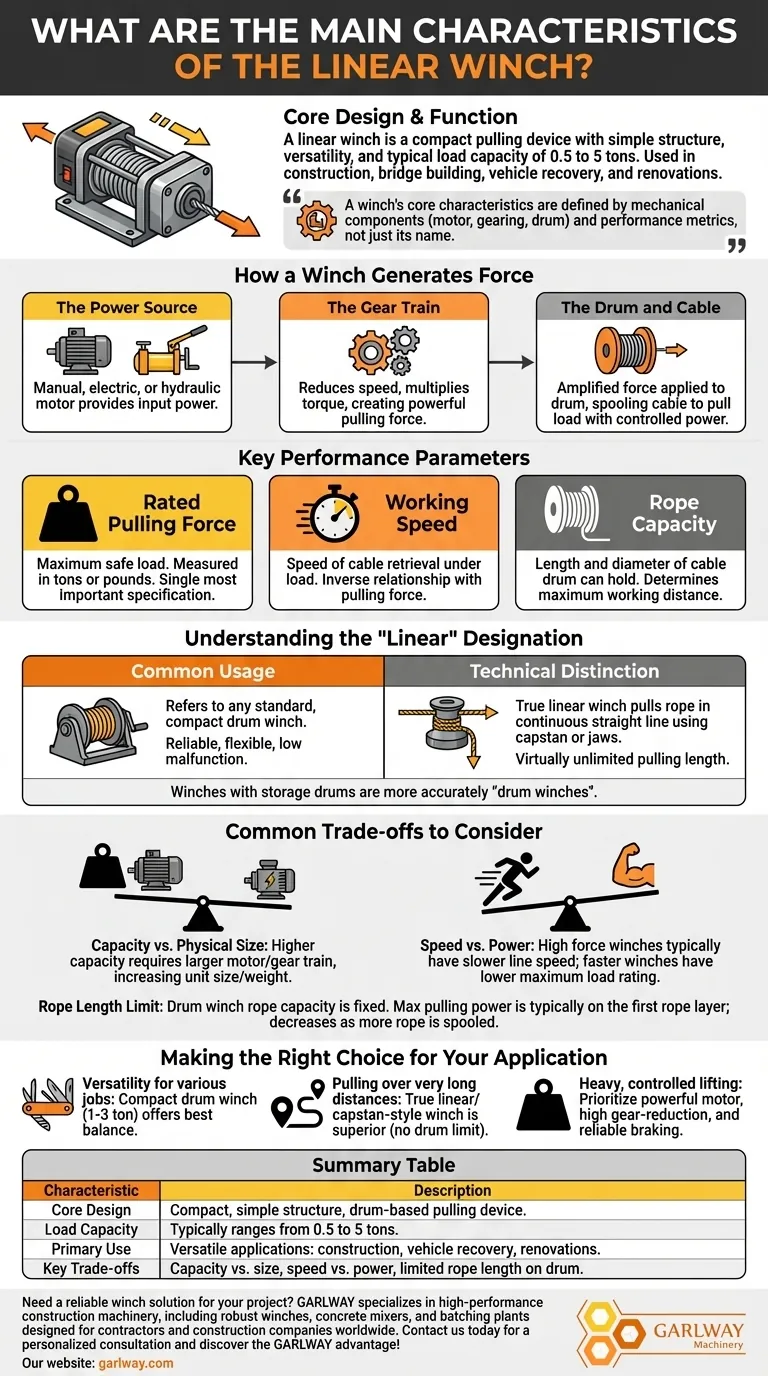
A linear winch is fundamentally a compact pulling device, characterized by its simple structure, versatility, and load capacity typically ranging from 0.5 to 5 tons. This design makes it suitable for a wide array of applications, from large-scale construction and bridge building to smaller jobs like vehicle recovery and home renovations.
A winch's core characteristics are not defined by its name, but by its mechanical components and performance metrics. Understanding how its motor, gearing, and drum work together to determine its pulling force, speed, and capacity is essential for proper selection.
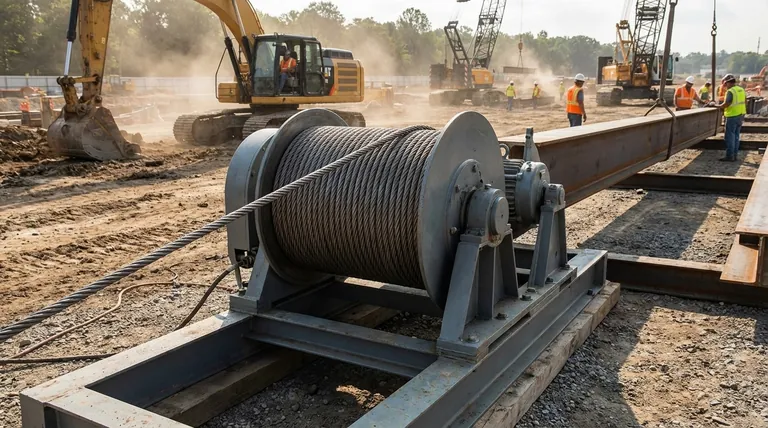
How a Winch Generates Force
A winch is a system designed to amplify a small input power into a large pulling force. This is accomplished through a series of critical, interconnected components.
The Power Source
The process begins with a power source. This can be a manual hand crank for smaller loads or, more commonly, an electric or hydraulic motor for heavier applications.
The Gear Train
The motor's high-speed, low-torque output is fed into a reduction gear train. This mechanism drastically reduces the rotational speed while multiplying the torque, creating the powerful pulling force the winch is known for.
The Drum and Cable
This amplified force is applied to the drum. As the drum rotates, it spools the steel cable or synthetic rope, pulling the attached load with immense, controlled power.
Key Performance Parameters
Three basic parameters define the capability and performance of any winch.
Rated Pulling Force
This is the maximum load the winch can safely pull. This rating, often measured in tons or pounds, is the single most important specification.
Working Speed
Working speed refers to how quickly the winch can retrieve the cable under load. There is typically an inverse relationship between speed and pulling force.
Rope Capacity
This parameter specifies the length and diameter of the cable or rope that the drum can hold. It directly determines the maximum working distance of the winch.
Understanding the "Linear" Designation
The term "linear winch" can be a source of confusion. It's often used colloquially but has a more specific technical meaning.
The Common Usage
In general use, "linear winch" often refers to any standard, compact drum winch. Its key traits are its simple and reliable structure, flexibility in use, and low probability of malfunction.
The Technical Distinction
Technically, a true linear winch pulls a rope in a continuous, straight line using a capstan or a series of gripping jaws. Unlike a drum winch, it doesn't store the rope on board, giving it a virtually unlimited pulling length. The winches described in the references, which use a storage drum, are more accurately called drum winches.
Common Trade-offs to Consider
Choosing a winch involves balancing competing characteristics. Understanding these trade-offs is crucial for selecting the right tool for the job.
Capacity vs. Physical Size
Higher pulling capacity almost always requires a larger motor and a more robust gear train, resulting in a heavier and larger unit.
Speed vs. Power
A winch geared for very high pulling forces will typically have a slower line speed. Conversely, a faster winch may have a lower maximum load rating.
The Limit of Rope Length
For a standard drum winch, the rope capacity is fixed. Furthermore, its maximum pulling power is typically only available on the first layer of rope on the drum; the force decreases as more rope is spooled on.
Making the Right Choice for Your Application
Selecting the correct winch depends entirely on your primary goal.
- If your primary focus is versatility for various jobs: A compact drum winch with a 1-to-3-ton capacity offers the best balance of power, size, and utility.
- If your primary focus is pulling over very long distances: A true linear or capstan-style winch is the superior technical solution, as its capacity is not limited by drum size.
- If your primary focus is heavy, controlled lifting: Prioritize a winch with a powerful motor, a high gear-reduction ratio, and a reliable braking system to ensure safety.
By matching the winch’s core parameters to your specific task, you ensure efficient, safe, and effective operation.
Summary Table:
| Characteristic | Description |
|---|---|
| Core Design | Compact, simple structure, drum-based pulling device. |
| Load Capacity | Typically ranges from 0.5 to 5 tons. |
| Primary Use | Versatile applications: construction, vehicle recovery, renovations. |
| Key Trade-offs | Capacity vs. size, speed vs. power, limited rope length on drum. |
Need a reliable winch solution for your project? GARLWAY specializes in high-performance construction machinery, including robust winches, concrete mixers, and batching plants designed for contractors and construction companies worldwide. Our experts can help you select the perfect equipment to enhance your efficiency and safety. Contact us today for a personalized consultation and discover the GARLWAY advantage!
Visual Guide
Related Products
- Small Electric Winch 120V and 240V for Compact Applications
- Electric and Hydraulic Winch for Heavy Duty Applications
- Hydraulic Winding Engine Harbor Freight Winch
- Warn Winch Windlass Boat Trailer Winch
- Portable Small Trailer Winch
People Also Ask
- What makes electric winches suitable for off-road use? Key Features for Reliable Vehicle Recovery
- What are the common applications of electric winches? Power Your Lifting & Pulling Tasks
- What are the common uses of an electric winch? A Guide to Safe and Efficient Heavy Lifting
- What are the uses of electric winches in mining and tunneling? Enhance Safety and Efficiency Underground
- How do electric winches contribute to energy savings? Maximize Efficiency and Lower Costs