
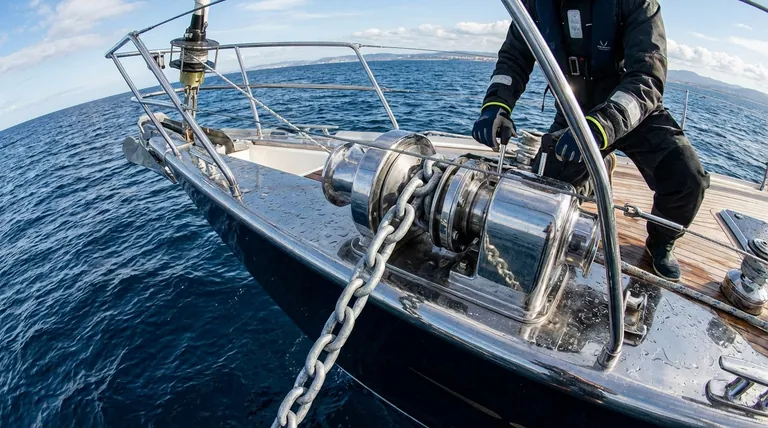
In essence, a windlass is a mechanical winch mounted on the bow of a boat designed specifically to raise and lower the anchor. Its primary function is to eliminate the intense physical labor of handling heavy ground tackle (the anchor and its chain or rope), making the entire anchoring process faster, safer, and more controlled.
A windlass is more than a luxury; it's a fundamental tool for safety and control. It transforms anchoring from a high-effort, physically demanding task into a reliable, repeatable procedure that can be executed quickly, even in adverse conditions.
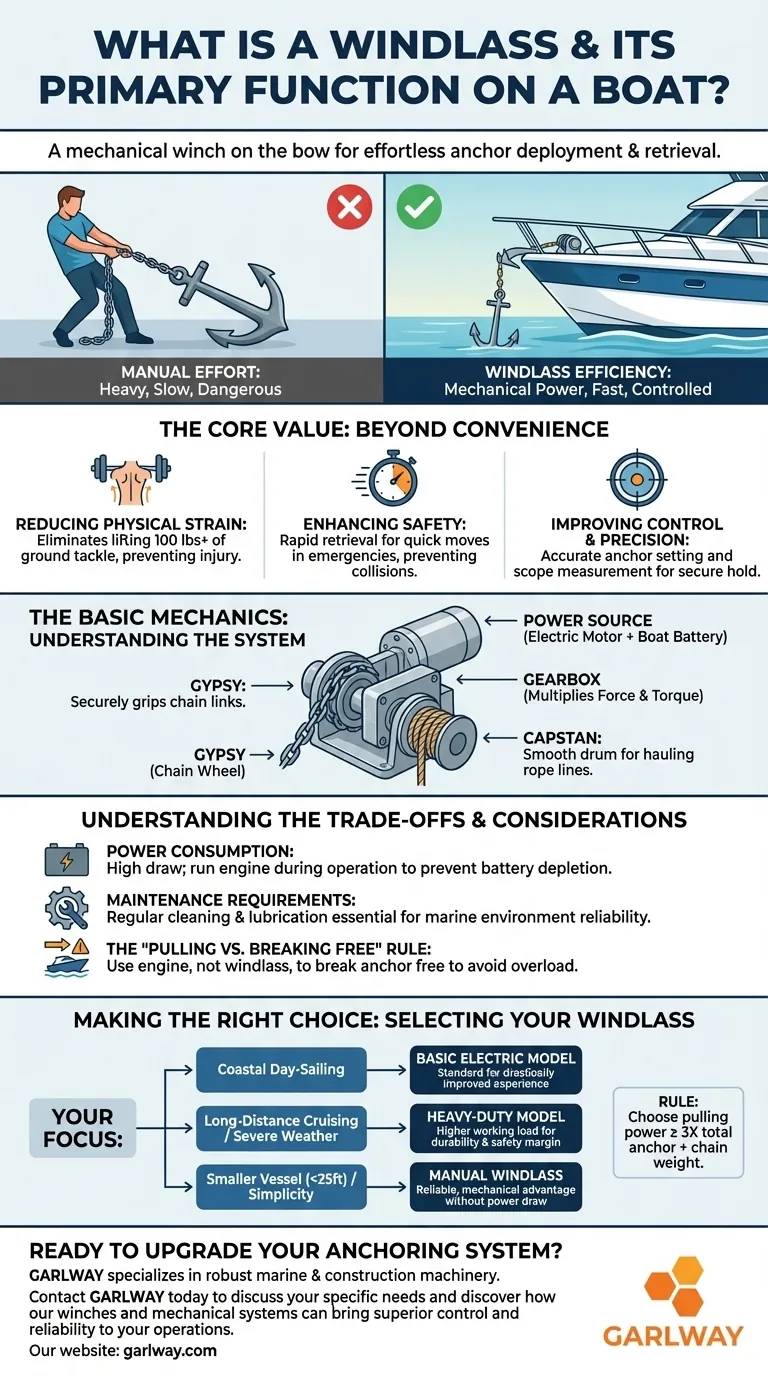
Beyond Convenience: The Core Value of a Windlass
While the reduction in physical effort is the most obvious benefit, the true value of a windlass lies in the operational advantages it provides.
Reducing Physical Strain
A typical anchor and chain combination can easily weigh over 100 pounds (45 kg). Manually hauling this weight from the seabed is strenuous and can lead to back injuries or other physical strain, especially in rough water.
A windlass uses mechanical power, typically from an electric motor, to do the heavy lifting for you.
Enhancing Safety
In a sudden wind shift or a crowded anchorage, you may need to raise your anchor and move immediately. A windlass allows you to retrieve the anchor in a fraction of the time it would take by hand.
This speed is a critical safety feature, preventing potential collisions or running aground.
Improving Control and Precision
A windlass allows for the controlled deployment and retrieval of the anchor chain. This precision helps you set the anchor correctly and measure the amount of chain (scope) you have out, which is essential for a secure hold.
The Basic Mechanics
Understanding how a windlass operates helps clarify its role. It's a simple but powerful system.
The Power Source
Most modern windlasses are electric, running off the boat's battery bank. Because they draw significant power, it is standard practice to run the boat's engine while operating the windlass to prevent draining the batteries.
The Gypsy and Capstan
The heart of the windlass is the rotating drum. This drum has two common parts.
The gypsy is a special notched wheel designed to grip the links of an anchor chain, preventing it from slipping. The capstan (or drum) is a smooth cylinder used for hauling rope-based anchor lines. Many windlasses have a combination of both.
The Gearbox
Between the motor and the gypsy is a powerful gearbox. This component multiplies the motor's force, generating the massive torque required to break an embedded anchor free from the seabed and lift the full weight of the ground tackle.
Understanding the Trade-offs
While indispensable for many boaters, a windlass is a complex piece of machinery with its own set of considerations.
Power Consumption
As mentioned, electric windlasses are power-hungry. Operating one without the engine running can quickly deplete your house batteries, potentially leaving you without power for other critical systems.
Maintenance Requirements
A windlass is a mechanical system exposed to the harshest marine environment. It requires regular maintenance, including cleaning, lubrication, and inspection of electrical connections, to ensure it functions reliably when you need it most.
The "Pulling vs. Breaking Free" Rule
A windlass is designed for lifting, not for breaking an anchor free with sheer force. The correct procedure is to use the boat's engine to motor gently towards the anchor, taking the direct strain off the windlass, which then simply retrieves the slack chain.
Relying on the windlass to pull the boat forward puts immense stress on the motor and gearbox and is a common cause of failure.
Making the Right Choice for Your Goal
Selecting a windlass isn't just about boat size; it's about how you use your boat. The general rule is to choose a windlass with a pulling power at least three times the total weight of your anchor and chain.
- If your primary focus is coastal day-sailing: A basic, correctly sized electric windlass will drastically improve your experience and is considered standard equipment.
- If your primary focus is long-distance cruising or anchoring in severe weather: Invest in a more powerful, heavy-duty model with a higher working load than the minimum recommendation for greater durability and a margin of safety.
- If you have a smaller vessel (under 25 feet) or desire simplicity: A manual windlass provides mechanical advantage without the complexity and power draw of an electric system, offering a reliable, albeit slower, alternative.
Ultimately, installing the right windlass provides confidence and control, ensuring your anchor is a tool you can deploy and retrieve safely in any situation.
Summary Table:
| Key Feature | Primary Benefit |
|---|---|
| Mechanical Winch | Eliminates manual lifting of heavy anchors and chains |
| Electric Power | Provides fast, controlled deployment and retrieval |
| Gypsy & Capstan | Securely handles both chain and rope anchor lines |
| Safety & Speed | Enables quick anchoring and retrieval in emergencies |
Ready to upgrade your vessel's anchoring system?
GARLWAY specializes in robust marine and construction machinery. For boat builders, marine contractors, and commercial fleets seeking reliable, high-performance equipment, our expertise ensures you get a solution built for durability and safety.
Contact GARLWAY today to discuss your specific needs and discover how our winches and mechanical systems can bring superior control and reliability to your operations.
Visual Guide
Related Products
- Warn Winch Windlass Boat Trailer Winch
- Quick Windlass Portable Winch for Truck and Boat Best Boat Winch
- Electric Hoist Winch Boat Anchor Windlass for Marine Applications
- Heavy Duty Electric Boat Winch Windlass Anchor
- 12000 lb Electric Boat Trailer Winch with Windlass Anchor Warn
People Also Ask
- What are the main components of a boat trailer winch? A Guide to Safe & Efficient Boat Loading
- What factors should be considered when choosing a boat trailer winch? Ensure Safe and Effortless Boat Loading
- What is the purpose of boat trailer winches? Safely and Efficiently Load Your Boat
- What are the two main types of boat trailer winches? Manual vs. Electric Explained
- How often should a boat trailer winch be replaced? Your Guide to Safety and Longevity


