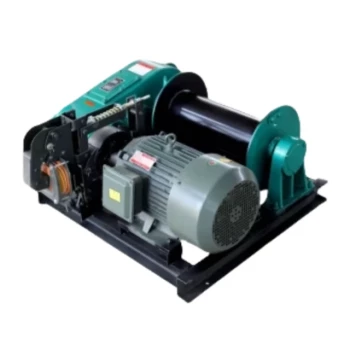
A linear winch operates on one of two specific electrical power sources. It is designed to use either a 220V single-phase power supply, common in residential and light commercial settings, or a 380V three-phase supply, which is standard for industrial applications.
The choice between 220V and 380V power is not merely about what's available. It is a fundamental decision that dictates the winch's suitability for either lighter, intermittent tasks or demanding, heavy-duty industrial operations.
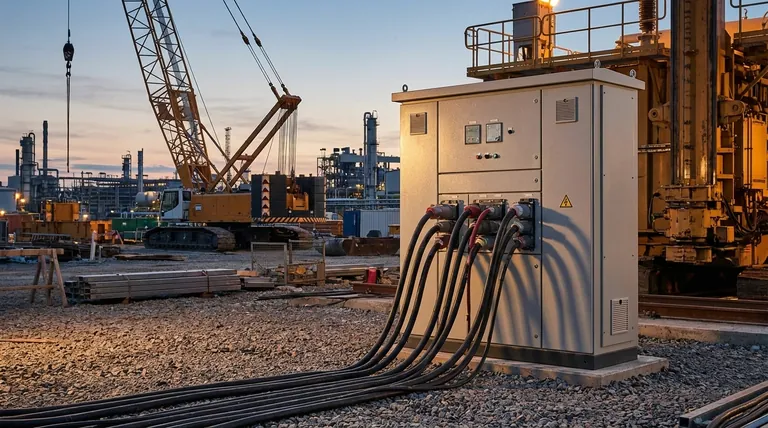
The Two Electrical Options Explained
A linear winch is a type of electric winch, meaning its core design revolves around an electric motor. The power source you connect to this motor directly influences its performance characteristics.
220V Single-Phase Power
Single-phase power is the standard electricity found in most homes and small businesses. A 220V connection is sufficient for powering the linear winch for smaller-scale operations.
This option is ideal when the lifting requirements are moderate and the work environment does not have industrial-grade power infrastructure.
380V Three-Phase Power
Three-phase power is the workhorse of the industrial world. It delivers a more consistent and balanced supply of power to the motor.
For a linear winch, a 380V connection enables it to handle heavier loads, operate more efficiently, and run continuously without the risk of overheating associated with less robust power sources. This is critical for components like the motor, brake, and gearbox under heavy strain.
Why Linear Winches Are Exclusively Electric
While the broader world of winches includes manual, hydraulic, and internal combustion models, the linear winch is specifically an electric device. This design choice is intentional and based on the advantages electricity provides in its target applications.
Reliability and Low Operating Cost
Electric winches are preferred wherever a stable power source is available. They offer superior safety, high reliability, and significantly lower operating costs compared to fuel-powered alternatives.
Integration with Machinery
Linear winches are often used as components within larger systems, such as cranes, mine hoists, and road construction equipment. In these industrial contexts, standardized and reliable electric power is a prerequisite.
Common Pitfalls and Considerations
The primary limitation of any electric winch, including the linear model, is its dependence on a power grid. This creates a clear trade-off between power and portability.
The Grid Dependency Trade-off
The linear winch offers immense power and control but is tethered to its source. It cannot function in remote locations or mobile scenarios where a power outlet is unavailable.
When Other Power Sources Are Necessary
If power is not available, you must consider other winch types. Internal combustion or hydraulic winches are designed for field use where portability and self-sufficiency are more important than the clean efficiency of an electric motor.
Making the Right Choice for Your Goal
Selecting the correct power configuration is the first step toward successful implementation. Your decision should be guided by your specific operational environment and performance requirements.
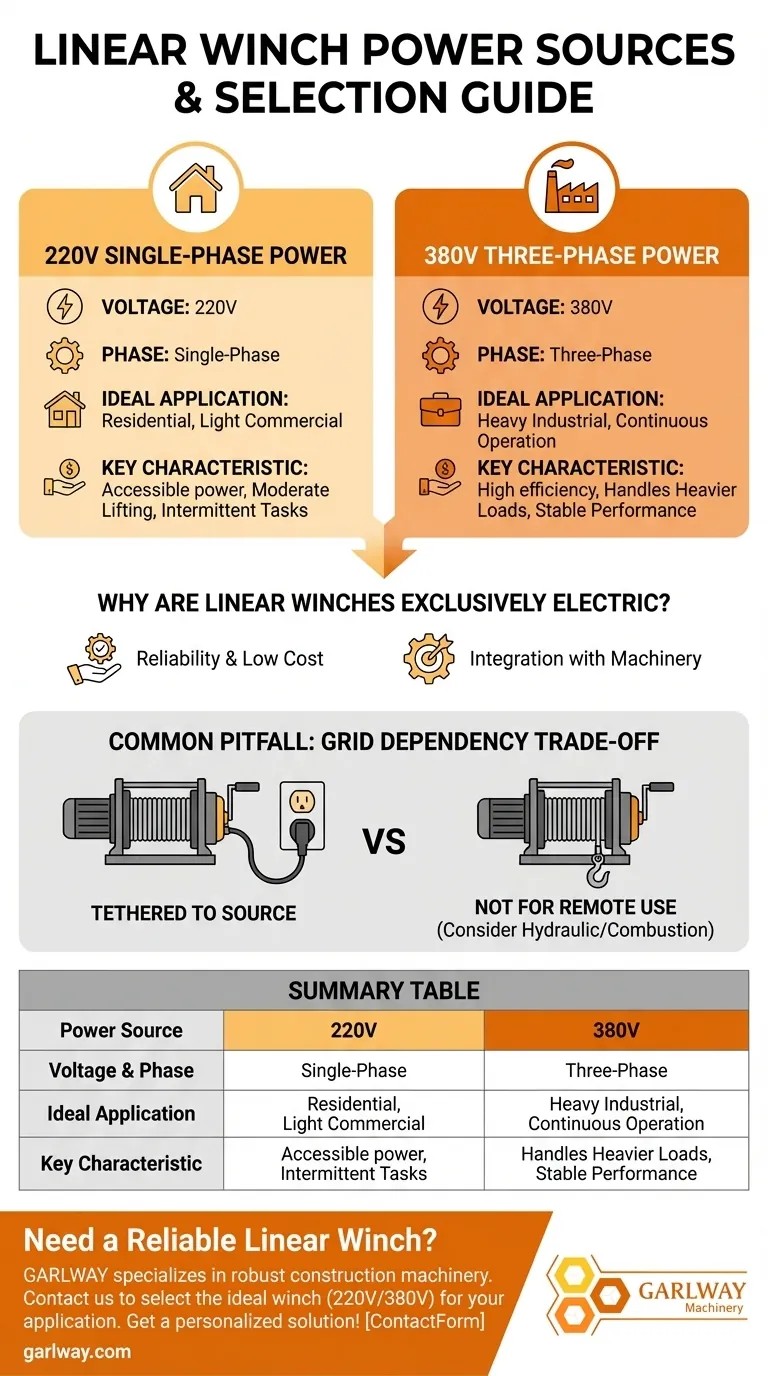
- If your primary focus is light-duty work in commercial or residential settings: A 220V single-phase winch is the most practical and accessible choice.
- If your primary focus is heavy industrial lifting or continuous operation: The stability and higher efficiency of a 380V three-phase power source are essential for performance and longevity.
- If you are operating in a remote location without grid access: You must look beyond the linear winch to alternatives like internal combustion or hydraulic models.
Ultimately, matching the winch's power system to your worksite's infrastructure ensures you get the reliable performance you expect.
Summary Table:
| Power Source | Voltage & Phase | Ideal Application | Key Characteristic |
|---|---|---|---|
| Single-Phase | 220V | Residential, Light Commercial, Moderate Lifting | Accessible power, suitable for intermittent tasks |
| Three-Phase | 380V | Heavy Industrial, Continuous Operation | High efficiency, handles heavier loads, stable performance |
Need a Reliable Linear Winch for Your Project?
Choosing the correct power source is crucial for the performance and longevity of your equipment. GARLWAY specializes in providing robust construction machinery, including electric winches, concrete mixers, and batching plants, tailored for construction companies and contractors worldwide.
We can help you:
- Select the ideal linear winch (220V or 380V) for your specific application.
- Ensure seamless integration with your existing power infrastructure.
- Enhance your project's efficiency and safety with reliable equipment.
Get a personalized solution for your lifting challenges. Contact GARLWAY today for expert advice and a quote!
Visual Guide
Related Products
- Small Electric Winch 120V and 240V for Compact Applications
- Electric and Hydraulic Winch for Heavy Duty Applications
- Hydraulic Winding Engine Harbor Freight Winch
- Warn Winch Windlass Boat Trailer Winch
- Portable Small Trailer Winch
People Also Ask
- What makes electric winches suitable for off-road use? Key Features for Reliable Vehicle Recovery
- What are the common applications of electric winches? Power Your Lifting & Pulling Tasks
- What are the common uses of an electric winch? A Guide to Safe and Efficient Heavy Lifting
- What are the uses of electric winches in mining and tunneling? Enhance Safety and Efficiency Underground
- How do electric winches contribute to energy savings? Maximize Efficiency and Lower Costs