
Beyond the power lines, winches are fundamental tools that enable critical work across the utility, electric, construction, mining, and even agricultural sectors. Their primary function is to provide controlled, powerful pulling and lifting force, making them indispensable for handling heavy materials and equipment with precision and safety.
The true value of a winch in utility and electric applications isn't defined by a list of industries, but by its core function: solving the universal challenge of moving heavy objects safely and efficiently in environments where manual labor is impractical or dangerous.
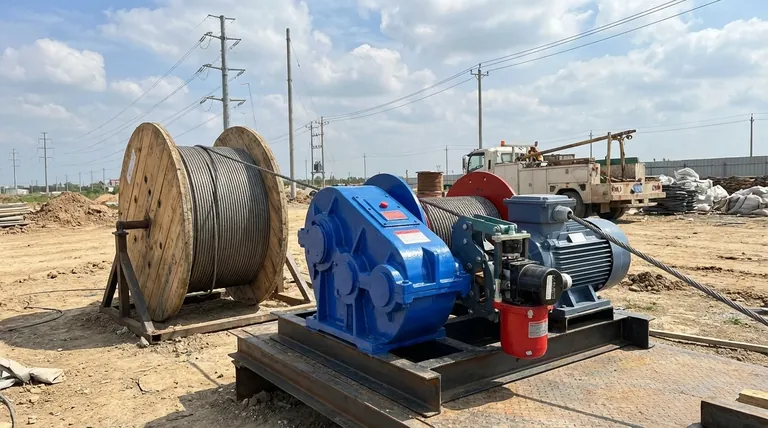
Core Industries and Their Critical Applications
Winches are not confined to a single industry; their utility is found wherever heavy loads must be managed as part of installing, maintaining, or supporting electrical infrastructure.
The Electric & Telecom Utility Sector
This is the most direct application. Crews rely on winches daily for pulling underground electrical cables through conduits, tensioning overhead power lines, and lifting heavy transformers or switchgear into position on poles and in substations.
Heavy Construction and Infrastructure
Before a utility can be installed, the site must be prepared. Winches are used in road construction and general site work for clearing obstacles, positioning large drainage pipes, and lifting structural components, all of which support the eventual installation of power and data lines.
Mining and Resource Extraction
Mines are massive consumers of electrical power and require extensive infrastructure. Winches are essential for mine hoisting operations, moving heavy equipment within shafts, and performing maintenance on the high-voltage systems that power the site.
Forestry and Land Management
Creating and maintaining a right-of-way for power lines requires significant land clearing. In forestry, winches are used for skidding and dragging logs and clearing dense vegetation, ensuring a safe corridor for electrical infrastructure.
Agriculture and Farming
Modern farms often use large, electrically powered equipment. Winches are used for pulling and lifting heavy farming machinery for maintenance and recovery, ensuring the operational uptime of critical agricultural systems.
Why Winches are Indispensable: Key Operational Benefits
The widespread adoption of winches stems from a few core benefits that directly address the high-stakes challenges of utility and industrial work.
Enhancing Operational Safety
The primary benefit is enhanced safety. Winches provide optimum load control, allowing operators to move multi-ton objects with precision. This removes personnel from hazardous lifting zones and prevents accidents associated with uncontrolled loads.
Driving Efficiency and Productivity
A winch allows a small crew to accomplish work that would otherwise require a much larger team or heavier machinery. Their simple operation and large rope capacity streamline tasks, reducing project timelines and labor costs.
Unmatched Versatility and Relocation
Winches can be used as standalone units or integrated into other machinery. Their relative ease of relocation means a single winch can be deployed across a worksite for multiple different tasks, from lifting materials to pulling vehicles.
Understanding the Trade-offs: Electric vs. Hydraulic
The choice of winch often comes down to the power source, with electric and hydraulic systems offering distinct advantages.
The Case for Electric Winches
Electric winches are often favored for their cost-effectiveness. They typically have a lower purchase price and require reduced maintenance compared to hydraulic systems. Their ease of use and efficiency contribute to lower long-term operating costs, making them ideal for a wide range of applications.
The Case for Hydraulic Winches
Hydraulic winches and capstans are the workhorses of the utility industry for a reason. They offer immense, continuous pulling power and exceptional durability under constant, heavy use. For the most demanding jobs, like tensioning high-voltage lines, hydraulics provide unmatched performance and reliability.
Making the Right Choice for Your Application
Selecting the correct winch requires aligning the tool's capabilities with your project's primary goal.
- If your primary focus is cost-effectiveness and portability: An electric winch is likely the superior choice due to its lower upfront cost, reduced maintenance, and simpler operation.
- If your primary focus is maximum power and continuous duty: A hydraulic system is the industry standard for large-scale utility, construction, and mining projects that demand relentless performance.
- If your primary focus is safety and precise control: Both systems offer excellent load control, but you should prioritize models with features specifically designed for the type of load you are managing.
Ultimately, choosing the right winch is a strategic decision that multiplies force, enhances safety, and drives operational efficiency on the job site.
Summary Table:
| Industry | Primary Winch Application | Key Benefit |
|---|---|---|
| Electric & Telecom | Cable pulling, line tensioning, lifting transformers | Enhanced safety, precise load control |
| Construction | Site preparation, pipe positioning, structural lifting | Increased productivity, versatility |
| Mining | Hoisting, equipment movement, maintenance | Continuous heavy-duty performance |
| Forestry | Land clearing, log skidding | Safe right-of-way creation for power lines |
| Agriculture | Machinery recovery and maintenance | Operational uptime for farm systems |
Ready to enhance your project's safety and efficiency?
GARLWAY specializes in providing robust winches, concrete mixers, and batching plants for construction companies and contractors worldwide. Whether you need a cost-effective electric winch for versatile applications or a powerful hydraulic system for heavy-duty tasks, our solutions are engineered for reliability and performance.
Contact us today to discuss your specific needs and discover how GARLWAY can power your success.
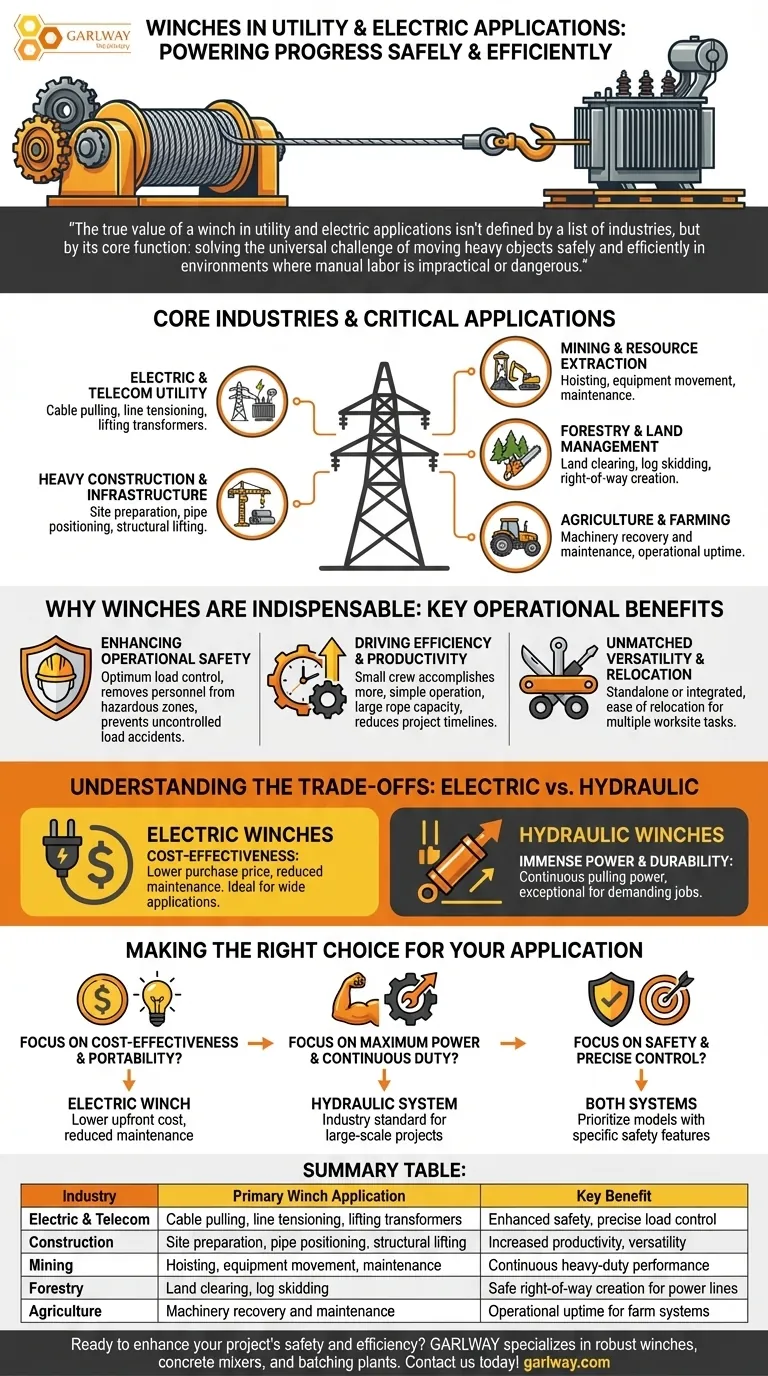
Visual Guide
Related Products
- Warn Winch Windlass Boat Trailer Winch
- Small Electric Winch 120V and 240V for Compact Applications
- Electric and Hydraulic Winch for Heavy Duty Applications
- Quick Windlass Portable Winch for Truck and Boat Best Boat Winch
- Portable Small Trailer Winch
People Also Ask
- What are the main components of a boat trailer winch? A Guide to Safe & Efficient Boat Loading
- What factors should be considered when choosing a boat trailer winch? Ensure Safe and Effortless Boat Loading
- What is the purpose of boat trailer winches? Safely and Efficiently Load Your Boat
- What are the two main types of boat trailer winches? Manual vs. Electric Explained
- How often should a boat trailer winch be replaced? Your Guide to Safety and Longevity





