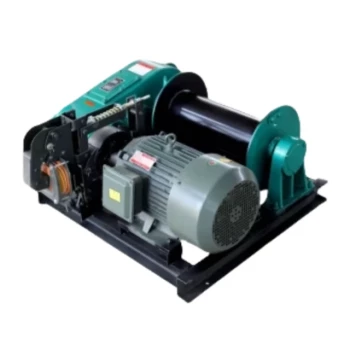
When selecting a winch, the most critical factors to evaluate are its load capacity, the type of line used (steel or synthetic), and the motor that powers it (typically electric or hydraulic). These core components dictate the winch's performance, safety, and suitability for your specific vehicle or task.
The goal is not simply to buy the most powerful winch, but to select a well-matched system where the capacity, line, and motor type work in concert to meet your specific needs safely and reliably.
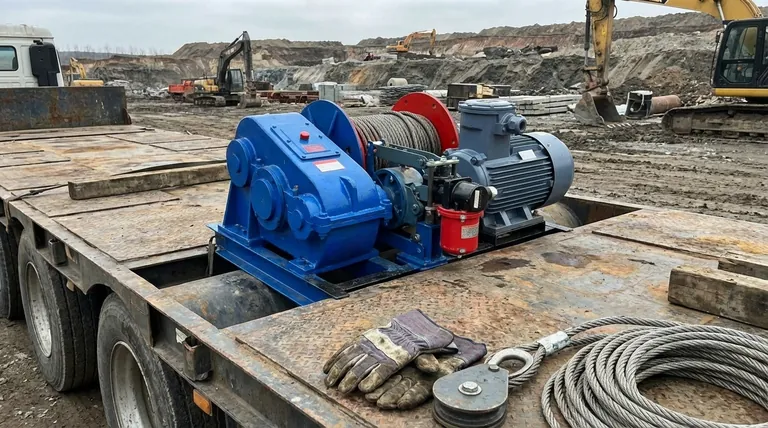
The Foundational Factor: Winch Capacity
Your first decision must be how much pulling power you require. This single specification influences every other aspect of your choice.
Calculating the Right Capacity
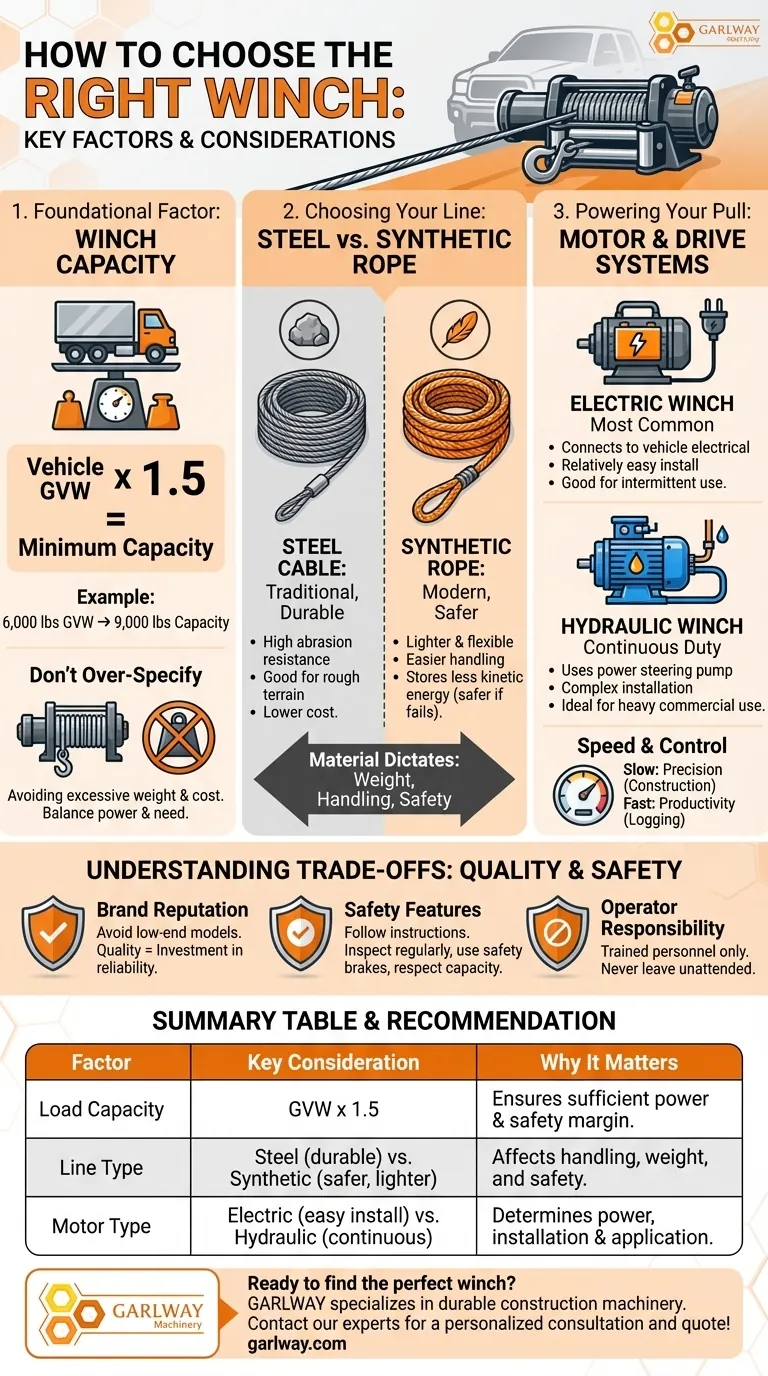
The industry-standard formula for off-road vehicles is to take your vehicle's Gross Vehicle Weight (GVW) and multiply it by 1.5. A winch rated for 1.5 times your GVW provides a sufficient safety margin for overcoming resistance from mud, inclines, or other obstacles.
For example, a vehicle with a GVW of 6,000 lbs would require a winch with a minimum capacity of 9,000 lbs.
The Problem of Over-Specifying
While it may seem safer, choosing a winch with excessive capacity adds unnecessary weight and cost to your vehicle. It's crucial to find the right balance between having enough power for a difficult recovery and not overburdening your setup.
Choosing Your Line: Steel vs. Synthetic Rope
The line is your connection to the recovery point. The material you choose has significant implications for weight, handling, and safety.
The Case for Steel Cable
Steel wire rope is the traditional choice, known for its high durability and excellent resistance to abrasion. It holds up well against rough terrain like rocks and is often less expensive than its synthetic counterpart.
The Advantages of Synthetic Rope
Modern synthetic rope is significantly lighter and more flexible than steel, making it easier to handle. Crucially, it stores less kinetic energy and is less prone to a violent snap if it fails, making it a much safer option.
Powering Your Pull: Motor and Drive Systems
The motor is the heart of the winch, converting energy into pulling force. The type of motor determines the winch's power source, installation complexity, and ideal use case.
Electric Winches
Electric winches are the most common type for consumer and off-road use. They connect to your vehicle's electrical system, are relatively easy to install, and offer excellent reliability and control for intermittent use.
Hydraulic Winches
Hydraulic winches tap into a vehicle's power steering pump for power. This allows for long, continuous operation without overheating, but the installation is far more complex and space-intensive, making them suitable for heavy commercial and industrial applications.
Winch Speed and Control
For construction projects requiring high precision over short distances, a slow-speed winch offers the best control. For covering long distances, such as in logging or utility work, a fast-speed winch improves productivity.
Understanding the Trade-offs: Quality and Safety
A winch is a safety-critical device. Prioritizing quality and understanding its limitations is non-negotiable.
Brand Reputation and Build Quality
Avoid low-end, unproven models, as they are far more prone to failure under load. A quality winch from a reputable manufacturer is a sound investment in reliability and safety, and dependable options can often be found for under $500.
The Importance of Safety Features
Always operate a winch according to the manufacturer's instructions. Key safety practices include regular inspection of all components, utilizing safety brakes, and never exceeding the winch's rated load capacity.
The Operator's Responsibility
A winch should only be operated by trained and attentive personnel. Never leave a winch unattended during operation and always be mindful of your surroundings to prevent injury or property damage.
Making the Right Choice for Your Goal
Your intended use case is the ultimate guide to selecting the right components.
- If your primary focus is occasional off-road recovery: An electric winch with a synthetic rope and a capacity of 1.5x your vehicle's GVW is the most balanced choice for safety and performance.
- If your primary focus is heavy-duty industrial use: A hydraulic winch is likely required for its ability to handle long, continuous pulls without overheating.
- If your primary focus is budget-conscious reliability: Prioritize a reputable brand's steel cable electric winch over a low-cost synthetic model from an unknown manufacturer.
Ultimately, the best winch is the one that safely and reliably meets the specific demands you will place on it.
Summary Table:
| Factor | Key Consideration | Why It Matters |
|---|---|---|
| Load Capacity | Vehicle GVW x 1.5 | Ensures sufficient power for safe recovery with a safety margin. |
| Line Type | Steel (durable) vs. Synthetic (safer, lighter) | Affects handling, weight, and safety during operation. |
| Motor Type | Electric (easy install) vs. Hydraulic (continuous use) | Determines power source, installation complexity, and ideal application. |
Ready to find the perfect winch for your specific needs?
GARLWAY specializes in construction machinery, offering durable and reliable winches, concrete mixers, and batching plants for construction companies and contractors globally. Our experts can help you select the right equipment to ensure safety and efficiency on your job site.
Contact GARLWAY today for a personalized consultation and quote!
Visual Guide
Related Products
- Warn Winch Windlass Boat Trailer Winch
- Electric and Hydraulic Winch for Heavy Duty Applications
- Small Electric Winch 120V and 240V for Compact Applications
- Quick Windlass Portable Winch for Truck and Boat Best Boat Winch
- Hydraulic Winding Engine Harbor Freight Winch
People Also Ask
- What are the main components of a boat trailer winch? A Guide to Safe & Efficient Boat Loading
- What factors should be considered when choosing a boat trailer winch? Ensure Safe and Effortless Boat Loading
- What is the purpose of boat trailer winches? Safely and Efficiently Load Your Boat
- What are the two main types of boat trailer winches? Manual vs. Electric Explained
- How often should a boat trailer winch be replaced? Your Guide to Safety and Longevity