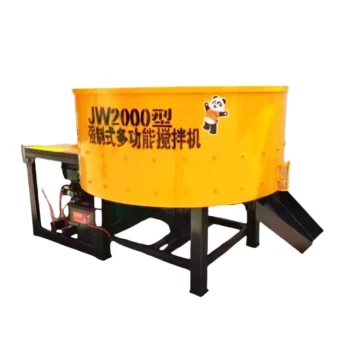
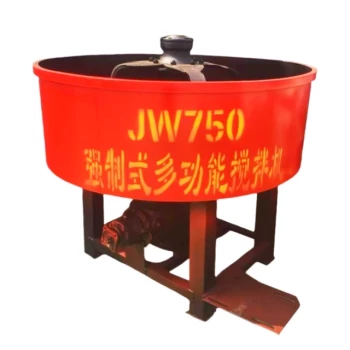
At their core, concrete mixer trucks offer significant environmental benefits by fundamentally changing how concrete is produced and delivered. They act as mobile batching plants, reducing material waste through precise mixing, lowering carbon emissions by consolidating transportation, and conserving substantial amounts of water compared to traditional methods.
The primary environmental advantage of a modern concrete mixer truck is its ability to transform concrete production from a wasteful, centralized process into a precise, on-demand, and resource-efficient operation right at the job site.
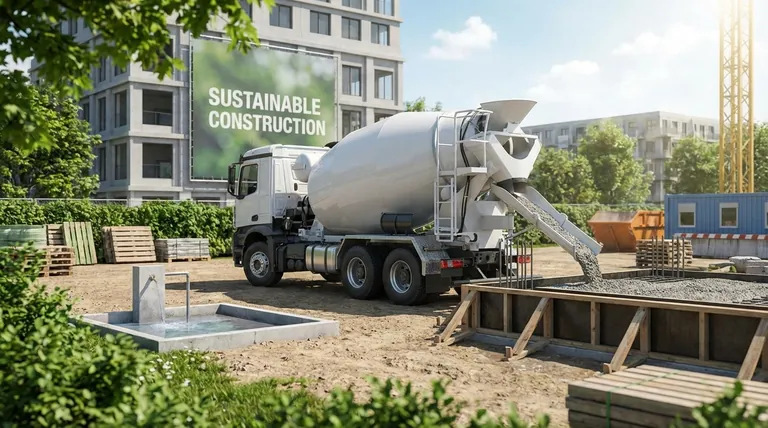
The Three Pillars of Environmental Benefit
The environmental impact of a concrete mixer truck is best understood by looking at its effect on three key resources: materials, fuel, and water.
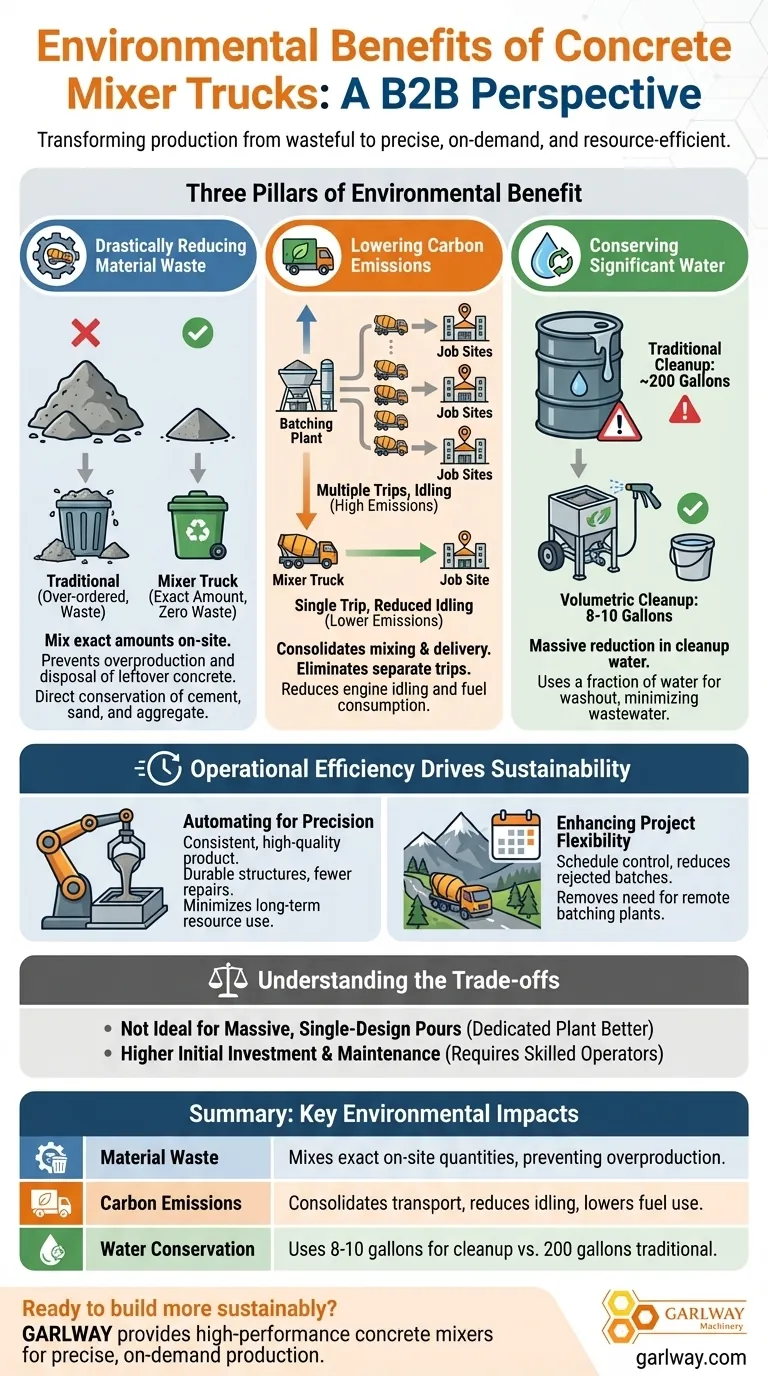
Drastically Reducing Material Waste
Traditional concrete production often involves ordering from a central batching plant, which leads to over-ordering to avoid shortages. Any unused concrete becomes waste.
A concrete mixer truck eliminates this by mixing the exact amount needed on-site. This prevents the overproduction and disposal of leftover concrete, directly conserving cement, sand, and aggregate.
Lowering Carbon Emissions
Consolidating mixing and delivery into a single vehicle significantly reduces the overall transportation required for a project. This eliminates separate trips to and from a batching plant.
Furthermore, because concrete is mixed on demand, the truck's engine does not need to idle for long periods while waiting to pour. This reduces fuel consumption and associated carbon emissions.
Conserving Significant Water
The cleanup process for traditional barrel mixers is notoriously water-intensive, often requiring up to 200 gallons of water to wash out the drum.
Modern volumetric mixers, by contrast, use a fraction of this. They can be cleaned with as little as 8-10 gallons of water, representing a massive reduction in water consumption and wastewater generation per job.
How Operational Efficiency Drives Sustainability
The operational advantages of mixer trucks create a positive ripple effect on a project's environmental footprint. Improved efficiency almost always translates to a more sustainable outcome.
Automating for Precision
By automating the mixing process, these trucks ensure a consistent, high-quality product. This leads to more durable structures that require fewer repairs and replacements over their lifespan, which minimizes long-term resource consumption.
Enhancing Project Flexibility
The ability to produce concrete anywhere provides tremendous schedule control. This reduces the risk of rejected batches due to delays, another source of material waste. For remote sites, it removes the need for a dedicated batching plant, avoiding the environmental impact of its construction and operation.
Understanding the Trade-offs
While beneficial, concrete mixer trucks are not a universal solution. An objective analysis requires acknowledging their limitations.
Not Ideal for All Scales
For massive, continuous pours where a single mix design is needed in enormous quantities, a dedicated, high-capacity batching plant located on-site can be more efficient. The "right tool for the job" principle is paramount.
Higher Initial Investment
The capital cost of a modern volumetric mixer truck is significant. This initial expense must be weighed against the long-term savings from reduced waste and increased operational efficiency.
Maintenance and Complexity
These are complex machines that require specialized maintenance and skilled operators. Improper maintenance can lead to breakdowns and inefficiencies, negating some of the potential benefits.
Making the Right Choice for Your Project
Selecting the right concrete production method depends entirely on your project's specific goals and constraints.
- If your primary focus is minimizing waste on projects with varied or uncertain pour volumes: A volumetric concrete mixer is the superior environmental and financial choice.
- If your primary focus is a massive, single-design industrial project: A dedicated on-site batching plant may offer greater economies of scale, though transit mixer emissions remain a factor.
- If your primary focus is working on remote or logistically challenging sites: A mobile mixer is often the only viable option and provides immense environmental benefits over transporting pre-mixed concrete long distances.
Ultimately, leveraging on-demand mixing technology is a powerful strategy for reducing the environmental footprint of modern construction.
Summary Table:
| Environmental Benefit | Key Impact |
|---|---|
| Material Waste | Mixes exact on-site quantities, preventing overproduction and disposal. |
| Carbon Emissions | Consolidates transport, reduces idling, and lowers fuel consumption. |
| Water Conservation | Uses as little as 8-10 gallons for cleanup vs. 200 gallons with traditional methods. |
Ready to build more sustainably?
GARLWAY specializes in providing high-performance construction machinery, including reliable concrete mixers, for construction companies and contractors globally. By choosing our equipment, you can achieve the precise, on-demand concrete production detailed in this article, directly reducing your project's environmental impact and operational costs.
Contact GARLWAY today to find the perfect concrete solution for your next project!
Visual Guide
Related Products
- Ready Mixer Machine for Construction Ready Mix Machinery
- JW1000 Mobile Cement Mixer Concrete Mixer Truck and Batching Plant
- Mini Cement Mortar Mixer Truck for Construction
- Harbor Freight JS1500 On Site Concrete Mixing Volumetric Cement Mixer
- HZS90 Large Multiquip Concrete Mixers for Construction
People Also Ask
- What are the purposes of low-speed agitation in truck mixers? Preserve Concrete Quality During Transit
- How is ready-mixed concrete transported from a commercial concrete batching plant? Ensuring Quality & Timely Delivery
- What are the main ingredients mixed in a concrete mixer truck? Master the Formula for Strong Concrete
- In what ways does a mobile concrete mixer improve quality control and consistency? Achieve Superior On-Site Concrete Quality
- What types of construction projects typically use concrete mixer trucks? From Highways to Home Foundations