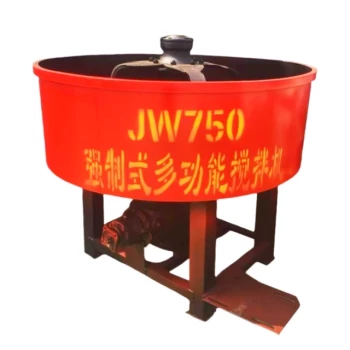
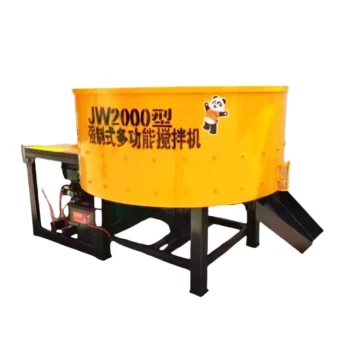
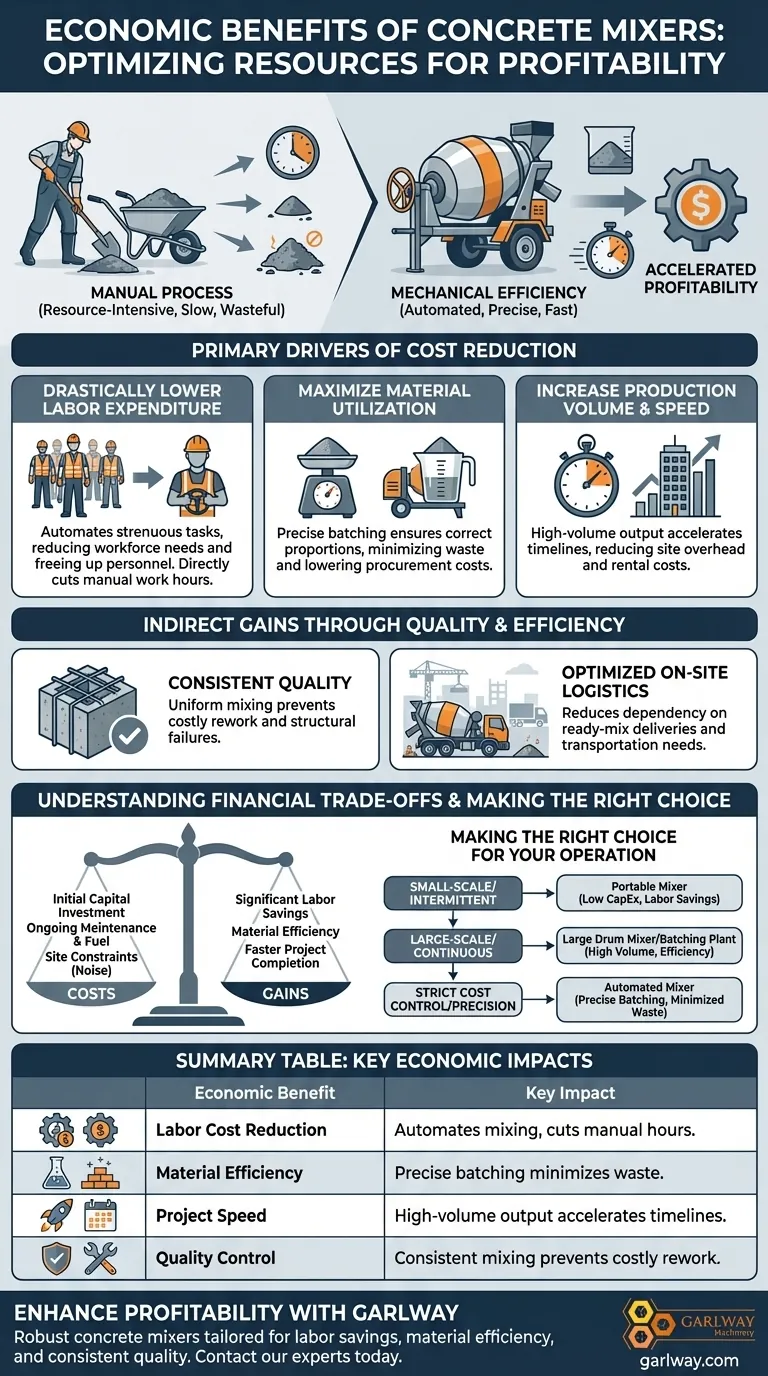
At their core, concrete mixers generate economic value by fundamentally optimizing the three most critical resources in construction: labor, materials, and time. They achieve this by automating the mixing process, which directly cuts down on manual work hours, reduces the waste of raw materials through precision, and accelerates the entire construction timeline by producing high volumes of concrete on demand.
The primary economic advantage of a concrete mixer isn't just about mixing concrete faster; it's about transforming a resource-intensive manual process into a highly efficient, controlled, and predictable operation that minimizes waste and accelerates project profitability.
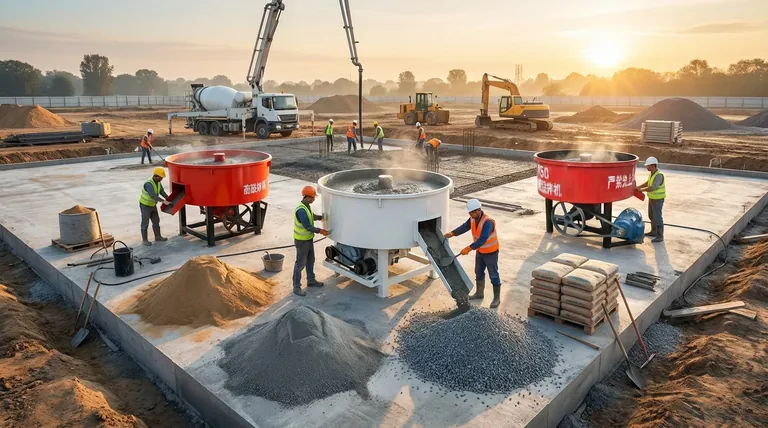
The Primary Drivers of Cost Reduction
The most significant economic benefits of using a concrete mixer are tied directly to immediate and measurable savings in operational expenses. These gains are realized across labor, materials, and project scheduling.
Drastically Lowering Labor Expenditure
A concrete mixer automates what is otherwise a strenuous and time-consuming manual task.
This mechanization drastically reduces the number of workers required for mixing, freeing up personnel for other critical activities on the job site and lowering overall labor costs.
Maximizing Material Utilization
Manual mixing often leads to inconsistent batches and significant material spillage or overuse.
Concrete mixers, especially those with precise batching systems, ensure the correct proportions of cement, sand, and aggregate are used every time. This efficiency minimizes material waste and decreases procurement costs over the life of a project.
Increasing Production Volume and Speed
Mixers are designed to produce large quantities of concrete far more rapidly than any manual team could.
This high-volume output allows construction work to proceed without delay, leading to faster project completion. Finishing a project ahead of schedule directly reduces ongoing costs like site management, equipment rental, and overhead.
Indirect Gains Through Quality and Efficiency
Beyond the immediate cost savings, concrete mixers provide secondary economic benefits that protect against future expenses and improve logistical efficiency.
The Financial Impact of Consistent Quality
A machine provides a level of mixing consistency that is nearly impossible to achieve by hand.
This uniform quality ensures the concrete meets its specified strength and durability standards. Superior quality control prevents costly rework, repairs, or premature structural failures that can have catastrophic financial consequences.
Optimizing On-Site Logistics
For many projects, on-site mixing eliminates the dependency on ready-mix concrete deliveries, which can be subject to traffic delays and scheduling conflicts.
Using portable or on-site mixers reduces transportation needs, lowers fuel consumption, and gives the project manager greater control over the concrete supply chain.
Understanding the Financial Trade-offs
To make a sound economic decision, it's crucial to weigh the benefits against the associated costs. A concrete mixer is an asset that requires investment and upkeep.
Initial Capital Investment
The most obvious cost is the upfront purchase price of the mixer itself. This initial capital expenditure must be factored into any return-on-investment calculation.
Ongoing Operational Costs
Concrete mixers require regular maintenance to remain in good working order. Additionally, larger models can have significant power or fuel consumption, which represents a recurring operational expense.
Environmental and Site Constraints
Mixers generate noise, which can be a limiting factor in urban or residential areas and may restrict working hours. Non-compliance with local noise ordinances can lead to fines and project delays.
Making the Right Choice for Your Operation
The economic viability of a concrete mixer depends entirely on the scale and nature of your work.
- If your primary focus is small-scale, intermittent projects: A smaller, portable mixer provides the best return by reducing manual labor without a massive capital outlay.
- If your primary focus is large-scale, continuous construction: Investing in a larger drum mixer or even a mobile batching plant can yield significant savings through high-volume production and material efficiency.
- If your primary focus is strict cost control and precision: A mixer with automated, precise batching capabilities is essential to minimize material waste and ensure consistent quality, reducing long-term costs.
By shifting from manual labor to mechanical efficiency, a concrete mixer becomes a strategic tool for controlling costs and enhancing project profitability.
Summary Table:
| Economic Benefit | Key Impact |
|---|---|
| Labor Cost Reduction | Automates mixing, drastically cutting manual work hours and labor expenditure. |
| Material Efficiency | Precise batching minimizes waste of cement, sand, and aggregate, lowering procurement costs. |
| Project Speed | High-volume output accelerates timelines, reducing site management and equipment rental overhead. |
| Quality Control | Consistent mixing prevents costly rework and structural failures, protecting long-term investment. |
Ready to enhance your project's profitability with a reliable concrete mixer?
At GARLWAY, we specialize in providing robust construction machinery, including durable and efficient concrete mixers, winches, and batching plants tailored for construction companies and contractors worldwide. Our equipment is engineered to deliver the labor savings, material efficiency, and consistent quality you need to control costs and boost your bottom line.
Contact our experts today to find the perfect concrete mixing solution for your specific project scale and budget!
Visual Guide
Related Products
- Portable Concrete Mixer Machine Equipment for Mixing Concrete
- Construction Products Concrete Plant Machine Mixing Concrete Mixer
- Portable Electric Concrete Mixer Machine for Cement Mixing
- JZC400 Mobile Small Concrete Mixer Cement Mixer Machine
- Hydraulic Concrete Mixer Machine Cement Mixing Equipment for Mixture Concrete
People Also Ask
- Why is it necessary to use a portable concrete mixer? Gain Total Control & Efficiency
- How much concrete can you pour with a portable mixer? Find the Perfect Fit for Your Project
- What types of projects are portable concrete mixers suitable for? Ideal for DIY & Small-Scale Construction
- How much does a portable concrete mixer hold? A Guide to Choosing the Right Capacity
- What types of portable concrete mixers exist? Find the Perfect Mixer for Your Project