
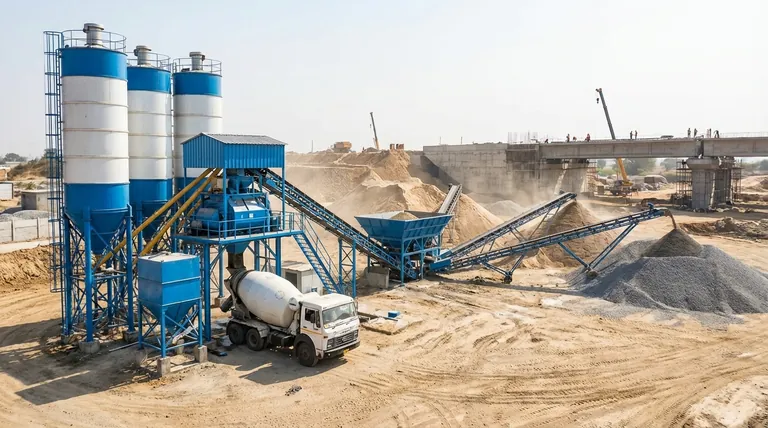
In short, concrete batching plants are industrial facilities designed to produce high-quality concrete by precisely combining materials like cement, sand, water, and additives. They serve as the backbone for a vast range of projects, from large-scale civil infrastructure like bridges and highways to the manufacturing of standardized precast components.
The true value of a concrete batching plant lies not just in its ability to produce concrete, but in its capacity to deliver a specific type and quality of concrete, tailored to the unique demands of a project, whether on-site or from a central location.
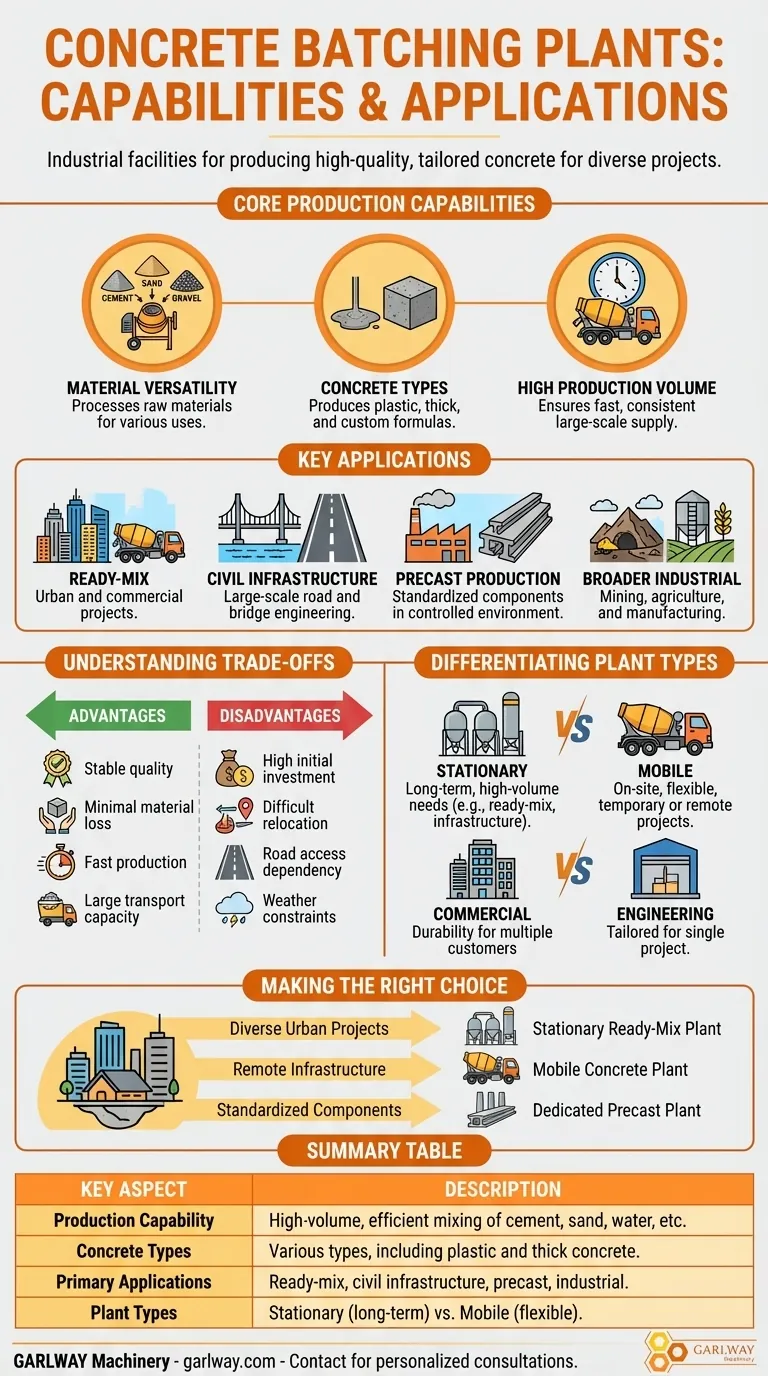
Core Production Capabilities
A plant's capabilities are defined by its versatility in materials, the types of concrete it can produce, and its overall output efficiency. Understanding these factors is the first step in matching a plant to a project's needs.
Material Versatility
At its core, a batching plant is a sophisticated mixer. While its primary function is producing concrete, its design allows it to process other raw materials like sand and gravel for various applications.
Concrete Types
Modern plants are not limited to a single formula. They can produce a wide variety of concrete types, including plastic concrete and thick concrete, to meet specific engineering requirements for strength, consistency, and durability.
Production Volume and Efficiency
Batching plants are characterized by high productivity and speed. This ensures a consistent and large supply of concrete can be produced quickly, transported efficiently, and poured without delay, which is critical for large construction timelines.
Key Applications Across Industries
The ability to produce consistent, high-quality concrete at scale makes batching plants indispensable in several key sectors. Their application determines the type of plant required.
Ready-Mix Concrete
Ready-mix plants are a common application, supplying fresh concrete to a variety of urban and commercial construction projects. These plants act as central hubs for houses, sidewalks, and other local building needs.
Civil Infrastructure
For large and medium-sized construction, batching plants are fundamental. They are widely used in road and bridge engineering projects where massive volumes of reliable concrete are essential for structural integrity.
Precast Concrete Production
Precast plants specialize in producing standardized concrete components in a controlled factory environment. These components are then transported to construction sites for use in transportation, building, and water conservancy projects.
Broader Industrial Uses
Beyond construction, the mixing capabilities of these plants are leveraged in other industries. This includes manufacturing, mining, and agriculture, where large-scale material mixing is required.
Understanding the Trade-offs
While powerful, investing in a concrete batching plant involves balancing significant advantages against logistical and financial constraints.
The Advantages
The primary benefits are centered on quality and efficiency. Plants deliver stable concrete quality, minimize the loss of raw materials, and support fast production and pouring schedules with a large transportation capacity.
The Disadvantages
The main drawbacks are financial and logistical. These plants require a high initial investment and are often difficult to relocate. They depend on good road access for material delivery and transport, and production can be forced to stop during rainy seasons.
Differentiating Plant Types for Specific Needs
Not all batching plants are the same. The choice between models depends entirely on the project's context, such as location, duration, and quality requirements.
Stationary vs. Mobile Plants
A fundamental choice is between a fixed plant and a mobile one. Stationary plants are ideal for long-term, high-volume needs like ready-mix supply or large infrastructure projects. Mobile plants, in contrast, offer an innovative solution for on-site production, providing flexibility and efficiency for temporary or remote construction scenarios.
Commercial vs. Engineering Plants
Commercial concrete plants, which supply multiple customers, generally have higher requirements for durability, reliability, and safety. Engineering plants, which are dedicated to a single project, are built to the specifications of that particular job.
Making the Right Choice for Your Project
Selecting the appropriate batching plant is a strategic decision that directly impacts project efficiency and budget.
- If your primary focus is supplying a continuous stream of concrete for diverse urban projects: A stationary, commercial ready-mix plant with high durability is the most logical choice.
- If your primary focus is a remote or temporary infrastructure project like a highway or bridge: A mobile concrete batching plant provides the necessary flexibility and on-site production capability.
- If your primary focus is manufacturing consistent, standardized concrete blocks or panels: A dedicated precast plant offers the controlled environment needed for superior quality control.
Ultimately, choosing the right concrete production technology is about aligning the plant’s capabilities with the specific logistical, qualitative, and financial goals of your operation.
Summary Table:
| Key Aspect | Description |
|---|---|
| Production Capability | High-volume, efficient mixing of cement, sand, water, and additives. |
| Concrete Types | Produces various types, including plastic and thick concrete. |
| Primary Applications | Ready-mix supply, civil infrastructure, precast production, and industrial uses. |
| Plant Types | Stationary (long-term, high-volume) vs. Mobile (on-site, flexible). |
Ready to find the perfect concrete batching plant for your project's needs?
At GARLWAY, we specialize in providing robust construction machinery, including concrete batching plants, winches, and mixers, for construction companies and contractors worldwide. Whether you need a stationary plant for a large infrastructure project or a mobile solution for a remote site, our expertise ensures you get the right equipment for maximum efficiency and quality.
Contact GARLWAY today for a personalized consultation and discover how our solutions can build the foundation for your success.
Visual Guide
Related Products
- HZS120 Ready Mix Concrete Batching Plant Commercial Mud Cement Mixer
- HZS35 Small Cement Concrete Mixing Batch Plant
- HZS75 Concrete Batching Plant Cement Mixer Price Concrete Mixer Bunnings Mixing Plant
- HZS180 Ready Mix Concrete Plant for Foundations with Sand and Cement
- Commercial Electric Concrete Mixer Machine HZS 50 Small Batch Plant for Sale
People Also Ask
- What is a ready mix concrete batching plant? The Engine of Modern Construction
- What is the name of the machine used in ready mix? Unpacking the Complete Concrete System
- What is the core component of a concrete batching plant? The Mixer Unit Defines Your Concrete Quality
- What are the types of concrete mixers used in batching plants? Choose the Right Mixer for Your Project
- What are the advantages and disadvantages of concrete batching plants? Maximize Quality & Efficiency





