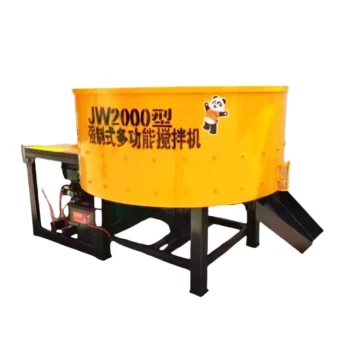
Beyond concrete, a standard cement mixer can be a powerful creative tool for artists and makers. Its primary functions of tumbling and mixing can be applied to unconventional materials, such as tumbling broken glass with sand to create smooth-edged decorative mulch or blending sand with epoxy resin to fabricate unique material for sculptures.
A cement mixer’s creative value lies in its ability to automate two key artistic processes: controlled abrasion for finishing surfaces and uniform blending of aggregates with binders to create entirely new composite materials.

The Cement Mixer as a Creative Engine
A cement mixer provides consistent, motorized action that saves an enormous amount of manual labor. This allows for processes that would otherwise be too time-consuming or physically demanding to be practical.
Principle 1: The Power of Tumbling and Abrasion
The constant rotation of the mixer's drum forces materials inside to rub against each other. This creates a powerful abrasive effect.
By adding an abrasive medium like sand, you can control this process to smooth, polish, or distress a wide variety of hard materials.
Principle 2: Uniform Blending of Unconventional Materials
The core function of a mixer is to ensure every particle of an aggregate (like sand or gravel) is evenly coated with a binder (like cement paste).
This same principle applies to artistic materials. You can use the mixer to perfectly combine aggregates like sand or fine stone with binders like epoxy resin, creating a consistent, workable medium for sculpting or casting.
Practical Artistic Applications
Harnessing these principles opens up several specific creative avenues.
Creating Tumbled "Sea Glass" Mulch
One of the most popular alternative uses is creating decorative tumbled glass, similar in appearance to sea glass.
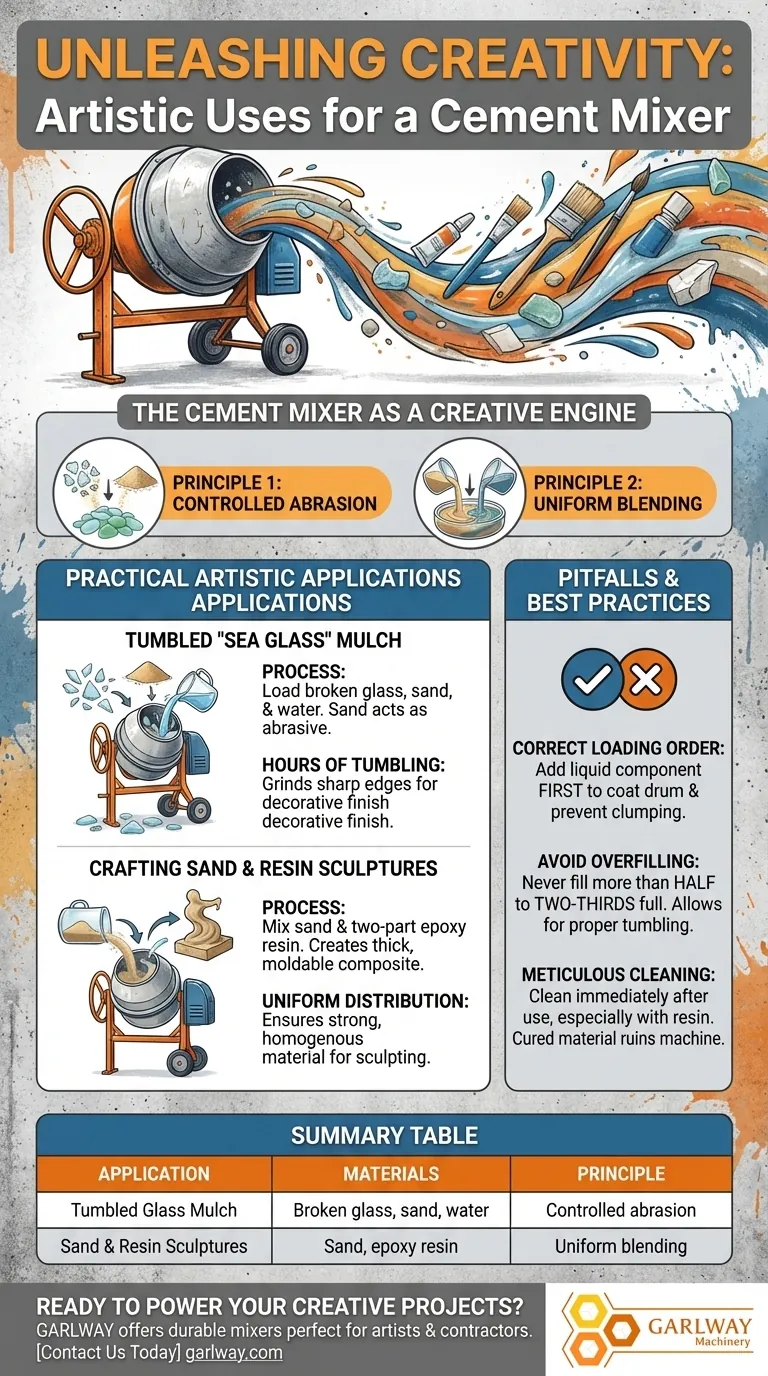
The process involves loading the mixer with broken glass shards, sand, and a small amount of water. The sand acts as the abrasive, and over several hours of tumbling, it grinds down the sharp edges of the glass, leaving smooth, frosted pieces perfect for garden beds or mosaics.
Crafting Sand and Resin Sculptures
For sculptors, the mixer can be used to prepare a unique composite material.
By mixing sand with a two-part epoxy resin, you can create a thick, moldable substance. The mixer ensures the resin is distributed perfectly, resulting in a strong, homogenous material that can be shaped before it cures into a permanent, stone-like sculpture.
Understanding the Pitfalls and Best Practices
Using a mixer for art requires the same precision as using it for construction. Ignoring best practices can damage your project, the tool, or both.
The Importance of Correct Loading Order
For any mixture involving a liquid and a solid, the order matters. Always add a portion of the liquid component first.
This coats the inside of the drum and prevents dry material from clumping and sticking to the sides, ensuring a much more uniform mix.
The Risk of Overfilling
Never fill a mixer more than halfway to two-thirds full. Overfilling prevents the materials from tumbling effectively.
An overloaded drum doesn't allow the contents to cascade properly, leading to an inconsistent mix where some parts are overworked and others are untouched.
The Necessity of Meticulous Cleaning
You must clean the mixer immediately after every use, especially when working with binders like epoxy resin.
Once a resin cures inside the drum, it is nearly impossible to remove and can render the machine useless. Scrape out all excess material, then rinse thoroughly.
Making the Right Choice for Your Goal
Your artistic objective will determine how you approach using the mixer.
- If your primary focus is altering the surface texture of a material: Use the mixer as an industrial tumbler, combining your primary material (like glass or rock) with an abrasive (like sand) and water.
- If your primary focus is creating a new composite for sculpting: Use the mixer to perfectly blend a dry aggregate (like sand) with a liquid binder (like epoxy resin) to produce a workable artistic medium.
By understanding its core mechanical principles, you can transform a common construction tool into a versatile asset for your creative work.
Summary Table:
| Application | Materials Used | Key Principle |
|---|---|---|
| Tumbled Glass Mulch | Broken glass, sand, water | Controlled abrasion via tumbling |
| Sand & Resin Sculptures | Sand, epoxy resin | Uniform blending of aggregates and binders |
Ready to power your creative projects with reliable equipment? GARLWAY specializes in construction machinery, offering durable cement mixers, winches, and concrete batching plants perfect for artists, contractors, and construction companies globally. Our mixers provide the consistent performance needed for both artistic and industrial applications. Contact us today to find the ideal mixer for your creative or professional needs!
Visual Guide
Related Products
- HZS25 Best Cement Mixer for Quick Mix Concrete at Bunnings
- JDC350 Small Cement Concrete Mortar Mixer
- Concrete Cement Mixer Machine Drum Mixer for Construction
- JW1000 Mobile Cement Mixer Concrete Mixer Truck and Batching Plant
- JZC500 Large Cement Mixer Machine Price for Concrete Mix
People Also Ask
- How do cement mixers enhance safety on construction sites? Reduce Strain, Hazards, and Accidents
- What are the main components of a cement mixer? A Guide to Core Parts & Functions
- What are some tips for using a cement mixer effectively? Maximize Your Mixer's Performance & Concrete Quality
- How does cleaning a cement mixer after use benefit its performance? Maximize Lifespan and Mix Quality
- Why is it important to clean the cement mixer after use? Prevent Costly Damage and Ensure Quality Concrete